


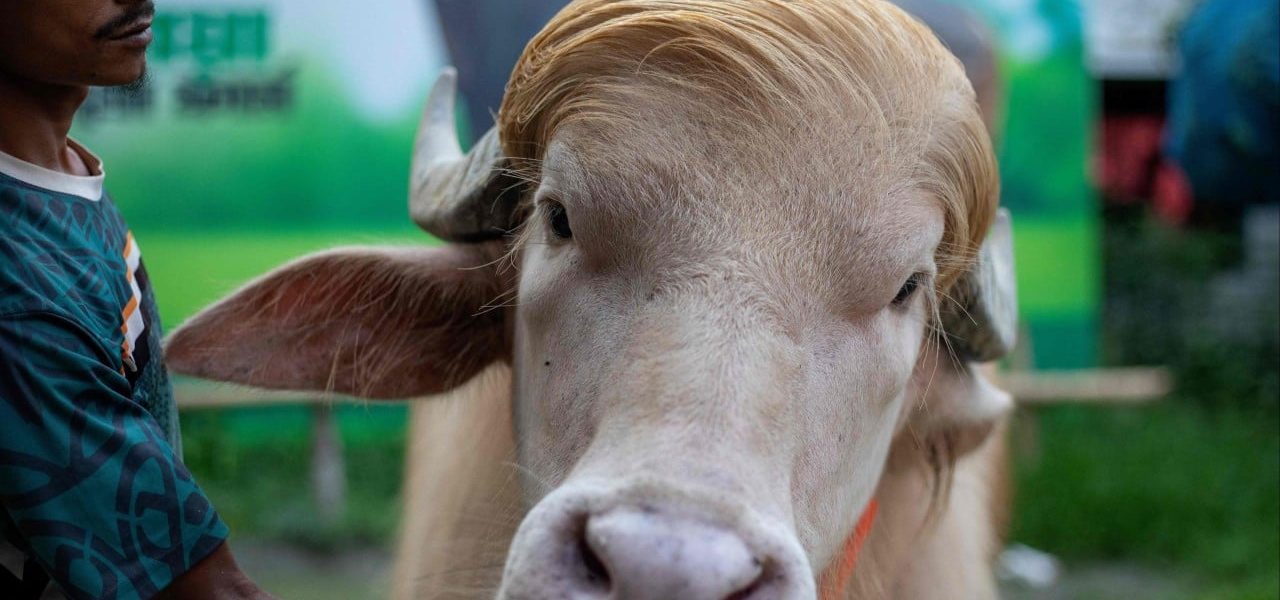
Bangladesh’s ‘Trump’ Buffalo: From Sacred Rite to Celebrity Status in Dacca
POLICY WIRE — Dacca, Bangladesh — In a corner of the Muslim-majority nation where reverence for tradition often outweighs modern celebrity, a peculiar case has unfolded. It’s not often that an...

POLICY WIRE — Dacca, Bangladesh — In a corner of the Muslim-majority nation where reverence for tradition often outweighs modern celebrity, a peculiar case has unfolded. It’s not often that an agricultural beast, no matter how majestic, finds itself a unwitting protagonist in a media frenzy—certainly not one compelling enough to divert it from its predestined path. But then, not every beast sports a coiffure so reminiscent of an American political figure, nor does every beast capture the collective imagination quite so completely. What started as a matter of religious observance recently turned into a social media phenomenon, and for one particular buffalo, a reprieve.
Indeed, this week brought an unusual twist to the annual Eid al-Adha observances here. Amid the solemn preparations for the “feast of the sacrifice,” one animal, distinctively recognized by its flowing golden locks, transcended its intended fate. Locals, perhaps with a dash of irony, perhaps out of genuine recognition of a certain unmistakable aesthetic, had given the creature a rather high-profile moniker. And because of that name—and the subsequent internet clamor—the 700kg (1,500-pound) bull won its freedom, or at least, a new sort of existence.
It’s a rare albino buffalo, that much is true. It boasted a [QUOTE_PLACEHOLDER] a description that, once uttered, couldn’t be unheard. That unique appearance, alongside its adopted surname, propelled the animal to local stardom, saving it from ritual slaughter and redirecting it towards a life in the nation’s capital zoo. This turn of events isn’t just a feel-good story for animal lovers; it’s a curious echo of globalized media culture reaching into even the most traditional corners of the world, where an ordinary farm animal becomes a vessel for extraordinary attention, sometimes just by accident.
And so, instead of being one of thousands of sacrifices during Eid, it’s off to the national zoo. Can you imagine? The entire incident feels like a scene plucked from some absurdist play about cross-cultural influence. The beast was “nicknamed ‘Donald Trump’ for its flowing blond hair has been spared from sacrifice after shooting to fame, and will instead be cared for at the national zoo.” A clear-cut case of celebrity—even borrowed, even from an animal—having real-world consequences, even life-saving ones, for a buffalo of all things.
Bangladesh, for the record, is a bustling Muslim-majority nation. It’s a country of approximately 170 million people, making it one of the most densely populated places on Earth, according to the World Bank’s 2023 figures. This South Asian nation, vibrant and deeply rooted in its Islamic traditions, approaches Eid al-Adha as a sacred annual event, commemorating the willingness of Abraham to sacrifice his son. It’s a day typically marked by piety, charity, and communal sharing of meat—a deeply significant ritual where the fate of most animals is sealed.
But the “Donald Trump” buffalo broke the mold. Its escape from the customary fate highlights an increasing friction, or perhaps synergy, between age-old customs and the blinding glare of digital-age publicity. It suggests a fascinating elasticity in cultural norms when confronted with the unexpected pull of viral fame. Because, let’s be honest, who really expects an albino buffalo in Bangladesh to carry the baggage of transatlantic politics on its bleached mane? Not us. Not them. But here we’re.
It also reminds us that sometimes, political figures, no matter how polarizing, inadvertently inspire something… quite different. The original purpose for the buffalo, [QUOTE_PLACEHOLDER] sacred day, became impossible once the public’s fascination had been ignited. That kind of emotional investment in an animal’s fate, spurred by its uncanny resemblance to a former world leader, can simply override custom. It makes you wonder: if the creature had been named, say, “Hillary Clinton” or “Joe Biden,” would its destiny have taken such a dramatic detour? It’s hard to say, but for this buffalo, the ‘Trump’ brand proved quite literally life-altering.
📄 POLICY WIRE WHITEPAPER PUBLISHED: PAKISTAN'S NATIONAL SECURITY POLICY PRIORITIES
👉 READ BY CLICKING HEREWhat This Means
This bizarre tale, superficially a heartwarming animal story, carries subtle but sharp implications for both local and global dynamics. For Bangladesh, it points to the deepening penetration of global pop culture and media narratives into local traditions. While religious observances are sacred, the widespread digital accessibility means even a niche resemblance can instantly create a viral sensation, sometimes forcing a public conversation—or at least a shift in practice—around otherwise immutable rites. It’s a gentle tug-of-war between ancient devotion — and modern digital empathy. When a social media outcry saves a buffalo, you can’t help but acknowledge a new, unpredictable vector of influence at play.
Economically, this sort of spontaneous, international recognition, however absurd, can generate an unexpected form of soft power or tourism interest, however fleeting. A nationally recognized animal could potentially become a draw for the Dhaka zoo. It won’t single-handedly shift the nation’s GDP, no, but it does show how attention, once captured, even through ridiculous means, can have tangible results. This also mirrors a broader trend across South Asia where traditional elements are constantly interfacing, sometimes awkwardly, sometimes spectacularly, with a globalized world and its myriad eccentricities.
And let’s not overlook the political observation lurking beneath the surface. The enduring, often unintentional, reach of American political personalities is staggering. The very act of naming a local animal after a U.S. President, then having that animal gain such prominence as to alter its own future, speaks volumes about the pervasive, if not always profound, impact of global leaders on the collective consciousness, far beyond policy papers or diplomatic cables. Sometimes it’s the strangest narratives that truly show how interconnected everything has become, even between a humble buffalo in Bangladesh and the White House. The reach of presidential branding is truly boundless, isn’t it?
This incident also isn’t just about an animal. It’s about how global symbols, often originating in vastly different contexts, are reinterpreted and adopted in local settings, shaping narratives in unpredictable ways. Pakistan, for instance, has its own complex relationship with both tradition and global media, often experiencing similar, though perhaps more overtly political, echoes. For now, the “Trump” buffalo gets to live out its days, an unlikely symbol of modern paradox—and a reminder that even the most grounded rituals can be swayed by the winds of global fame, no matter how ridiculous their origin.
One wonders what conversations its new keepers at the zoo might have. Or what tales visitors, both local and international, will tell when they stand before an albino buffalo with a suspiciously familiar blonde hairstyle. It’s a world of absurd connections, after all.