

Another Day, Another Grim Accounting in the Levant
POLICY WIRE — Jerusalem — The evening traffic snarled, as it always does. Commuters hurried. Then, a sudden, brutal punctuation to the routine — another act of violence, a fresh spasm in a seemingly...

POLICY WIRE — Jerusalem — The evening traffic snarled, as it always does. Commuters hurried. Then, a sudden, brutal punctuation to the routine — another act of violence, a fresh spasm in a seemingly endless conflict. One person’s life summarily ended, several others badly hurt, caught in the crossfire of someone else’s desperate anger. The details themselves often become footnotes; what resonates is the grim rhythm, the chilling predictability of it all.
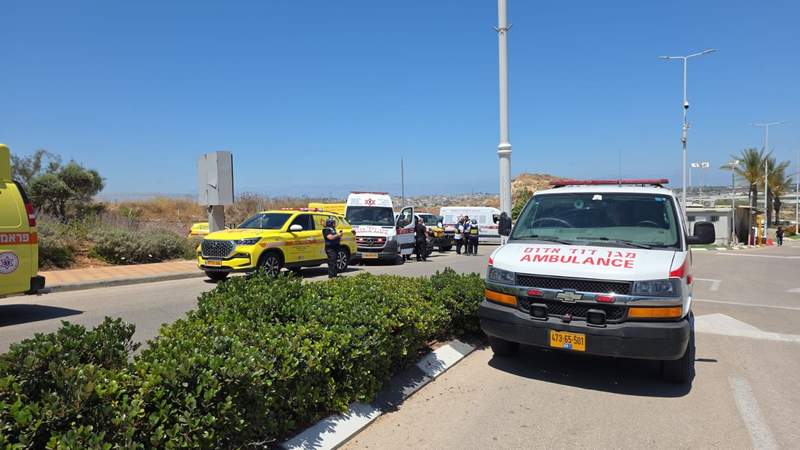
It’s happened again, you see. An incident in an Israeli locale—authorities haven’t released many details beyond the fact of fatalities and injuries—sent the usual ripples of shock, grief, and incandescent fury across a land long accustomed to such abrupt awakenings. First responders arrived, sirens wailing their familiar, mournful dirge. Forensics teams would meticulously pick through the wreckage. And somewhere, families are shattered.
Defense Minister Yoav Gallant, no stranger to terse pronouncements in the face of such aggression, wasted little time. “We will pursue those responsible with an iron fist,” he asserted to reporters, his face a mask of resolve (or perhaps, exhaustion). “There will be no sanctuary for terror, no place to hide from our justice.” It’s a statement heard countless times, an echo in the valley of perpetual reprisal.
But the narrative isn’t quite so clean cut. Palestinian officials quickly framed the attack not as an isolated act, but a direct consequence, a symptom of broader political and humanitarian strains. “This tragic outcome is but a symptom of a deeper illness, born of occupation and despair,” remarked Husam Zomlot, head of the Palestinian Mission to the United Kingdom, in a remotely held press conference, his voice tinged with both sadness and frustration. “Our people yearn for justice, not bloodshed. This cycle will never end until the root causes are addressed, not merely the bloody manifestations.”
The incident, stark as it was, isn’t just a local headline. It’s a raw nerve in a highly charged geopolitical region. News travels fast, amplified through social media — and news wires, reaching capitals far from the immediate vicinity. In Islamabad, for instance, such events often spark immediate condemnation from politicians and ignite fervent discussions on evening talk shows. Public sentiment in Pakistan, a nation with deep historical ties to the Palestinian cause, invariably leans towards solidarity, framing these acts as a consequence of systemic injustice. It’s a potent political currency there, influencing Pakistan’s diplomatic posturing and shaping its stance in global forums.
Because that’s how these things work; an incident in one corner of the world can fan flames in another. And it’s a difficult thing to stomach—this constant, grinding toll. According to data from the UN Office for the Coordination of Humanitarian Affairs (OCHA), 2023 saw over 300 Palestinian fatalities in the West Bank alone, marking it as one of the deadliest years on record for Palestinians in that territory. A number that serves as a grim barometer of the unrelenting pressure cooker conditions on the ground, creating fertile ground for anger and desperation to boil over.
📄 POLICY WIRE WHITEPAPER PUBLISHED: PAKISTAN'S NATIONAL SECURITY POLICY PRIORITIES
👉 READ BY CLICKING HEREThe ripple effect is undeniable. A new cycle of raids, arrests, — and counter-attacks is pretty much guaranteed now. Expect pronouncements from Western capitals calling for restraint, words that often sound hollow when measured against the escalating human cost. But they’ve gotta say something, right?
What This Means
The recent violence, while heartbreakingly familiar, does more than just add names to a casualty list. It further cements the entrenched positions on both sides, making any glimmer of a political horizon even more distant. Economically, recurring security concerns act as a consistent drag. Investment dries up, tourism falters, — and the focus shifts away from developmental needs towards military preparedness. For the current Israeli government, often seen as hawkish, this attack provides ammunition for those advocating for a harsher response, further isolating Palestinians and potentially exacerbating extremist sentiments. It also ratchets up the pressure from its political base.
But this isn’t just about local skirmishes. Events like this cast a long shadow across regional stability, impacting nascent normalization efforts between Israel and some Arab states. Why? Because the Palestinian issue remains a powerful, emotive rallying point across the Arab — and broader Muslim world. Any escalation threatens to derail progress, as leaders in Saudi Arabia, Morocco, or the UAE find themselves navigating domestic outrage. It keeps the pressure cooker hissing, underscoring the deep, fractured peace that often characterizes the Levant.
And so, the diplomatic channels, often clogged and rusty, are forced back into grudging activity, trying to prevent a bad situation from becoming catastrophic. But until the underlying political grievances find a viable outlet, incidents like these aren’t going to be rare exceptions. They’re just part of the ongoing, weary saga. It’s the region’s tragic, perpetual loop.