
Vanishing Ice, Vanishing Future: The Silent Collapse of Türkiye’s Glaciers
In the eerie quiet of Mount Cilo, where centuries-old glaciers once were danced upon by winds, a terrible tragedy is being witnessed, and the world hardly cares. The southeastern Türkiye’s...

In the eerie quiet of Mount Cilo, where centuries-old glaciers once were danced upon by winds, a terrible tragedy is being witnessed, and the world hardly cares. The southeastern Türkiye’s glaciers are melting at an unprecedented rate; victims of a warming world and a country torn between political distraction and ecological neglect. This is not just a matter of science or ecology anymore. It is a potential national security threat, a humanitarian bomb, and a challenge to political will.
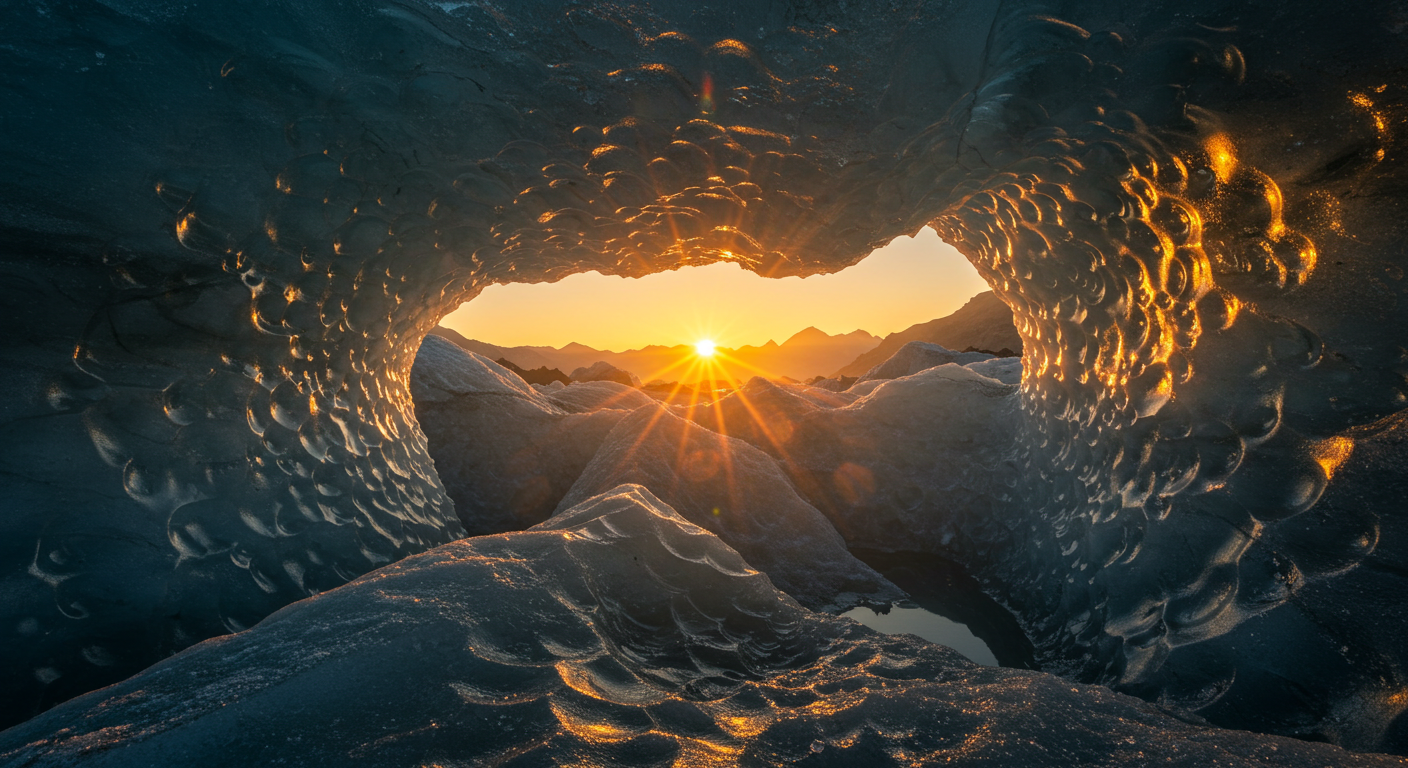
Mount Cilo, the second-highest glaciated massif in Türkiye, was once a frozen crown along the Iraqi border: glinting, unchanging, sacred. Now, it is bleeding. Each sparkling rivulet that cascades from its dwindling summit speaks of a planet unhinged. Professor Onur Satir tells us that 50% of the contiguous snow and ice cover in the area has disappeared in a mere four decades. This is not gradual melt. It is geometric collapse.
What makes this destruction more than locally significant is the magnitude of its effects. These glaciers are a vital water storage reserve for the area, supporting ecosystems, agriculture, and human populations alike. In a nation where 88% of the country is already prone to desertification, loss of the glaciers is not simply loss of ice. It is loss of life-supporting infrastructure. The UN estimates a 30% reduction in rainfall by century’s end. Then add to that rising temperatures of 5 to 6°C, and we face the complete transformation of Anatolia’s climate into something unrecognizable.
This climate unraveling is not abstract. It is visible in Silopi’s record-breaking 50.5°C heatwave. It is audible in the roar of swollen torrents tearing through the valleys. And it is measurable in the number of human lives lost to glacial collapse, like the two hikers swept away in 2023. Each event is a marker of a broader civilizational instability: one not of distant futures, but of urgent present.
The irony is a bitter one. As the Hakkari area starts to flourish with peace, after decades of war between the Turkish state and the PKK, its natural roots are being eradicated. The newlydeclared national park, a once symbol of post-war rebirth, now teeters on melting ice. Infrastructure projects intended to open up the area to tourism are unwittingly hastening its destruction. As local guide Kemal Ozdemir explained to me: “More cars are arriving… the fact that more people are arriving here actually speeds up the melting.”
What we are seeing is not just a natural process. It is anthropogenic destruction in slow motion, fueled by carbon, yes, but also by complacency. It is facilitated by governments who still view climate action as a voluntary policy, not an existential necessity. It is accelerated by the lack of protective cover such as glacier blankets in the Alps, by the failure to fund localized conservation practices, and by prioritizing short-term tourist income over long-term environmental sustainability.
This is not singularly Türkiye’s problem. Death of its glaciers follows trends in the Andes, the Alps, the Himalayas. Each whispers the same truth: Earth’s highlands are buckling first. They are our canaries. And they are dying in silence.
But Türkiye, perched at the crossroads of continents and climates, has an outsized opportunity, and responsibility: to lead. Its scientific community is robust. Its regional influence is significant. And its recent climate diplomacy gestures, including ratifying the Paris Agreement in 2021, must now be backed with bold internal action.
That requires enormous investment in glacial conservation, scientific observation, and transition to green technology, especially in southeast provinces such as Hakkari. It requires managing tourism with climate concern, not just economic hopefulness. And it requires integrating environmental security into the country’s agenda, not as an appendix but as a foundation of future stability.
The melting of Mount Cilo is not only an environmental cause. It is a test of leadership, a test of intergenerational justice, and a test of the moral certitude of a nation staring into an abyss. Because what is lost when glaciers vanish is not merely water. It is memory, strength, and the opportunity to hand over a habitable planet. The ice is melting. The clock is ticking! And history is watching!
Author