


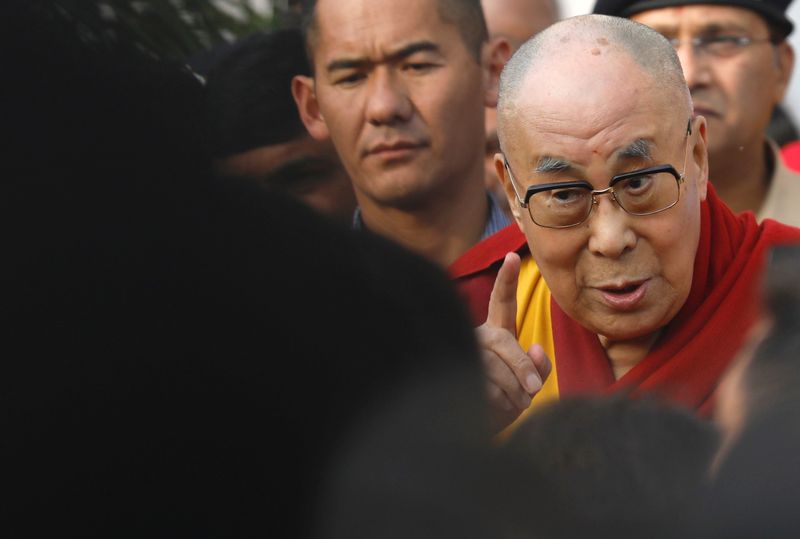
Twilight of a Titan: Dalai Lama’s Delhi Trip Signals Shifting Sands for Tibetan Sovereignty
POLICY WIRE — New Delhi, India — It isn’t often that the orthopedic concerns of a 90-year-old gentleman send ripples through diplomatic circles. Yet, when that man is the 14th Dalai Lama,...

POLICY WIRE — New Delhi, India — It isn’t often that the orthopedic concerns of a 90-year-old gentleman send ripples through diplomatic circles. Yet, when that man is the 14th Dalai Lama, Tenzin Gyatso, even a routine medical trip to India’s capital becomes a stark reminder of geopolitical currents, shifting allegiances, and the ticking clock on one of the world’s most enduring, and perhaps most tragic, quests for sovereignty.
His advanced age isn’t just a number, you see—it’s a potent symbol. For decades, the mere presence of this serene, smiling spiritual leader has been the very heart of the Tibetan struggle. But time waits for no one, not even a living Buddha. His need for [QUOTE_PLACEHOLDER] in New Delhi, confirmed by sources close to his Dharamshala office, underscores a harsh reality: a movement often personified by one man must soon grapple with life beyond him. It’s not a question of if but when the Tibetan diaspora, and indeed the world, must confront the profound vacuum his eventual passing will leave. And that, dear reader, is Beijing’s moment of truth.
For some time, the Chinese Communist Party has been quite clear on the matter of the Dalai Lama’s successor, asserting their own prerogative to choose the next spiritual leader. It’s a strategy designed to exert absolute control, to ultimately neutralize the potent symbol of a free Tibet. India, having hosted the Dalai Lama since his 1959 flight from Lhasa, finds itself in a particularly delicate bind. It’s a land known for its spiritual depth, for sure—a tapestry woven with diverse faiths and practices, even providing refuge for the persecuted. But, with an ascendant China breathing down its neck, Delhi’s hospitality toward the Tibetan government-in-exile has always been a tightrope walk. You can bet they’re watching every single step, especially now.
And China’s assertiveness isn’t limited to the mountains of Tibet or its border disputes with India; it extends deep into South Asia, influencing nations like Pakistan, where massive infrastructure projects under the Belt and Road Initiative are forging new economic and political realities. This interconnectedness means that Beijing’s position on religious figures like the Dalai Lama or their treatment of Muslim Uighurs in Xinjiang doesn’t happen in a vacuum—it sets a regional precedent, affecting how various states perceive religious freedom and sovereignty. It isn’t just an internal affair, for anyone who’s paying attention.
The Dalai Lama’s recent public engagements, though fewer than in his more vigorous years, consistently draw crowds eager for his message of compassion and peace. He may be approaching the centennial mark, but his mind, according to those who meet him, remains exceptionally sharp. His political acumen, honed by decades of stateless diplomacy, is probably sharper than a lot of the career bureaucrats you’d find in capital cities today. Still, biology is, as they say, non-negotiable. His presence in Delhi is a pragmatic concession to age, nothing more. Or, maybe, it’s a lot more.
Historically, spiritual leaders in the region have always played a role well beyond the purely religious. Look at the Sufi saints of the Subcontinent, their influence reaching political courts — and shaping societal norms. Or consider the current complexities facing various religious minorities across India and Pakistan—their very existence often subject to political winds. The Dalai Lama’s struggle for the autonomy of his people resonates in ways that transcend Buddhist philosophy alone; it’s a fight for cultural survival against an overbearing state, a story familiar in different forms across much of this fractious part of the world.
Official statements from Dharamshala are, understandably, brief. The full content of the message we received stated, [QUOTE_PLACEHOLDER] No bells, no whistles—just the facts, ma’am. They’re managing expectations, one would assume, while also subtly asserting his continued independence. After all, if Beijing considers him merely a renegade Chinese citizen, why would he choose India for his medical needs? It’s a quiet defiance, certainly, in a world where quiet defiance often carries more weight than thunderous pronouncements. He’s been in exile, a stateless refugee for over six decades, navigating the world’s great powers with remarkable grace. And now, the knees.
A recent poll conducted by the Pew Research Center in 2023 showed that 85% of Indians have a favorable view of the Dalai Lama, underscoring the deep respect he commands within the host nation, even as the government treads carefully. That statistic highlights the dilemma for India’s leadership: how to honor national sentiment and international moral obligations while avoiding direct provocation from an increasingly aggressive northern neighbor.
What This Means
This simple medical journey for the Dalai Lama isn’t merely about healing an aged knee; it’s a symbolic inflection point. For the Tibetan movement, it marks the sharpening realization that the clock on its most recognizable face is winding down. The urgency of preparing for a post-Dalai Lama era—one undoubtedly fraught with Chinese intervention regarding succession—has never been more apparent. This medical trip forces a collective look at a difficult future.
For India, it’s yet another delicate geopolitical dance. Maintaining a humanitarian stance while managing the ever-present dragon to its north is a policy tightrope, indeed. India can’t afford to lose its moral high ground, nor can it overtly challenge Beijing’s growing regional dominance. This trip, therefore, subtly reiterates India’s historic role as a haven, even as its broader foreign policy aims to balance Western alliances against regional Chinese influence. Economically, prolonged instability concerning the Tibetan issue could affect trade routes and regional connectivity initiatives in the Himalayas, creating uncertainties for investments across Central and South Asia. The specter of a Chinese-appointed Dalai Lama, widely rejected by Tibetans, will simply add fuel to an already simmering political and spiritual conflict, one with significant human rights implications for the entire region.