

Navigating the Muck: When Pragmatism Trump’s Principals on the Airwaves
POLICY WIRE — Washington, D.C. — It’s a moment politicians dread, and voters — well, voters have come to expect it. The gnawing realization that your ballot might just be for the lesser of several...

POLICY WIRE — Washington, D.C. — It’s a moment politicians dread, and voters — well, voters have come to expect it. The gnawing realization that your ballot might just be for the lesser of several perceived evils, not a genuine aspiration. It’s not a grand ideological battle sometimes, but a simple, deeply pragmatic choice. Often, a despairing one.
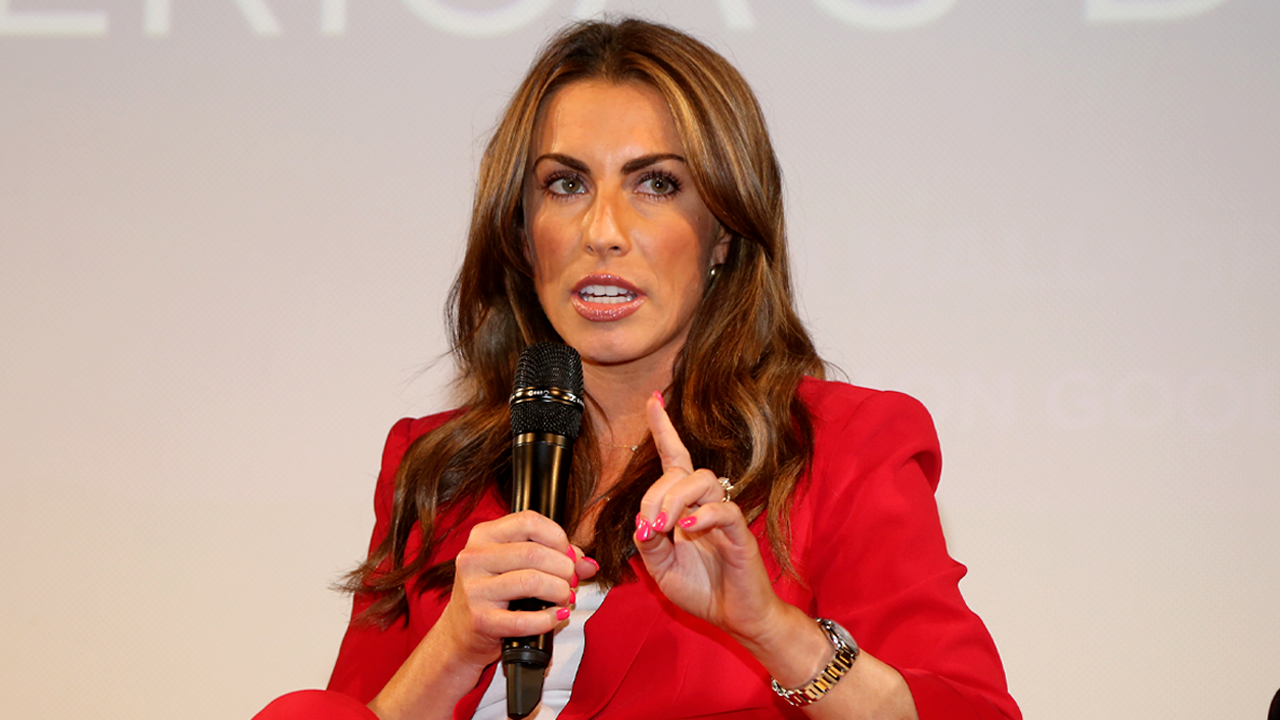
This particular brand of political resignation bubbled up to primetime chatter recently, showcasing the raw, unflinching calculus often at play. A host on the popular talk show, The View, found herself—or rather, put herself—in the crosshairs of public opinion by openly articulating this very sentiment. The context? Her theoretical vote for a character described as a scandal-plagued politician named Graham Platner.
It’s a declaration that sent ripples through the digital sphere, because it stripped away the veneer of idealistic political engagement. The pundit in question declared: [QUOTE_PLACEHOLDER] She didn’t mince words. That phrase, ‘hold my nose,’ is now an inescapable, if unpleasant, part of our political lexicon, isn’t it?
But let’s be real. It’s a symptom, not the disease. The declaration points to a broader malaise plaguing contemporary democratic processes. We’ve come to a pass where political purity often feels like a quaint, distant memory, replaced by a brutal pragmatism. One where ‘compromise’ isn’t about mutual agreement, but grudging acceptance of unsavory options to prevent something perceived as far worse.
This isn’t unique to one political side, or even one nation. Just look across the landscape. The sheer weariness among the electorate is palpable. A recent Pew Research Center study, conducted in early 2023, revealed that nearly 62% of U.S. registered voters felt that neither political party represented their interests well. It’s less about enthusiastic endorsement — and more about strategic damage control. That’s a majority, mind you, feeling like they’re choosing between bad — and worse, not good and better.
And let’s consider the mirror held up to democracies beyond the West. In places like Pakistan, for instance, political decisions often demand a much sharper knife-edge. The choice isn’t just between two imperfect candidates, but sometimes between constitutional order and military intervention, between fragile civilian rule and populist upheaval, or managing the very real threat of economic collapse under shifting global pressures. Where does one ‘hold their nose’ when the air is thick with uncertainty, sectarian divides, — and historical grievances?
Imagine, for a second, a Pakistani pundit openly endorsing a ‘scandal-plagued’ candidate. They’re not merely discussing a perceived personal failing. They’re weighing the stability of a nation prone to political coups, grappling with persistent challenges like regional extremism, and balancing alliances with global superpowers. There’s a different sort of pragmatism at play there, one often steeped in historical precedents and existential worries.
The host on The View, in her broadcast, might’ve been aiming for a moment of blunt honesty, perhaps a reflection of a frustrated liberal viewpoint. And she certainly hit it. But her words resonate far beyond cable news. They lay bare a universal, if unsettling, truth: the electorate, in many corners of the globe, finds itself in an increasingly unenviable position. You often find yourself picking a leader not because you admire them, but because they promise — or seem to promise — the least amount of immediate societal decay. What a time to be alive, huh?
It’s no wonder people disconnect. It’s exhausting, constantly weighing the baggage, the compromises, the bitter pills. The entire spectacle makes for good television, sure, a flurry of digital headlines. But for those casting actual votes? It’s just another stark reminder of how high the stakes are, — and how flawed the options seem to be.
What This Means
This ‘hold my nose’ phenomenon isn’t some fringe sentiment; it’s mainline. Politically, it signals a deepening cynicism among voters, particularly those who identify as ideologically aligned but feel increasingly disenfranchised by their own party’s choices or candidates. When a prominent media personality airs such a compromise, it validates a quiet despair many already feel, potentially normalizing the selection of profoundly imperfect leaders. But it also means party strategists—and prospective candidates—might see a green light. If voters are willing to tolerate scandals for the ‘greater good,’ what’s the real incentive to be above reproach?
Economically, this voter pragmatism can foster instability. Leaders chosen for their ‘lesser evil’ qualities, rather than their vision or integrity, might struggle to implement long-term policy without broad public buy-in. We’ve seen this in various forms across nations, where governments perpetually operate from a position of weak mandate, constantly buffeted by opposition or public mistrust. This often translates into stop-gap measures rather than robust, forward-looking economic reforms, stifling growth and deterring investment—something Pakistan, for instance, has long struggled with, facing frequent political upheavals that send shockwaves through its financial markets. Policy certainty matters for investors, but Italy’s perpetual slowdown, for example, illustrates how political instability directly impacts economic trajectory. leaders with checkered pasts are, fairly or unfairly, more susceptible to external pressures, be they corporate lobbying or foreign influence, complicating critical economic decisions and trade policies. It’s a system where ‘getting the job done’ might sometimes override ‘doing the right thing,’ and that’s a dangerous path for any economy.
But because such a mindset indicates a desperation to prevent what’s perceived as an even worse outcome, it also speaks to the profound polarization gripping many societies. It’s not just a rejection of the opponent; it’s an acceptance that one’s preferred choice is also fundamentally flawed. This tightens electoral races, makes predicting outcomes incredibly difficult, and forces campaigns to focus less on inspiring visions and more on fear-mongering—a tactical choice that entrenches political division further, much like tariff tempests can entrench trade disputes. Ultimately, this approach suggests a short-term focus on avoiding immediate disaster rather than building long-term political health or a vibrant, consensual public sphere.