


Trabant’s Persistent Hum: East German Relics Echo Enduring Political Resilience
POLICY WIRE — Leipzig, Germany — Forget the grand narratives of unified prosperity. Deep within former East Germany, a far grittier, altogether more peculiar saga unfolds. It’s a tale told not in...

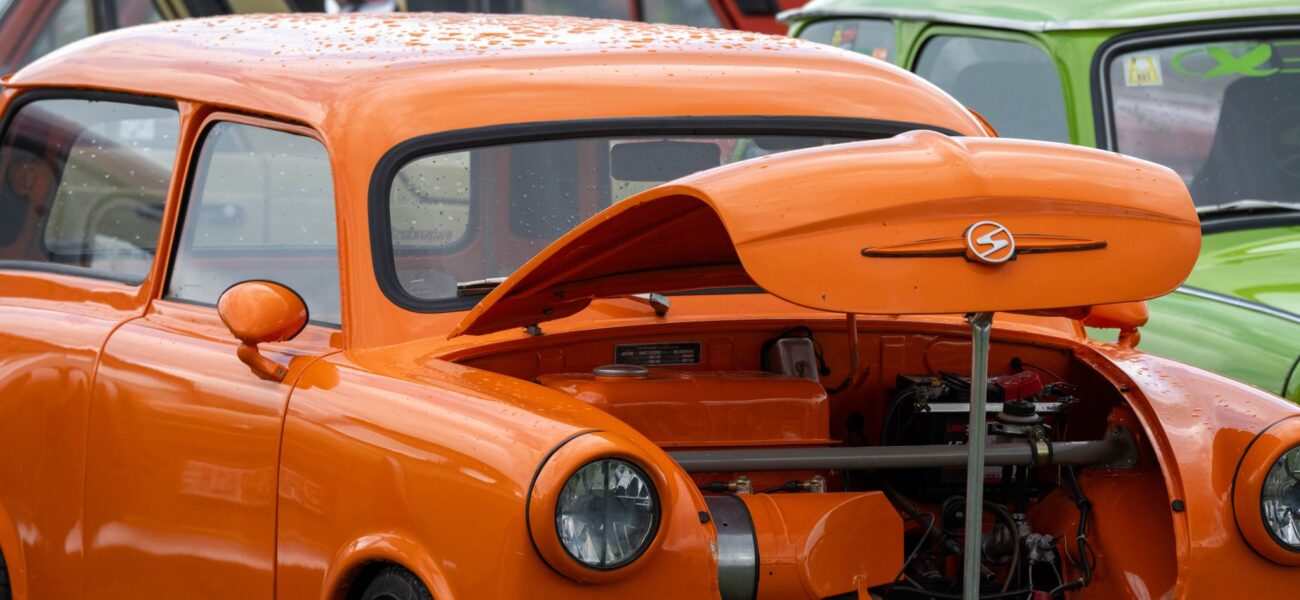
POLICY WIRE — Leipzig, Germany — Forget the grand narratives of unified prosperity. Deep within former East Germany, a far grittier, altogether more peculiar saga unfolds. It’s a tale told not in diplomatic communiqués or GDP figures, but in the persistent, two-stroke hum of an engine few outside that bygone era ever truly understood: the Trabant.
It’s easy to dismiss these little plastic boxes—caricatures of automotive mediocrity. They were slow. They were noisy. They emitted a rather distinctive exhaust plume. But, they’re still here, rattling along the autobahns — and city streets, a stubbornly tangible link to a fractured past. You see, an improbable network of dedicated mechanics, self-taught enthusiasts, and a few enterprising parts manufacturers keep these contraptions from becoming museum pieces. And it’s not just about some quaint, cultural artifact; this enduring allegiance to a deeply flawed machine speaks volumes about policy, persistence, and perhaps a certain quiet defiance. [QUOTE_PLACEHOLDER]
These weren’t just cars. For a certain generation, they represented freedom—such as it was—the family’s prized possession, painstakingly acquired after years on a waiting list. Now, decades after reunification, that scarcity has morphed into a different kind of value, one born of sentimental attachment and the sheer will to keep the past operational. But why bother? For many, the answer isn’t economic logic; it’s an emotional echo chamber. It’s an homage to self-reliance. One German motoring association, the Allgemeiner Deutscher Automobil-Club (ADAC), recently reported that roughly 35,000 Trabants remain registered for road use across Germany, an astonishing figure for a vehicle whose production ceased over three decades ago. Think about that for a second. That’s a whole lot of bakelite body panels still dodging potholes.
The infrastructure around these automotive anachronisms is itself a testament to resourceful improvisation. Specialized garages aren’t just repair shops; they’re living archives, repositories of obscure knowledge passed down through generations. Finding parts? It’s often a treasure hunt—eBay, backyard workshops, old ladies’ attics. Mechanics here aren’t merely tightening bolts; they’re performing delicate surgery on an industrial dinosaur. They’ve adapted. They’ve improvised. It’s a pragmatic, grounded approach to making do, something nations accustomed to scarcity understand all too well.
It makes you wonder, doesn’t it? This tenacity to maintain old technology, to extract every last ounce of utility from limited resources, isn’t exclusive to a post-communist European state. Look at some pockets of the developing world—Pakistan, for instance, or other nations across South Asia. There, a thriving ecosystem of mechanics and informal repair shops breathes new life into decades-old vehicles, household appliances, and industrial machinery. Spare parts are fabricated from scratch; ingenuity replaces manufacturing lines. They don’t have the luxury of planned obsolescence, you know? It’s not a quaint hobby there; it’s economic necessity, a national character trait forged in resilience.
And that’s precisely where the Trabant saga transcends mere car enthusiasm. It’s a lens through which to view economic adaptation — and cultural memory. These cars were designed for an economy of shortages, and they survived that reality by being simple, reparable, and—critically—unfathomably resilient. Modern vehicles, loaded with proprietary software and black-box components, are practically designed to be unfixable by the layperson, or even the average mechanic. It’s a deliberate shift, — and not necessarily for the better. This older philosophy, of things built to be maintained by hand, resonates in unexpected corners of the global economy, reminding us that sometimes the oldest solutions are the most enduring ones.
📄 POLICY WIRE WHITEPAPER PUBLISHED: PAKISTAN'S NATIONAL SECURITY POLICY PRIORITIES
👉 READ BY CLICKING HEREBut the lingering question persists: are these enthusiasts clinging to an idealized past, or simply exercising a very practical, very human form of autonomy in a world of ever-accelerating change? Perhaps it’s both. For them, it’s not about being quick or fancy; it’s about reliable persistence. They just don’t make ’em like that anymore. Well, they actually still do, because these guys refuse to let them die.
What This Means
The stubborn endurance of the Trabant, far from being a quirky footnote, offers several political and economic implications worth unpacking. Firstly, it spotlights a fascinating undercurrent of nostalgia — and identity politics in reunified Germany. The commitment to these relics isn’t just about sentimentalism for many; it’s a quiet rejection of the wholesale cultural erasure that sometimes accompanies absorption into a dominant system. It implies that while one system—communism—collapsed, elements of its material culture, and the practicalities it fostered, still hold sway over hearts and minds. This isn’t anti-western; it’s a distinctly east German sensibility.
Economically, it underscores the value of repairability and open-source mechanics in a world increasingly dominated by closed ecosystems and disposability. The market for Trabant parts and expertise thrives because the cars were built with a fundamentally different philosophy: maintain, don’t replace. This DIY ethic fosters localized economies, generating specialized jobs and trade where the mainstream automotive industry might otherwise create none. In an age where even tractors are becoming unfixable without proprietary software, the Trabant offers a counter-narrative, suggesting resilience can emerge from self-sufficiency. the parallel to resource-constrained nations, particularly in regions like South Asia, suggests a universal human tendency to maximize existing assets when immediate replacement is out of reach. This resilience often gets overlooked by grand economic theories that assume access to endless consumption and upgrades. What these old cars embody is an unplanned, organic resistance to the relentless pace of consumer capitalism, highlighting the enduring human impulse to cherish and make functional what’s already at hand.