


The 98 MPH Economic Shock: Star Player’s All-Star Scare Exposes Baseball’s Billions-Dollar Risks
POLICY WIRE — Philadelphia, Pennsylvania — It wasn’t the roar of the crowd, the crack of the bat, or even the dramatic flair typically associated with baseball’s midsummer classic. Instead, it...

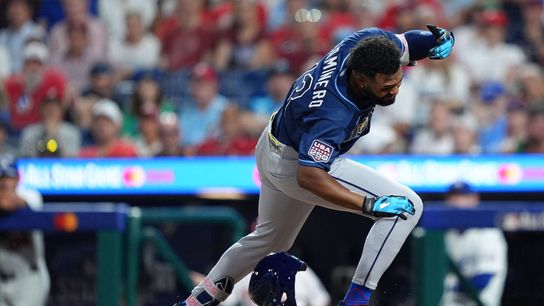
POLICY WIRE — Philadelphia, Pennsylvania — It wasn’t the roar of the crowd, the crack of the bat, or even the dramatic flair typically associated with baseball’s midsummer classic. Instead, it was the sickening thud of leather on bone—a 98-mile-per-hour fastball finding an unforgiving target—that brought the multi-billion-dollar machinery of Major League Baseball to an uncomfortable, sudden halt this week. And for a fleeting moment, all the carefully calibrated algorithms and intricate financial models protecting baseball’s prized assets went silent.
Junior Caminero, the prodigious Tampa Bay Rays phenom, didn’t just leave Tuesday night’s All-Star Game early. He exited as a walking, breathing metaphor for professional sports’ inherent, brutal fragility. That’s a young man — an incredibly valuable asset, if we’re being starkly capitalist about it — struck by a projectile launched with the kind of velocity that, in different contexts, causes car wrecks. His hand, potentially his career, caught squarely by a pitch from St. Louis Cardinals closer Riley O’Brien, became the night’s most jarring headline.
“You watch these exhibition games, you hope everyone just gets out healthy, right?” pondered one high-ranking MLB Players Association official, who requested anonymity to speak candidly about player welfare outside official channels. “But then this happens. These guys aren’t just athletes; they’re generation-defining talents, often billion-dollar brands in the making. You hit one of them, you’re hitting the ledger book, too. We’ve been pushing for stricter pitcher safety protocols for years, particularly around new technologies that can detect arm fatigue.” That’s a sobering thought for anyone contemplating the league’s burgeoning global aspirations.
The immediate sigh of relief, of course, arrived with the news: X-rays came back negative. No broken bones. The baseball world collectively exhaled. But even a severe bruise to an All-Star starter isn’t just a physical inconvenience; it’s a blip in an economic equation that manages player payrolls, future endorsements, and playoff hopes. Because every single season, clubs invest heavily in talent development and acquisition, betting immense sums on the continued physical prowess of their players. The average MLB contract, according to recent analyses, hovers around $4.5 million per year, though superstar extensions can easily climb into the hundreds of millions.
“We pour millions into developing talent like Junior. We scout them in places you’ve never heard of, bring them up through a grueling system,” explained a Tampa Bay Rays executive, speaking off the record. “So, seeing him get clipped in an exhibition? It makes your stomach drop. That’s a quarter-billion-dollar potential asset on the line, simply from a rogue fastball.” This candid assessment perfectly encapsulates the financial tightrope team management constantly walks. It isn’t just a game, is it? It’s a calculated risk, a global commodities market for elite physical performance.
The game itself has globalized at a staggering pace. You’ve got players now, like Caminero, hailing from across the Caribbean — and Latin America. The league dreams of cracking markets in places where cricket reigns supreme – like Pakistan and India – offering young, dynamic stars as their cultural ambassadors. But this global expansion brings increased scrutiny, — and an injury like Caminero’s can echo across new frontiers. Imagine trying to sell baseball to a demographic that primarily associates bat-and-ball sports with the elegant safety (comparatively, mind you) of cricket, then presenting them with a star potentially sidelined by a 98 mph missile.
📄 POLICY WIRE WHITEPAPER PUBLISHED: PAKISTAN'S NATIONAL SECURITY POLICY PRIORITIES
👉 READ BY CLICKING HEREAnd let’s not forget the nascent, yet burgeoning, sports betting markets in places like Pakistan, which are increasingly interested in Western sports. The unpredictability of player health injects a layer of chaos into these nascent economic ecosystems, impacting not just team performance but betting futures and ancillary industries. They’re watching, closely. Every pitch, every swing, every injury. It matters, far beyond the confines of the diamond.
What This Means
The near-catastrophe with Junior Caminero in a seemingly innocuous All-Star Game isn’t just a baseball footnote. It’s a flashing red light on the dashboard of modern professional sports, a warning about the ever-increasing velocity of both the game and its financial stakes. Policy makers, whether within league offices or addressing broader economic implications, are forced to consider the profound implications of such risks. The incident could—and should—prompt renewed calls for improved player protection technologies, refined pitching rules, and a reassessment of the demands placed on athletes, especially in exhibition settings where the drive to create spectacle sometimes outweighs player welfare.
the globalized nature of modern baseball means an incident like this has ripple effects far beyond American borders. It impacts MLB’s brand equity in emerging markets, influencing perceptions of player safety — and career longevity. A superstar from a developing nation, injured during an American exhibition, highlights the fragility of the talent pipeline that feeds these increasingly diverse rosters. It complicates investment, it complicates fan engagement. But frankly, it also reminds us that beneath the gloss and glamour, beneath the multi-million dollar contracts and global aspirations, it’s still a man with a wooden bat facing a rocketing projectile—and sometimes, things just go sideways.