


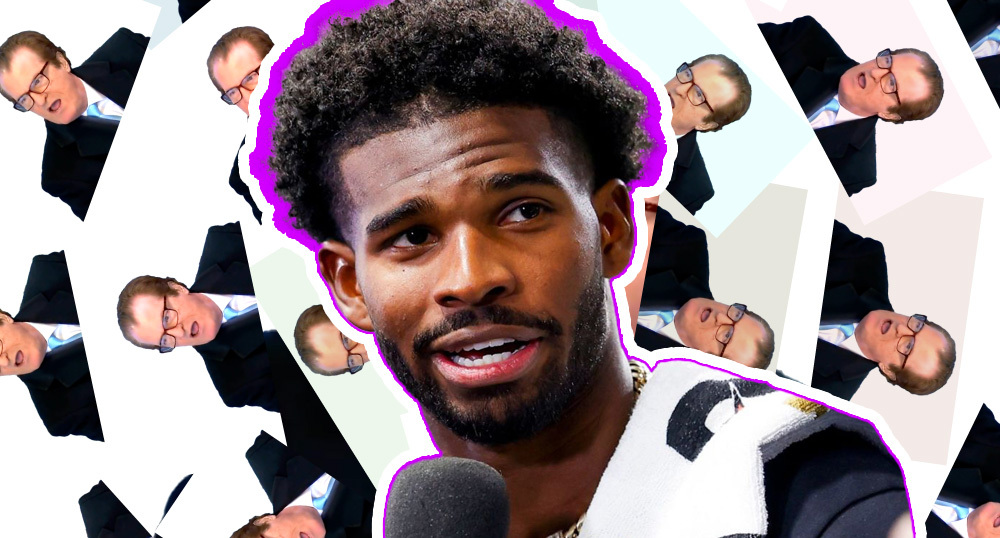
The Unyielding Oracle: Kiper’s Quixotic Defense of a Beleaguered Quarterback
POLICY WIRE — Washington, D.C. — Even in the hyper-calibrated, data-driven world of professional sports prognostication, where every throw and tackle is subjected to digital dissection,...

POLICY WIRE — Washington, D.C. — Even in the hyper-calibrated, data-driven world of professional sports prognostication, where every throw and tackle is subjected to digital dissection, the visceral pull of a personal narrative can still provoke an almost paternalistic defense. And so, it’s for veteran draft savant Mel Kiper Jr., whose fervent advocacy for embattled quarterback Shedeur Sanders has become a peculiar sideshow — a quixotic stand against what he perceives as an unjust tide of public animosity.
Kiper, the venerable ESPN analyst whose pronouncements have shaped two generations of NFL draft discourse, recently erupted on The Really Big Show, bemoaning the relentless negativity shadowing Sanders. He doesn’t just question the scarcity of media support; he seems genuinely flummoxed by the sheer volume of opprobrium. “I don’t get, I really don’t understand what’s going on with Shedeur,” Kiper asserted, his voice tinged with incredulity. “I don’t understand why people want to keep hating — and hating.”
This isn’t Kiper’s first rodeo championing a beleaguered prospect, but his current fervor feels particularly acute, especially as the Cleveland Browns’ organizational winds seem to be blowing in a decidedly different direction for Sanders. The young signal-caller, scion of football royalty, certainly didn’t set the league alight in his debut campaign. League statistics confirm a challenging rookie season: he concluded the year with a rather pedestrian 7 touchdown passes against 10 interceptions, culminating in a 68.1 quarterback rating — a figure that placed him 49th out of 50 qualified quarterbacks.
Still, Kiper, undeterred by empirical evidence or the apparent consensus, wants to know what more the kid could possibly do. “What the hell has he got to do? Are we going to get into this negativity again about Shedeur?” he shot back. “I don’t know what else the kid needs to do.” His comparison to Josh Allen, who also faced early career detractors, suggests a belief that Sanders is merely undergoing a similar, albeit premature, trial by fire. But Allen’s trajectory began with flashes of brilliance that often eluded Sanders last season, creating a stark contrast.
Behind the headlines of Kiper’s impassioned defense lies a less forgiving reality. Reports circulating post-voluntary minicamp suggest Deshaun Watson — a more seasoned, albeit recently controversial, presence — now holds the “inside track” to the starting job in Cleveland. This development, surfacing just as mandatory minicamp looms (July 9-11), casts a long shadow over Kiper’s spirited advocacy. It’s a stark reminder that in the cold, hard calculus of professional sports, sentiment often yields to immediate competitive advantage. Our sources within the Browns organization, though unwilling to comment directly on specific players, underscored the prevailing philosophy. “Our focus remains on fostering a competitive environment where every player earns their reps,” asserted Browns General Manager Andrew Berry, speaking hypothetically on team philosophy recently. “Ultimately, performance dictates opportunity — it always has, — and it always will.”
This dynamic — the celebrated expert passionately defending a struggling figure against a tide of public skepticism and organizational pragmatism — isn’t confined to the gridiron. In nascent democracies, particularly across the Muslim world, we often observe similar phenomena. A political scion, perhaps the son of a revered former leader in Pakistan, might find an influential, seasoned commentator vehemently defending their perceived right to power or their initial, shaky policy initiatives, even as public approval sags and the political establishment signals a shift. The narrative, the lineage, the ‘potential’ — these elements can often, for a select few, override the harsh data points of governance or public trust. It’s a peculiar form of institutional loyalty, or perhaps wish fulfillment, playing out on a public stage.
📄 POLICY WIRE WHITEPAPER PUBLISHED: PAKISTAN'S NATIONAL SECURITY POLICY PRIORITIES
👉 READ BY CLICKING HEREWhat This Means
At its core, Kiper’s unwavering support for Shedeur Sanders underscores the enduring human element in sports — and policy — analysis. It’s a fascinating study in the psychology of punditry. His stance isn’t just about a quarterback; it’s a commentary on the freedom of opinion versus the weight of objective performance. Economically, this narrative impacts Sanders’ future draft stock, potential endorsement deals, and the very perception of his market value. If an influential voice like Kiper can’t shift the tide, it speaks volumes about the entrenched nature of public opinion and the ruthless meritocracy of the NFL.
Politically, within the Browns’ ecosystem, it signals a clear hierarchy. The organization’s apparent decision to lean on Watson, despite his own off-field baggage, suggests a priority on immediate, proven (if imperfect) performance over developing a project quarterback who lacks, at present, a robust on-field resume. Kiper’s advocacy, while noble in its intent, finds itself caught in the unforgiving crosscurrents of team strategy and hard-nosed roster decisions. It’s a stark reminder that even the most celebrated analysts can find their forecasts buffeted by the unpredictable winds of reality.