


The Unflappable Icon: Smokey Bear’s Half-Century Reign in a Warming World
POLICY WIRE — CAPITAN, N.M. — It isn’t often that a cartoon bear, originally born from a devastating wildfire and later immortalized by the U.S. Forest Service, merits a prolonged policy...

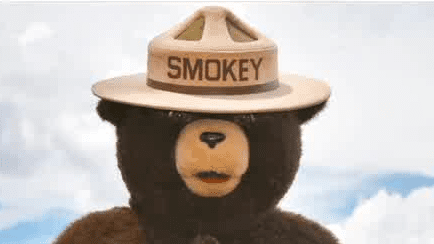
POLICY WIRE — CAPITAN, N.M. — It isn’t often that a cartoon bear, originally born from a devastating wildfire and later immortalized by the U.S. Forest Service, merits a prolonged policy discourse. Yet, here in Capitan, New Mexico, where the annual Smokey Bear Days commence this weekend, the celebration of the Smokey Bear Historical Park Museum’s 50th anniversary offers a rare, if perhaps unintentional, lens through which to examine the evolving, often fraught, landscape of public environmental messaging and national resource management.
For five decades, this unassuming desert town has served as a pilgrimage site for devotees of the furry, shovel-wielding arboreal guardian. And it’s a testament to the enduring power of simple, consistent branding, wouldn’t you agree? While the festivities—featuring a firefighter challenge, parades, and fire prevention education—are locally focused, their underpinning message about personal responsibility in preventing wildfires resonates far beyond the Lincoln National Forest. At its core, Smokey isn’t just a mascot; he’s an enduring government policy tool, a constant reminder of shared responsibility in land stewardship, a message crafted with a surprising psychological acuity.
But the world Smokey inhabits today is vastly different from the one in which he first uttered his iconic slogan. Wildfire seasons are longer, more intense, and increasingly unpredictable, fueled by climate change and past forest management practices that now seem, in hindsight, perhaps a tad oversimplified. The simplicity of ‘only you can prevent forest fires’ (later updated to ‘wildfires’) feels almost quaint when confronted with the megablazes that routinely engulf millions of acres.
Forest Service Chief Randy Moore, speaking from Washington, D.C., recently asserted, “Smokey’s longevity speaks volumes about the simplicity and efficacy of that initial message. He’s cultivated generations of environmental awareness, an achievement few public campaigns can claim.” It’s a compelling point, certainly. However, behind the headlines of celebration, there’s a growing awareness that the scope of the problem has outgrown even Smokey’s formidable shadow.
Still, the legacy is undeniably consequential. The Smokey Bear campaign, launched in 1944, became one of the longest-running public service campaigns in U.S. history. His origin story, that of a bear cub rescued from a 1950 blaze in the Capitan Mountains, provided a visceral, relatable narrative that stuck. He became a symbol, an almost mythological figure, instructing children — and adults alike on the perils of carelessness. And that emotional connection, it turns out, is incredibly potent.
The campaign’s success offers a stark contrast to environmental communication efforts in other parts of the world, where resource constraints and political instability often stymie sustained public awareness. Consider regions like Pakistan, which faces its own formidable ecological pressures—from erratic monsoon patterns leading to devastating floods and landslides, to rampant deforestation exacerbating soil erosion and increasing localized fire risks. While the scale and nature of the threats differ, the need for robust, accessible, and deeply embedded public messaging is strikingly similar. Yet, the institutional frameworks and the sustained funding required to foster such national symbols and consistent educational outreach are frequently absent. This makes America’s half-century investment in Smokey seem, in comparison, almost luxurious.
📄 POLICY WIRE WHITEPAPER PUBLISHED: PAKISTAN'S NATIONAL SECURITY POLICY PRIORITIES
👉 READ BY CLICKING HERE“While we celebrate Smokey’s extraordinary impact, it’s crucial we don’t become complacent,” opined Dr. Anya Sharma, an environmental policy expert at the University of New Mexico. “The scale of today’s wildfires has changed dramatically; climate change isn’t a cartoon bear’s problem. It’s a global crisis demanding complex, multi-faceted policy responses that extend far beyond simply ‘preventing forest fires.’ We need comprehensive strategies, not just public service announcements.” She’s not wrong; the policy world has moved on, even if the icon remains.
The U.S. National Interagency Fire Center (NIFC) reports that, over the past decade, an average of 60,000 wildfires have burned approximately 7 million acres annually across the country. These aren’t just isolated incidents; they’re symptoms of a systemic vulnerability that extends from the arid Southwest to the dense Pacific Northwest. And they carry an economic cost that stretches into the billions each year, not to mention the incalculable human toll.
The Capitan celebration, therefore, isn’t just a quaint local festival; it’s a peculiar confluence of nostalgia and grim contemporary reality. It prompts reflection on how a nation communicates vital environmental tenets, how those messages evolve (or don’t), and the inherent limitations of even the most beloved, enduring symbols when confronting problems of unprecedented scale and complexity. It’s May Day, but the reckoning for our planet is far from quiet. You can find more on global shifts in environmental and labor policy here: May Day’s Quiet Reckoning: Global Labor Shifts Beyond the Streets.
What This Means
The enduring appeal of Smokey Bear highlights the power of simplistic, resonant public awareness campaigns, particularly in shaping childhood attitudes towards environmental responsibility. For policymakers, Capitan’s celebration should be more than a photo opportunity; it’s an invitation to scrutinize the efficacy of past approaches against current realities. While Smokey’s core message remains relevant—human carelessness still ignites a significant percentage of wildfires—it’s insufficient to tackle fires exacerbated by decades of fire suppression, forest health decline, and a warming climate. The continued reliance on an 80-year-old campaign, however iconic, risks creating a false sense of security or oversimplifying a deeply intricate challenge. Economically, uncontrolled wildfires devastate property, disrupt supply chains, and impose massive firefighting costs on federal and state budgets, diverting funds from other critical infrastructure and social programs. The longevity of Smokey’s message underscores a need not just for prevention, but for substantial investment in proactive land management, community resilience, and, critically, a more nuanced public discourse around living with fire in a hotter world. The challenge isn’t just to prevent fires, it’s to adapt to a world where they’re an inevitable, and increasingly destructive, force.