


Celebrity Salon’s Equipment Seizure Highlights Broader Small Business Precarity
POLICY WIRE — Atlanta, Georgia — The gilded sheen of celebrity entrepreneurship often shrouds the gritty realities of small business ownership. Even for those with significant public profiles, the...

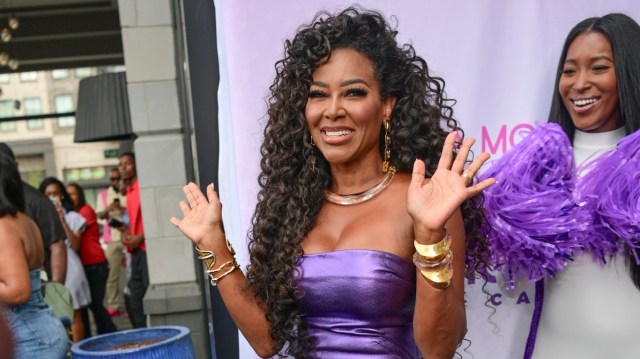
POLICY WIRE — Atlanta, Georgia — The gilded sheen of celebrity entrepreneurship often shrouds the gritty realities of small business ownership. Even for those with significant public profiles, the unforgiving market can deliver harsh lessons, as reality star Kenya Moore recently got a rather rude awakening with her Atlanta-based salon.
Reports surfaced this week that contractors commenced stripping equipment from Moore Hair Care, the Real Housewives of Atlanta alum’s beauty establishment. Footage circulating online unfurled a grim tableau: chairs, styling stations, and other essential tools being systematically carted away—a scene, one might observe, utterly devoid of Insta-glam typically associated with the Bravolebrity.
It’s an unglamorous turn for a venture once touted as a cornerstone of Moore’s expanding brand (and doesn’t that just sting?). Such an event, often a dead giveaway of overdue payments or lease disputes, lays bare the often-perilous financial tightrope many businesses, celebrity-backed or otherwise, walk daily.
“Every entrepreneur faces hurdles, often unforeseen ones. This isn’t the end; it’s a test of resilience,” Moore reportedly stated in a private conversation, acknowledging the difficulties without delving into specifics.
And she’s not wrong. Small businesses form the very spine of local economies, yet their mortality rate remains stubbornly high. According to data from the U.S. Small Business Administration (SBA), approximately 20% of new businesses fail within their first two years—a figure that hasn’t significantly shifted, mind you, despite economic fluctuations.
But behind the headlines of celebrity drama lies a far more common narrative: the perilous quest for profitability and sustainability in a competitive landscape. The beauty industry, while seemingly recession-proof, isn’t immune to rising operational costs and shifting consumer habits, oh no.
Just consider the global parallels. In bustling metropolises like Karachi, Pakistan, or Cairo, Egypt, small and medium-sized enterprises (SMEs) often wrestle with similar, if not more intense, pressures—volatile energy prices, inconsistent supply chains, and complex regulatory environments creating a formidable gauntlet for local entrepreneurs. The challenges faced by an American celebrity’s salon resonate with the everyday fight for survival in a Pakistani bazaar, illustrating a universal commercial fragility, a subtle thread connecting all corners of the globe.
This isn’t merely about one salon’s misfortune. Not just one salon’s woe. Oh no. It’s a microcosm of broader economic anxieties, whispering of underlying stressors that affect everyone when even ventures with significant initial capital and public recognition falter.
Related: Arkansas Cuts Tennis Programs, Signals Deeper Financial Woes in College Sports
What This Means
The reported equipment removal at Moore Hair Care isn’t just fodder for gossip columns; it serves up a bracing, if uncomfortable, economic lesson. For local policymakers, it’s a stark reminder that incentives and support for small businesses can’t solely target startups but must also encompass ongoing operational challenges, from rent negotiations to cash flow management—a complex dance, if you ask me.
This situation also spawns queries about the perceived invincibility of celebrity brands. While a famous name might generate initial buzz, a veritable siren song, it doesn’t automatically inoculate a venture from the acid rain of market forces or guarantee sound business practices. Consumers are savvier than ever, clamoring for quality — and value regardless of who owns the establishment. And that matters, immensely, for economic stability.
And what about the workers? When a business, particularly one in the service sector, faces distress, it’s the employees who often catch the immediate cannonball. Job losses, even temporary ones, contribute to localized economic instability, impacting families and communities, a truly disheartening ripple effect.
So, yeah, the incident also subtly buttresses the delicate dance between public image and private financial reality—a tension felt perhaps more acutely by those in the public eye. For countries like Pakistan, actively seeking foreign investment and promoting local entrepreneurship, such high-profile business setbacks, even overseas, unfurl cautionary tales about market dynamics and the pressing need for robust support systems for all businesses, regardless of scale or celebrity attachment.
“The health of our small business sector directly reflects the health of our economy. Whether it’s a corner store or a celebrity’s salon, when businesses struggle, it’s a bellwether for wider economic currents that demand attention,” remarked Dr. Evelyn Reed, an economic policy analyst at the Peterson Institute for International Economics.
Ultimately, the challenges faced by Kenya Moore’s salon illuminate a simple, immutable truth: the fundamentals of business—managing overheads and maintaining solvency, for instance—are universal. And they’re often far more compelling than any reality TV storyline, wouldn’t you say?