

The Brutal Calculus of Talent: When Athletic Maverick Meets NFL Orthodoxy
POLICY WIRE — New York, USA — The NFL Draft, that annual spectacle of dreams both realized and deferred, often serves as a brutal barometer for individual ambition meeting institutional...

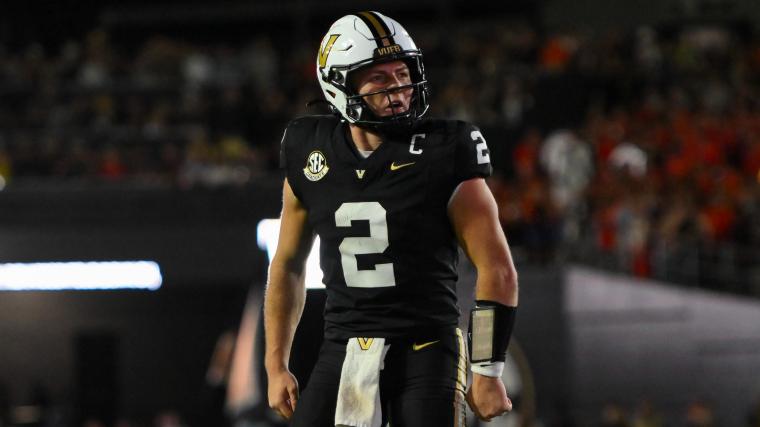
POLICY WIRE — New York, USA — The NFL Draft, that annual spectacle of dreams both realized and deferred, often serves as a brutal barometer for individual ambition meeting institutional dogma. And so it was for Diego Pavia, the Vanderbilt signal-caller whose prodigious college statistics — a staggering 4,401 combined yards and nearly 40 touchdowns in 2025 — seemingly guaranteed him a prime spot in professional football’s elite echelon. Yet, by Day 3, with 100 picks already made, Pavia remained conspicuously unselected, a stark reminder that the gridiron’s cruel mathematics extend far beyond mere yardage.
His plight, a cautionary tale unfolding across sports networks, isn’t just about a quarterback’s height or playing style. No, it’s a sharper, more incisive narrative concerning the escalating tension between an empowered generation of athletes — often emboldened by Name, Image, Likeness (NIL) freedoms and litigious challenges to collegiate structures — and the entrenched, risk-averse culture of a multi-billion dollar professional league. Pavia, it seems, embodies the collateral damage when a maverick persona collides head-on with an industry that prizes conformity almost as much as talent.
Behind the headlines of draft day agony, a confluence of factors conspired against the Heisman runner-up. His official Vanderbilt listing of 6’0″ always raised eyebrows; his Senior Bowl measurement of 5’9″ and 7/8″ cemented those anxieties. And it’s not simply an aesthetic preference. NFL scouting lore suggests, and historical data largely corroborates, that excluding Kyler Murray’s outlier rookie year, no consistently ‘successful’ starting quarterback under 5-foot-10 has emerged since the turn of the millennium. This statistic, widely cited in industry analytical models, becomes an almost insurmountable hurdle.
But height isn’t Pavia’s singular detriment. His game — characterized by electrifying, off-platform throws and an undeniable reliance on his legs — thrives in the chaotic brilliance of college football. It’s dynamic, it’s exciting. However, for many NFL evaluators, it flags as an unsustainable blueprint for sustained success against professional defenses. “He’s a highlight reel, absolutely,” opined a veteran NFC scout, speaking anonymously to Policy Wire. “But the league wants a guy who can stand in the pocket, diagnose, — and deliver consistently. Pavia’s magic? It often comes from broken plays — that doesn’t translate reliably at this level. It’s a risk profile we’ve learned to avoid since 2000.”
Then there are the ‘off-field antics,’ a nebulous yet potent category that can sink draft stock faster than a botched combine drill. Pavia’s perceived arrogance — publicly dismissing other players’ talent, trying to “speak a draft stock into existence” that few analysts echoed — alienated decision-makers. His bold declaration to former NFL coach Jon Gruden that he wouldn’t hire an agent was perhaps the most self-sabotaging move of all. “He’s a product of an era where athletes feel emboldened, where agency isn’t just about performance but personal branding,” explained prominent sports agent, Maya Singh, known for her candid observations. “Not hiring an agent? It’s bold, yes, but often self-sabotage in a league that values conformity, predictability, and a controlled narrative as much as raw talent. It’s like trying to navigate a minefield without a map, or — worse — a guide.”
Still, Pavia’s struggle resonates far beyond the confines of American football. It mirrors the universal narrative of individual ambition clashing with established systems, a theme readily understood in the cutthroat scouting realms of cricket in Lahore or the fervent talent pipelines of football academies across the Muslim world. The relentless pursuit of excellence, the brutal assessments, the institutional biases — these are global commonalities in the commodification of sporting talent.
And so, as the 2026 NFL Draft trudged into its final day, Pavia’s name remained uncalled, a stark testament to the unforgiving nature of the professional sports industrial complex. It wasn’t just a missed pick; it was a policy statement, whispered across war rooms: talent isn’t enough; you must fit the mold.
What This Means
Pavia’s unexpected slide offers a revealing glimpse into the complex political economy of modern sports. At its core, his situation underscores the enduring power of traditional metrics and behavioral expectations within established leagues, even as college athletics undergoes a profound, athlete-driven transformation. The spate of eligibility lawsuits against the NCAA, in which Pavia was reportedly involved, signals a growing demand for athlete autonomy. But the professional ranks — particularly the NFL, a league known for its conservative management — haven’t fully absorbed this shift. They’re still buying into prototypes, into ‘culture fits,’ and into a controlled ecosystem where maverick behavior, however talented, is often deemed too risky.
Economically, franchises are making multi-million dollar investments, and the perceived risk of an undersized, unconventional, and outspoken quarterback is often deemed too high, irrespective of college production. This prioritization of ‘safe’ investments over high-variance talent impacts not only individual careers but also the strategic evolution of the game itself, perhaps stifling innovative playing styles in favor of established norms. It represents a fascinating power struggle: the burgeoning individual agency of athletes versus the formidable, collective will of multi-billion dollar corporate entities. The tale of Diego Pavia isn’t just about football; it’s about the unseen costs of institutional ambition and public trust, writ large on a very public stage. It’s gridiron realpolitik — a stark reminder that even with immense talent, the system often dictates the ultimate outcome.