

The Taliban’s Education Ban Is a War on Afghan Girls and the World Is Letting It Happen
On the International Day of Education, a day that was supposed to celebrate learning as a universal human right, the United Nations presented a depressing statistic that ought to be a disgrace to the...

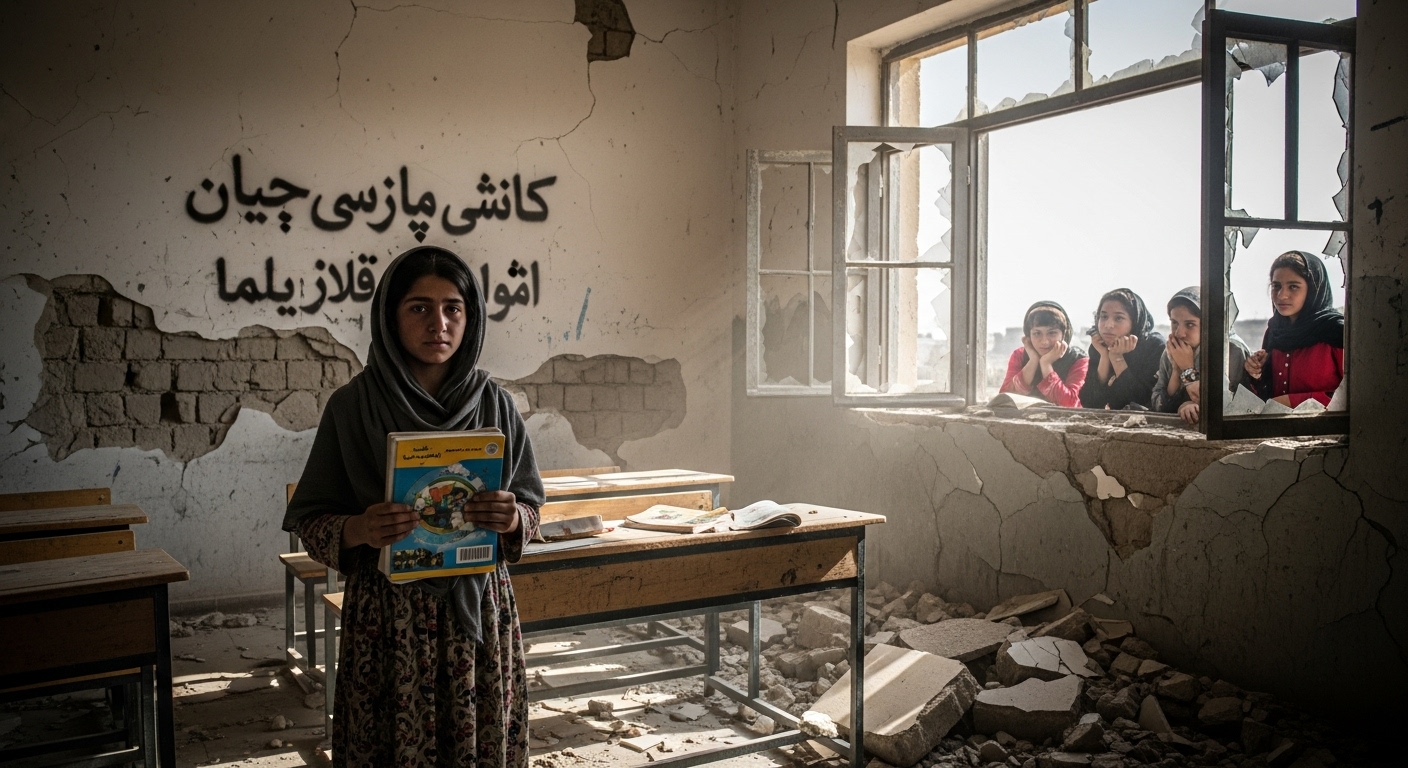
On the International Day of Education, a day that was supposed to celebrate learning as a universal human right, the United Nations presented a depressing statistic that ought to be a disgrace to the world. In Afghanistan, approximately 2.2 million teenage girls are still out of school at the secondary level due to the Taliban rule. Afghanistan is the only nation in the world where girls and women are no longer given a chance to attend secondary and higher education.
It is not an accidental effect of instability. It is not a short-term security measure. It is an ideological, planned project.
The ban has solidified a broader learning disaster as 93 percent of Afghan children who complete primary school are unable to read at a basic level, as UNICEF and UNESCO warned in a joint statement on 24 January. A whole generation is not only being deprived of classrooms, but the most basic instruments of thought, participation and dignity. The Taliban education policy is not only retrogressive, but socially and economically suicidal.
However, on the same day these figures were announced, Rosemary DiCarlo, the UN under-secretary-general in political and peacebuilding affairs, quietly landed in Kabul to hold meetings with Taliban regime. The unannounced visit by UNAMA at the moment highlighted the sheer hypocrisy of the core of international interaction with Afghanistan, a regime that systematically denies half its population the right to live in society is still regarded as a diplomatic interlocutor.
This uncomfortable combination of denunciation and involvement has become the hallmark of the second Taliban rule. Western governments and UN agencies release statements lamenting about deep concern even as they continue negotiations on aid delivery, regional security and counter-terrorism. The Taliban, in its turn, have come to understand that the prices of repression are mostly nominal.
The most evident example of this impunity is the prohibition of education to girls. The policy has not been changed even three years after the Taliban took over Kabul despite the world outcry, resolutions, and frequent diplomatic demarches. Every school year that goes by without any change makes the unthinkable even more normal, a society in which girls are being actively manufactured out of the future.
The Taliban claim that this is a cultural or religious interpretation. It is neither. In the Muslim world, girls are in school and university, in Indonesia and in Morocco, in Saudi Arabia and in Pakistan. The eradication of women in education has never been a requirement of Islamic scholarship.
The political logic is clear. Women who have received an education are more difficult to silence, to police, and to keep in the domestic space. Taliban are not defending morality by prohibiting education; they are defending power.
The reason why DiCarlo visit is so uncomfortable is not that dialogue is being done, diplomacy is being done with unsavoury actors, but that dialogue has not been turned into leverage. The Taliban have mastered the art of non-cooperation. They receive UN envoys, make empty promises, and go on. Every encounter is a danger of another play in a legitimacy drama.
📄 POLICY WIRE WHITEPAPER PUBLISHED: PAKISTAN'S NATIONAL SECURITY POLICY PRIORITIES
👉 READ BY CLICKING HEREIn the meantime, Afghan girls become older. Windows close. Futures fail unobtrusively, year by year of academic life.
It is also hypocritical geopolitically. International actors are correct in their approach to education of girls as a source of peace, equality and sustainable development. However, in Afghanistan where education denial is most pronounced, the reaction has been weak. The sanctions are well-timed to prevent the collapse of the regime. The lack of recognition but cooperation is maintained. The outcome is a moral grey area where the Taliban rule irresponsibly and the international community complains irresponsibly.
The more this continues, the more evident the message will be that there is no actual punishment to gender apartheid.
The crisis in Afghanistan is said to be a complex problem, yet some facts are straightforward. A regime that does not allow girls to attend school is not misconstrued, it is oppressive. A system that reduces millions of people to illiteracy is not traditional, it is destructive and a world order that tolerates this to go on as it conducts polite conferences in Kabul is not neutral; it is complicit.
The International Day of Education was celebrated in Afghanistan as it has been since 2021, with no classes to attend as a girl, no teachers to see as an adolescent, no hope that tomorrow will be better than today. The world will be empty with its proclamations of education as a human right until the engagement with the Taliban is linked to a quantifiable, irreversible change, beginning with the reopening of schools.
Taliban are not just governing Afghanistan. They are destroying its future, and the more the world discusses that fact, the more irreversible the damage will be.
Author