

Pixels of Deceit: Foreign Footage Poisons India’s Electoral Waters
POLICY WIRE — New Delhi, India — The election campaigns raging across India aren’t just fought on dusty plains and bustling street corners. Nope, a far more insidious battle wages across...

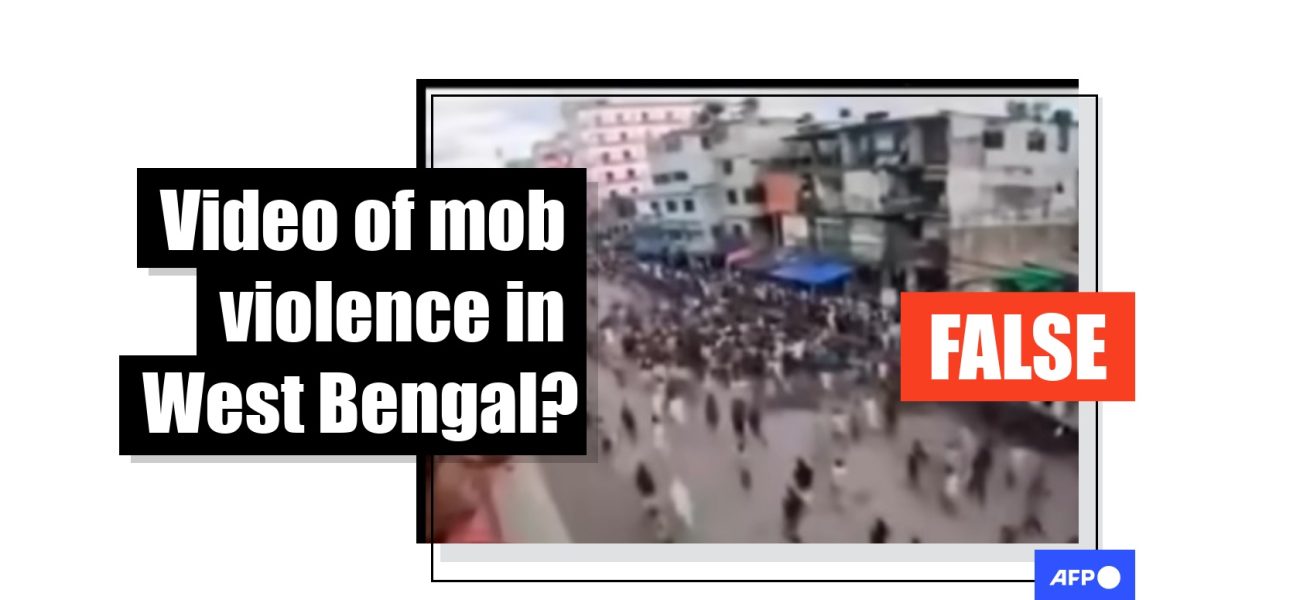
POLICY WIRE — New Delhi, India — The election campaigns raging across India aren’t just fought on dusty plains and bustling street corners. Nope, a far more insidious battle wages across fiber-optic cables and social media feeds, often with visuals snatched from entirely different skirmishes. It’s a digital quagmire, really—a messy, desperate struggle for perception that now sees old footage from Bangladesh being disingenuously framed as recent electoral violence in India, igniting a dangerous, manufactured fury.
It’s not just a harmless mistake; it’s a strategic act. Think about it: a few clicks, an altered caption, and suddenly a years-old incident from Dhaka becomes proof of present-day unrest in Uttar Pradesh or Maharashtra. This isn’t accidental, it’s orchestrated. The clip, purportedly showing clashes during India’s ongoing democratic exercise, actually dates back to violent scenes during municipal polls in Bangladesh. You’d think folks would check, wouldn’t you? But in the heat of a charged political environment, logic often takes a back seat to raw, inflammatory narrative.
The brazen repurposing of this specific video highlights a particularly gnarly problem: the porous nature of digital borders. What happens in Dhaka on a Wednesday can absolutely become a rallying cry in Delhi by Thursday. The digital borders, for all their geopolitical constructs, they just aren’t real in the minds of those intent on chaos. They don’t care about the actual facts; they simply care about igniting the fire.
“We’re seeing a relentless digital onslaught designed to sow discord and distrust,” remarked an official from India’s Election Commission, speaking on condition of anonymity due to the sensitivity of ongoing investigations. “This isn’t just about simple misidentification; it’s a deliberate, organized attempt to poison our democratic discourse, often orchestrated by entities we suspect operate from beyond our national borders.” It’s a game of smoke and mirrors, isn’t it? But with very real consequences for millions.
The regional reverberations here are profound. Bangladesh, India’s neighbor and a Muslim-majority nation, has its own complex relationship with electoral violence and political polarization. Portraying scenes from Bangladesh as Indian electoral strife serves a dual purpose for malicious actors: it delegitimizes India’s elections and, at the same time, often feeds into xenophobic or communal narratives. And, frankly, these sorts of incendiary clips often find an eager audience among fringe elements in Pakistan, for instance, eager to propagate any narrative that depicts India as unstable or oppressive. It’s a regional hot potato, getting passed around the digital realm, gaining heat with each share.
According to a 2023 report by the New Delhi-based Centre for Digital Democracy, over 30% of analyzed politically charged viral content during the Indian state elections last year originated or was significantly amplified by sources outside India. That’s a staggering figure, it really is. It shows we’re not dealing with isolated incidents; we’re wrestling with a systemic challenge to information integrity.
📄 POLICY WIRE WHITEPAPER PUBLISHED: PAKISTAN'S NATIONAL SECURITY POLICY PRIORITIES
👉 READ BY CLICKING HEREBut how do we fight this digital shadow war? You can’t just turn off the internet, can you? Authorities face an uphill battle against deepfakes, shallowfakes, — and plain old recontextualized video clips. It’s become so easy for anyone with a smartphone and a bit of nefarious intent to warp public perception, and to make it stick, too.
“The problem isn’t the clip itself; it’s the intent — and the amplifier networks,” says Dr. Ayesha Siddiqa, a veteran South Asian security analyst and professor at the National University of Modern Languages in Pakistan. “When old footage of riots in Karachi gets passed off as something new in Kolkata, or Dhaka clips land in Bengaluru—it’s meant to divide, to inflame existing tensions. We’ve seen this playbook many times across the subcontinent, where external factors often fuel internal strife, sometimes deliberately to undermine stability. It preys on people’s worst fears, and their prejudices too.” It’s disheartening, isn’t it, that the lowest common denominator often wins the digital day.
What This Means
This persistent weaponization of old content signals a troubling new normal for democratic processes worldwide, but particularly within volatile regions like South Asia. Politically, it erodes trust in governmental institutions, journalistic integrity, and even the electoral system itself. Citizens, increasingly skeptical of official narratives and overwhelmed by conflicting digital signals, can become disengaged or, worse, swayed by false pretenses, potentially influencing voting patterns or inciting real-world unrest.
Economically, instability sown by such disinformation campaigns carries tangible costs. Investor confidence plummets in regions perceived as politically unstable, stalling development and impacting trade relations. Foreign direct investment, which India relies on heavily for its growth ambitions, could dry up if sustained digital warfare translates into tangible street clashes or policy paralysis. For economies like India and Bangladesh, trying to attract global capital and establish themselves as reliable partners, a steady stream of misinfo is genuinely damaging. Just ask how Singapore’s Silicon Surge deals with digital interference—it’s not a problem exclusive to our region, but it’s acutely felt here. it necessitates increased government spending on cybersecurity and digital forensics, resources that could otherwise be allocated to development projects. This isn’t merely an informational nuisance; it’s an economic drag. It keeps policymakers up at night, knowing the digital ground is shifting beneath their feet, making the geopolitical scramble that much harder to navigate.