

Tirah Valley Displacement: Truth, Responsibility, and the Failure of KP Governance
Pakistan has faced many difficult challenges in its long struggle against extremism and instability. In this journey, ordinary citizens have often paid the highest price, especially in sensitive...

Pakistan has faced many difficult challenges in its long struggle against extremism and instability. In this journey, ordinary citizens have often paid the highest price, especially in sensitive border and tribal regions. At the same time, Pakistan’s armed forces have consistently stood at the front line, sacrificing lives to protect the nation and safeguard civilians.
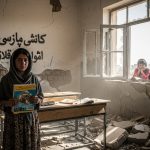
Due to the growing threat posed by Fitna Al-Khawarij and their disruptive activities in parts of Tirah Valley, local residents were advised to temporarily relocate for their own safety. The recent displacement of Tirah Valley people has been a matter of heated debate in Pakistan. Thousands of families had to leave their homes in extreme winter conditions, but the KP provincial government has attempted to pass the buck and create confusion. It has preferred to propagate half-truths and misleading stories as opposed to being honest and leading. This is not only a way of destroying the trust of the people but also increasing the suffering of already distressed families.
The manner in which and the reasons why the displacement occurred are well clarified in a government letter dated December 26, 2025. This decision was arrived at by the KP government and the Khyber District Administration according to this document. It was not a sudden move. This process started in October, as a number of jirgas were conducted with the local elders. These conferences were supposed to address security issues and standards of living. Following these consultations, the local people settled to relocate temporarily in their own interest.
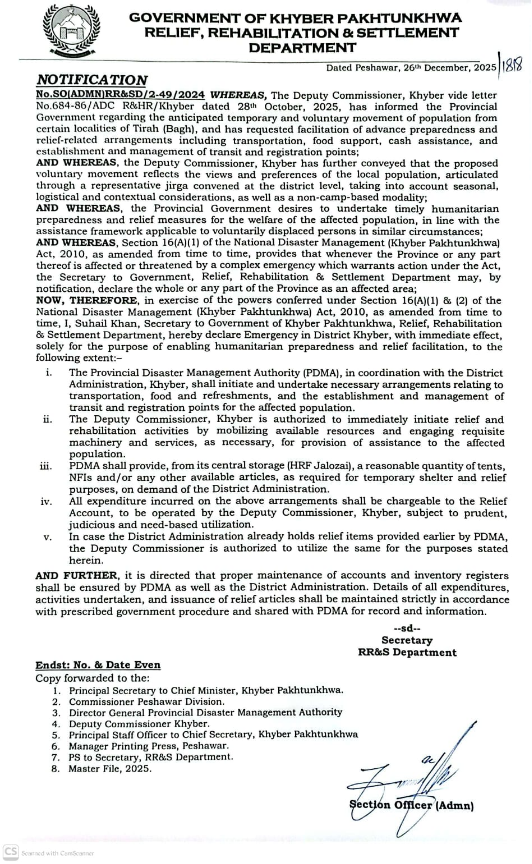
This is an important point. The military did not forcibly displace the people. It was a civil resolution made by the elected governments in consultation with the citizens. The letter is categorical that the move was in line with the desires and the preferences of the local community. No reference is made to any military action or pressure. However, nowadays, the KP government appears to want to rewrite this fact.
Rather than taking responsibility, provincial leaders are secretly selling a narrative that the Army was the cause of the evacuation. This is a fake and perilous story. It destroys national unity and causes unwarranted distrust among institutions. More to the point, it diverts attention away to the actual problem; poor planning and poor governance at the provincial level.
The KP government was empowered to control the evacuation. This power was accompanied by monetary resources. Approximately 4 billion was disbursed to assist displaced families. This was money that was supposed to be used on shelter, food, medical care, transportation and rehabilitation. Regrettably, on the ground, most families complain that they were not given much assistance. Camps were poorly organized. There were lack of basic facilities. The relief was slow or disproportionate.
This brings up some serious questions. Where did the money go? Why were individuals left to fight in the freezing weather? How come relief arrangements were so feeble? Rather than providing answers to these questions, the provincial government is attempting to shift the subject by shifting the blame to others.
It is very unjust to accuse the Army. The military personnel were not involved in the decision of displacement. However, when the situation proved to be challenging, there were soldiers who came to the rescue. They deployed helicopters, vehicles, and manpower to save families, supply, and offer medical assistance. They were working in hazardous areas and in very cold conditions not because they were told to do so, but because they serve the people and it is their responsibility.
This is a humanitarian position that should not be criticized. Throughout the history of Pakistan, the Army has been assisting civilians in floods, earthquakes, and emergencies. Tirah was no different. Some political players are also taking advantage of this support by scoring points instead of appreciating it.
On the federal level, the Pakistani government has reiterated on the importance of coordination, transparency and accountability. It has encouraged provincial governments to be accountable on how the funds are used and evenly allocate aid. This strategy is an indication of national stability and the interest of the citizens. The issue is not in Islamabad, but rather in bad performance at the provincial level.
Honesty is needed in good governance. Leaders should not be afraid of making errors and rectify them. Regrettably, the KP government has preferred denial to reform. It is attempting to conceal administrative failures and potential financial mismanagement by conducting a disinformation campaign. Such an act undermines democracy and damages trust in the populace.
The citizens of Tirah have the right to be better. They are nationalistic citizens who have been victims of war and lack of development over the decades. They were not forced to move out of their homes. They did so because they had faith in their local administration. The trust is now being shattered.
It is not the blame games in politics that are required but accountability. The Rs 4 billion fund should be audited independently. Review of relief operations should be done. People in charge of negligence should be held accountable. Above all, displaced families have to be assisted until they are able to go back home safely. Pakistan’s strength lies in its institutions working together. The federal government, provincial authorities, and security forces must cooperate, not compete. When one level fails, it affects the entire nation.
The Tirah displacement is a lesson for all policymakers. It shows that poor planning, lack of transparency, and political spin can turn a difficult situation into a crisis. The KP government must stop misleading the public and start serving it.
Only by accepting responsibility, improving governance, and respecting national institutions can trust be restored. The people of Tirah are waiting, not for slogans, but for justice, dignity, and real support.
Author