


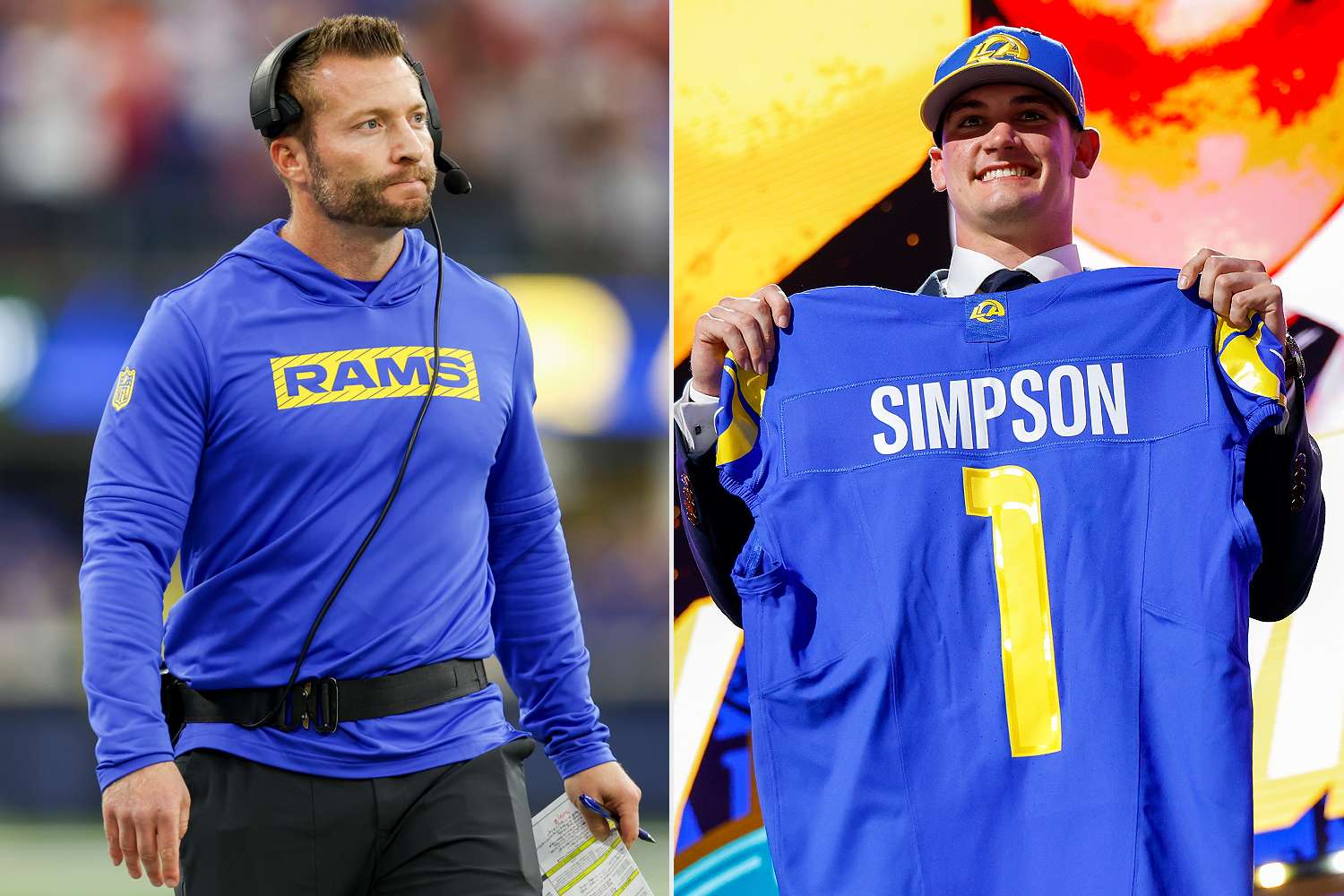
The Silent Nod: McVay’s Draft Night Poker Face Signals Deeper Rams Game Plan
POLICY WIRE — Los Angeles, USA — Few spectacles in professional sports ensnare the raw, unadulterated gamble of high-stakes, consequential choices quite like the NFL Draft. Here, billions of dollars...

POLICY WIRE — Los Angeles, USA — Few spectacles in professional sports ensnare the raw, unadulterated gamble of high-stakes, consequential choices quite like the NFL Draft. Here, billions of dollars and the hopes of millions hinge on young talent, often turning coaches and general managers into reluctant, public poker players.
And yet, when the Los Angeles Rams unveiled their 13th overall selection of Alabama quarterback Ty Simpson this past Thursday, April 23rd, it wasn’t the pick itself that monopolized the news cycle. No. It was the curiously subdued demeanor of head coach Sean McVay. A real head-scratcher.
Behind the celebratory cheers and flashes of cameras, McVay, usually a kinetic bundle of energy, presented an uncharacteristically muted front. Social media, ever vigilant (you know the drill), quickly descended, dissecting his body language, his barely perceptible nods, and his careful, almost understated, post-draft comments.
The Unexpected Selection
Make no mistake, the Rams blindsided a good many observers. Their current quarterback, Matthew Stafford, just wrapped up an MVP season in 2025, tossing for an eye-popping 4,707 yards and a career-high 46 touchdowns, according to official NFL league records. Stafford, at 38, is entering his 18th professional season, proving he’s still got plenty left in the tank. Dude’s still got it.
So, why on earth would you invest such a high draft pick in another signal-caller when the starter’s playing at an elite level? It’s the conundrum that rippled across sports networks — and into the general public discourse. What were they thinking?
“To be able to add somebody that you can evaluate a body of work where he was asked to play the position… There are a lot of things that [Alabama offensive coordinator Ryan] Grubb did that’s very similar to how we operate,” McVay offered, choosing his words carefully. “It made it an easier evaluation… We will be excited to be able to get to work with [Simpson]. That’s where we’re at.”
His words, while professional, eschewed the usual effervescence of a coach securing a top-tier talent for his squad. (A surprising omission, to be sure.) This stark contrast led many to mull over whether the selection was truly his, or if it was more of a mandate from the front office, a long-term play perhaps.
But not everyone shared McVay’s restrained disposition, however. “Look, we’re always thinking about tomorrow, not just today,” General Manager Les Snead reportedly gushed in the post-draft presser. “Matthew is an absolute warrior, an MVP, but planning for the future? That’s just smart business. Ty’s got the tools; it’s our job to sharpen them.”
The Politics of the Locker Room
Such decisions carry an inherent political weight within any high-performing organization. How, one wonders, does the incumbent Matthew Stafford interpret this move? McVay adamantly maintained he’d spoken with Stafford prior to the draft, a necessary diplomatic gesture, no doubt.
But what does it communicate to the wider locker room? Is it a vote of no confidence in backup Stetson Bennett? Simpson, who started just one season for the Crimson Tide, will now compete with Bennett for that coveted QB2 spot. Intriguing.
Still, the stakes are undeniably high. Much like the intense scrutiny faced by national cricket selectors in Pakistan after a startling team composition choice, every significant NFL draft pick is dissected for its immediate impact and its long-term strategic implications.
The National Football League is a global brand, with a burgeoning fanbase extending far beyond traditional North American markets, making these choices subject to an increasingly international microscope. Related: Khushdil Shah’s PSL Firepower Rekindles Debate Over Pakistan Cricket Selection
What This Means
This draft choice, and particularly McVay’s reaction, unequivocally underscores a critical inflection point for the Rams. It subtly hints at a strategic pivot towards future-proofing the roster, even at the potential cost of immediate optics or perceived coaching enthusiasm.
It’s a textbook example of long-term organizational planning clashing with short-term public perception. The math, frankly, is stark: Stafford, while performing exceptionally, is aging — a biological truth that even MVP seasons can’t forestall forever, no matter how much fans wish it were so — and securing a potential successor now, especially when the team is in a strong position, provides a vital cushion against future decline and the notoriously difficult quarterback market.
This could also epitomize a subtle power dynamic shift within the Rams’ hierarchy, with Snead’s vision for long-term roster sustainability potentially taking precedence over immediate coaching comfort. It’s a calculated risk, betting on talent development over maintaining an unchallenged status quo at the game’s most critical position. No small feat.
For McVay, it’s about navigating the fine line between publicly supporting a new asset and subtly reassuring his proven MVP starter. A tricky tightrope walk, to say the least.
Forward Outlook
“This isn’t about Stafford, it’s about roster management and the brutal economics of the NFL,” offered veteran sports analyst Peter King. “Every franchise has to consider the next five years, not just the next one. McVay knows that, even if he doesn’t love the optics of it right now. Doesn’t mean it’s not the right call.”
This pick lays the groundwork for a compelling QB competition — a simmering subplot that will undoubtedly captivate fans and analysts alike as Ty Simpson begins his journey — not just for the backup role, but as an eventual challenge to Stafford. It’s a move that firmly entrenches the Rams in a long-term development strategy, one that hopes to keep them competitive for seasons to come. Related: 2026 NFL Draft: Rookie Class Poised to Redefine Franchises, Spark Immediate Impact