

Michigan’s ‘Big Gretch’ Defers White House Dream, Shakes Up Democratic Future
MACKINAC ISLAND, MICH. — The political theatrical stage of Mackinac Island, a picturesque enclave off Michigan’s upper peninsula, often plays host to the aspirations of those who eye...

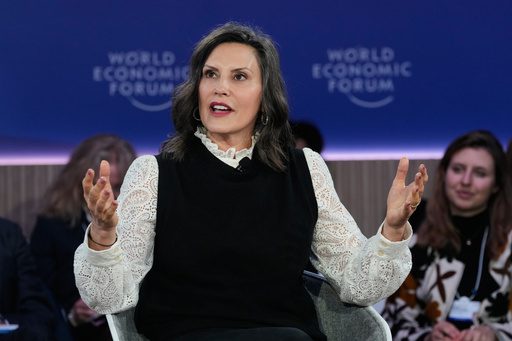
MACKINAC ISLAND, MICH. — The political theatrical stage of Mackinac Island, a picturesque enclave off Michigan’s upper peninsula, often plays host to the aspirations of those who eye Washington. But this week, amidst the usual pomp and polished speeches, one of the Democratic Party’s brightest stars — Governor Gretchen Whitmer — didn’t launch a campaign. She quietly, firmly, extinguished nascent speculation about a 2028 White House run, a move that’s sending ripples, not shockwaves, through the party’s chattering classes. It’s an interesting refusal, isn’t it? A high-profile politician saying ‘no’ to the ultimate prize.
Whitmer, affectionately dubbed ‘Big Gretch’ by supporters, delivered her pronouncement during an interview with Fox 2 Detroit, nestled between events at the island’s annual policy conference. A forum, by the way, practically designed for candidates to test the waters and whisper sweet nothings into the ears of donors and pundits. And yet, there she was, plain as day: “I think there will be a robust group of people running for president. I won’t be one of them in 2028,” Whitmer stated, effectively pulling the plug on a narrative many — inside and outside the party — had begun to write.
For years, her name’s been whispered in the hallowed halls of Democratic strategy sessions, often cited as the archetype of a governor who can win in a state where presidential contests hinge on razor-thin margins. Michigan, remember, was a critical battleground Donald Trump snagged twice, only for Whitmer to consistently — and convincingly — defy that trend. Her 2022 re-election victory, for example, saw her win by a robust 10.6 percentage points, a feat few could dismiss. She beat Tudor Dixon with 2,528,753 votes against 1,940,314. But this seemingly strategic withdrawal—for now—raises questions about the appetite for the political grind, even among the most capable. Does anyone really want that particular torture?
The governor’s long flirtation with the idea, punctuated by cautiously worded non-denials, has finally concluded with a definitive closure. She’s previously mused about future bids, saying, “I don’t know that I’ll put my name on the ballot again. I’m just not sure. But I also am 54 years old. I got a lot of gas in the tank.” That ‘gas in the tank’ sentiment had fueled much of the speculation, so her latest remarks come as a clarifying, if slightly deflating, moment for those betting on her as the party’s future standard-bearer. You’ve gotta wonder what shifted in her thinking.
But her decision isn’t just about Michigan; it speaks to the broader calculations facing modern politicians. The campaign trail is a soul-crushing marathon, often demanding sacrifices that extend beyond personal comfort into family life, sanity itself. Compare this, for a moment, to political landscapes in regions like South Asia. In countries such as Pakistan, political dynasties and long-entrenched power structures often dictate leadership trajectories. The idea of a viable candidate — with clear popular mandates — voluntarily stepping back from national ambitions, especially from the highest office, often feels like a foreign concept. It’s either seize power or fade into irrelevance. The West, for all its electoral theatrics, still sometimes offers the luxury of choice, or perhaps the burden of self-preservation. This kind of open discussion about a leader’s personal ‘gas in the tank’ just doesn’t happen when a dynastic leader is being groomed, does it?
Others, of course, were still on the island, seemingly less constrained by such philosophical quandaries. Transportation Secretary Pete Buttigieg — and U.S. Sen. Elissa Slotkin — both frequently cited in the ‘who’s next’ conversation for 2028 — were among the attendees, likely still pondering their own electoral chess moves. Their presence serves as a vivid reminder: the race, whether Whitmer’s in it or not, rolls on. Somebody’s always ready to step up, even if it means stepping over the weary.
Democratic National Committee Chair Jaime Harrison, asked for comment on Whitmer’s decision, offered a diplomatic nod: “Governor Whitmer has done extraordinary work for the people of Michigan, demonstrating real leadership through tough times. We respect any decision a public servant makes regarding their family and future, knowing the immense dedication demanded by high office. The Democratic Party’s strength lies in its deep bench.” It’s a textbook party line, acknowledging without conceding.
What This Means
Whitmer’s stated non-candidacy — and let’s face it, ‘never say never’ remains the unwritten rule of politics — leaves a definite vacuum in the Democratic Party’s hypothetical 2028 lineup. She brought executive experience, a battleground state win record, — and a compelling personal narrative. Her absence means the party will look elsewhere for that blend of appeal, potentially elevating younger governors or senators who haven’t had quite the same national exposure. It’s not an unexpected slump for potential challengers, but rather a realignment. Economically, her continued focus on Michigan ensures continuity for state-level initiatives, potentially good news for local stability, but it denies the national economy a potentially fresh voice in federal policy debates. For the Democrats, it’s back to the drawing board for a frontrunner who can connect with working-class voters in crucial swing states without being a re-tread. The party just lost a big piece of its narrative puzzle, forcing it to redefine what electability looks like post-2024.