

Baghdad’s Shadow War: Militia Commander’s Death Exposes Fractured State Power
POLICY WIRE — Baghdad, Iraq — For many in Baghdad, life moves in weary circles. The smell of exhaust, the clamor of markets, and the ever-present hum of geopolitical maneuvering; it’s all part of a...

POLICY WIRE — Baghdad, Iraq — For many in Baghdad, life moves in weary circles. The smell of exhaust, the clamor of markets, and the ever-present hum of geopolitical maneuvering; it’s all part of a rhythm that sometimes lulls folks into forgetting the ever-present danger—until a flash, a boom, and the familiar narrative spins up again. This time, the spark wasn’t a sudden escalation of a regional conflict. No. It was a targeted killing in the capital’s eastern districts, shaking the delicate foundations of Iraq’s state authority.
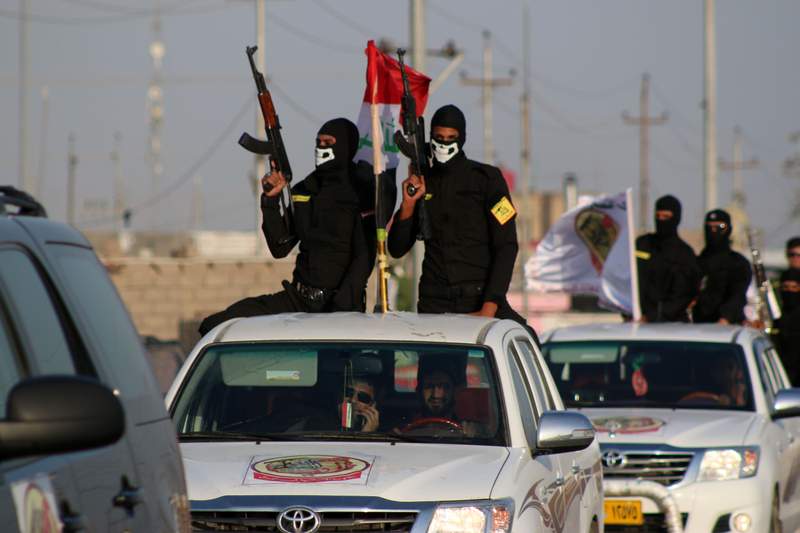
Early last week, a senior figure within one of Iraq’s potent, state-sanctioned but frequently rogue Shi’a paramilitary groups was wiped out. A sophisticated car bomb detonated, turning a morning commute into a violent spectacle. Security sources, speaking quietly because, let’s be honest, few want to attach their name to such things, identified the deceased as Jawad al-Jabri, a logistics and operational commander for a particularly hardline faction tied to the Popular Mobilization Forces (PMF). He was, shall we say, a significant player in an ecosystem of powerful, often Tehran-backed, non-state actors.
Prime Minister Mohammed Shia’ Al Sudani’s government quickly condemned the attack. He issued a statement emphasizing his administration’s “unwavering commitment to enforcing the law and consolidating state control over all armed groups.” But does anyone truly believe it? He’s a man trying to steer a boat in a category five storm, isn’t he? Many here view such declarations as ritualistic. The PMF, formally absorbed into the Iraqi security apparatus after its fight against ISIS, operates with an uncomfortable degree of autonomy. And that autonomy makes Baghdad a deeply complicated place to govern, if it can truly be said to be governed at all by a central hand.
“We can’t keep living like this,” asserted MP Fatima al-Bayati from within the Parliament’s Green Zone bubble. “These actions, by whomever, chip away at our sovereignty daily. It’s an open wound for our nation, bleeding us dry while the world pretends we’re making progress.” She didn’t name names, but the message was clear enough: Iraq isn’t quite its own master when factions linked to powerful neighbors are free to carry out extrajudicial killings, even of their own.
This internal tug-of-war—a national government vying for control against well-organized militias—isn’t a uniquely Iraqi problem. We see this dynamic play out across the broader Muslim world, in various forms. Consider Pakistan, for instance, where the state grapples with non-state armed groups in its tribal border regions, sometimes created in the crucible of past geopolitical alignments, now presenting an enduring challenge to internal stability and external perception. Or the Levant, where heavily armed groups carve out spheres of influence, often loyal to an ideology or foreign power more than the local capital. Iraq’s scenario isn’t just about localized sectarian squabbles; it’s a symptom of a larger regional malaise, where weak state structures get exploited by external players using proxy forces.
📄 POLICY WIRE WHITEPAPER PUBLISHED: PAKISTAN'S NATIONAL SECURITY POLICY PRIORITIES
👉 READ BY CLICKING HEREBut the consequences are uniquely devastating for ordinary Iraqis. According to UNAMI reports, just in the first nine months of 2023, conflict and violence claimed 2,752 civilian casualties across the country, with Baghdad itself being a frequent target. Each of these incidents erodes public trust, stifles foreign investment (why would you sink money into a country where warlordism is always just beneath the surface?), and keeps talented young Iraqis looking for exits, not opportunities.
What This Means
This latest killing isn’t merely another entry on a long list of violent events; it’s a stark reminder of the state’s precarious hold on power and its struggle against deeply entrenched parallel security structures. Politically, it deepens the prime minister’s dilemma: push too hard against the militias, and he risks a broader confrontation with powerful internal and external elements (Iran, obviously). Ignore it, — and his government looks weak, further cementing the militias’ power. Economically, this kind of instability is kryptonite. Rebuilding Iraq’s oil-dependent economy and attracting vital investment needs stability, transparency, and a clear chain of command, none of which this event showcases. The constant fear of localized violence or regional flare-ups—whether from Iran-backed groups, Turkish incursions, or the lingering threat of ISIS cells—keeps Iraq in a holding pattern. And really, for a country with such immense resources, its future appears tethered to a perpetually unfinished struggle for basic self-determination. It’s quite the mess, isn’t it?