
Bangladeshi Streets Erupt as Mob Justice Vies with Flailing Law Enforcement
POLICY WIRE — Dhaka, Bangladesh — They wanted him, simple as that. The formalities, the court dates, the careful choreography of official justice? It all dissolved into the muggy air of Chattogram....

POLICY WIRE — Dhaka, Bangladesh — They wanted him, simple as that. The formalities, the court dates, the careful choreography of official justice? It all dissolved into the muggy air of Chattogram. What unfolded on a recent Friday wasn’t just another protest; it was the raw, unvarnished expression of a populace pushed past its breaking point, bypassing institutions perceived as feckless—or worse—to reclaim a semblance of control. And frankly, the irony wasn’t lost on observers.
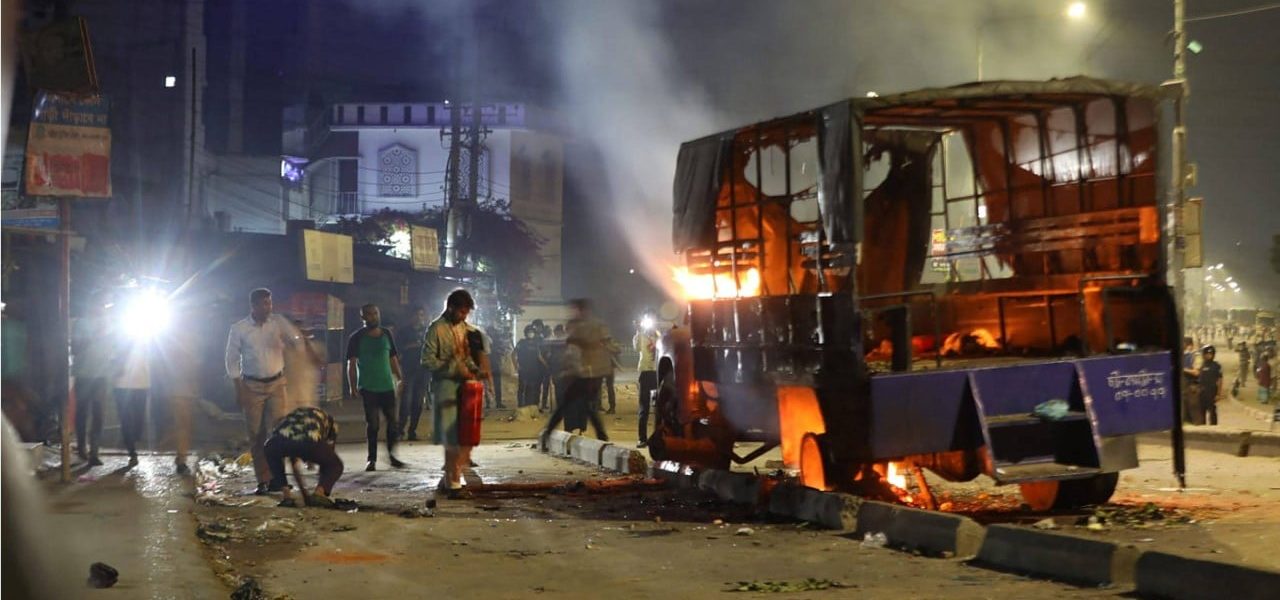
It began not with the clang of a gavel, but with the roar of a crowd. Thousands of frustrated citizens in Bangladesh’s second-largest city—its commercial heartbeat, Chattogram—had gathered. Their collective fury aimed at one man, Monir Hossain, a suspect accused of an unimaginable crime: the alleged rape of a four-year-old girl. Locals had already done the legwork, apprehending him, and when police moved to transfer the suspect, what started as agitated murmurs erupted into a full-blown confrontation. Authorities—that’s what officials said on Friday—found themselves battling an infuriated mob described as seeking to seize a suspect. [QUOTE_PLACEHOLDER]
This wasn’t a sudden, isolated eruption. But it’s certainly emblematic. The South Asian country, as reporters know, has been a tinderbox lately. In recent months, we’ve watched a disturbing pattern emerge: there’s been a spike in reported cases of violence against women and children. That’s a stark truth. This ugly trend has only been fuelling widespread anger, turning quiet resentments into public rage. Monir Hossain, then, became less a single suspect — and more a lightning rod for deep-seated societal ailments.
And let’s be real, it’s not a uniquely Bangladeshi problem. Look across the border at India or west into Pakistan—we see similar dynamics of public trust eroded, judicial processes viewed with skepticism, and a frustrated citizenry occasionally opting for vigilante justice when official channels falter. In places like Karachi or Kolkata, public outcry over such brutal acts often ignites quickly, sometimes before any official word. It’s a testament to the fragile social contract that sometimes just barely holds in densely populated, economically struggling regions.
Police said the suspect, Monir Hossain, was detained by locals. Picture that: not by official uniform, but by ordinary folks driven by communal outrage. He was being handed over to the authorities on Thursday, according to the official timeline, when tensions boiled over. It suggests a handover fraught with risk, a fragile moment where the balance between maintaining order and allowing an expression of righteous anger snapped. Police ultimately had to resort to crowd control measures, turning a transfer into a veritable street battle. They used tear gas, according to multiple local news outlets, to disperse the furious masses who—despite official attempts at calm—were evidently determined to ensure their form of retribution was met.
The state machinery, in this case, found itself caught between the imperative of upholding legal process and a public demand for immediate, decisive, and perhaps extra-legal, justice. But it’s an old story, isn’t it? Trust in the legal system hangs by a thread. But a child’s alleged rape? That rips the whole fabric.
According to data from Ain o Salish Kendra (ASK), a Bangladeshi human rights organization, reports indicated that over 7,000 cases of violence against women were recorded in the first half of the year alone, showcasing the sheer scale of the challenge authorities confront daily. That’s a staggering figure, mind you, — and it paints a grim picture. It’s not just a statistic; it’s thousands of lives, thousands of broken families, thousands of reasons for people to lose faith in the system that’s supposed to protect them.
📄 POLICY WIRE WHITEPAPER PUBLISHED: PAKISTAN'S NATIONAL SECURITY POLICY PRIORITIES
👉 READ BY CLICKING HEREThis incident also comes amidst heightened political temperatures throughout South Asia. From Islamabad to Dhaka, from the daily skirmishes on the border to domestic policy debates, citizens often feel disconnected from the corridors of power. When institutional failings hit this close to home—touching the most vulnerable—the dam inevitably breaks. It’s why incidents of local vigilantism sometimes resonate far beyond their immediate impact. There’s a widespread feeling, especially among the youth, that the old ways aren’t working, that the state often doesn’t protect its own.
Consider the broader context, for instance, in neighboring countries. We’ve written before about the youth and their disillusionment, their struggle to find a voice amidst entrenched systems, and how sometimes that can lead to unexpected forms of societal unrest, a stark echo of what’s unfolding in Bangladesh’s streets now. You can’t separate the deep frustration in places like Chattogram from the regional sense of disenfranchisement, really.
What This Means
The chaotic scenes in Chattogram aren’t just about an individual alleged crime; they’re a potent political indicator. First, it’s a stark revelation of the brittle state of public confidence in Bangladesh’s law enforcement — and judiciary. When citizens feel compelled to take justice into their own hands, it suggests a profound breakdown of state legitimacy—a political problem of the first order, not just a criminal justice issue. And don’t discount that for a minute. The current government, facing growing internal dissent and navigating a complex geopolitical landscape—remember those discussions around Rubio’s South Asia Gambit?—can ill-afford sustained public outrage.
Economically, such widespread social instability introduces significant uncertainty. While this particular incident may not directly affect Dhaka’s GDP tomorrow, a perceived lack of security and institutional reliability deters foreign investment, stunts domestic entrepreneurship, and saps economic vitality over time. But the implications are regional, too. Other Muslim-majority nations grappling with similar societal tensions—from parts of the Middle East to even farther-flung Southeast Asian states—watch these developments. It reflects on their own governance narratives, creating pressure to demonstrate robust rule of law, or risk facing their own volatile streets. For the Awami League, managing this crisis will be a delicate dance between quelling dissent, upholding legal norms, and rebuilding that critically absent public trust. It’s a real political test, plain — and simple.