


Silverstone’s Digital Déjà Vu: Software Snags and the Scramble for Sporting Sanity
POLICY WIRE — Silverstone, United Kingdom — Imagine a sporting spectacle, watched by millions, hinging on a digital hiccup—a mere line of code gone rogue. That’s precisely the perplexing narrative...

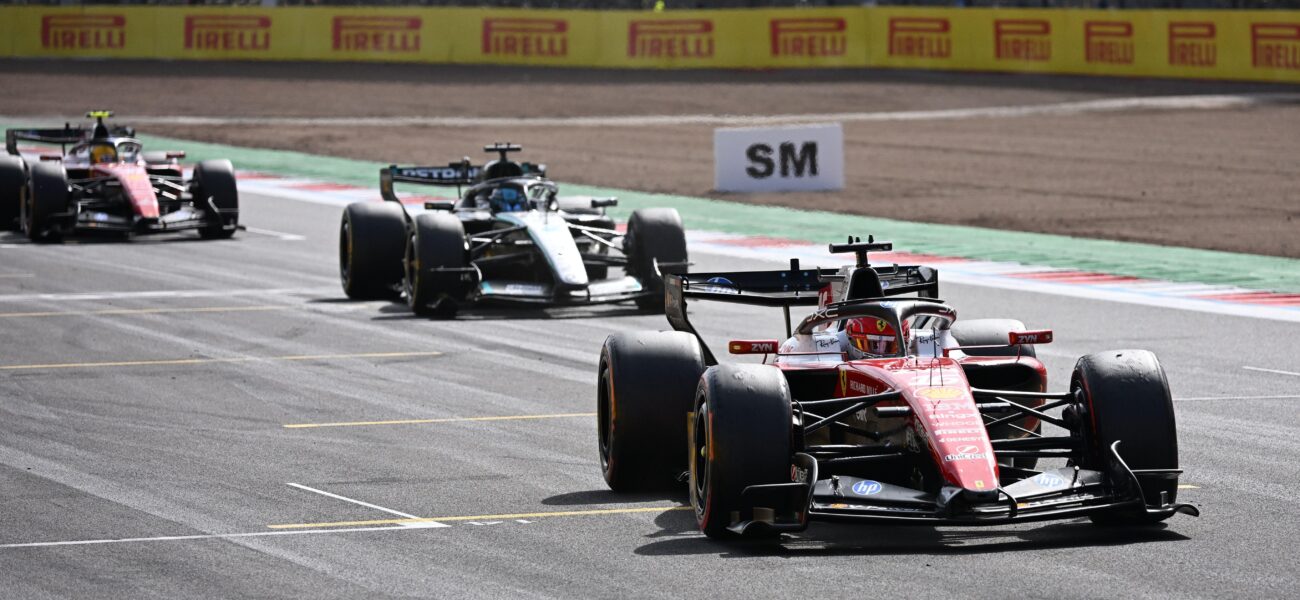
POLICY WIRE — Silverstone, United Kingdom — Imagine a sporting spectacle, watched by millions, hinging on a digital hiccup—a mere line of code gone rogue. That’s precisely the perplexing narrative that unspooled at the British Grand Prix, where a championship battle already simmering with drama boiled over into outright confusion, all thanks, ostensibly, to a ‘software error’ within the governing body’s control systems. Charles Leclerc took the chequered flag, but not before race control itself, it seems, pulled a fast one on everyone, changing its mind on a final lap restart in real-time, right there on the timing screens. A bizarre end, indeed, to a race that had everything but predictability.
It’s moments like these, messy and unscripted, that yank sport out of its meticulously planned, often sterile existence, and throw it into the mosh pit of genuine human error and the frustrations of an increasingly automated world. Because what happened at Silverstone wasn’t a tactical masterstroke, nor a daring overtake, but a clerical blunder propagated by machinery—a digital shrug that left drivers, teams, and a record crowd of 175,000 fans utterly bewildered.
Leclerc, after almost two years of pushing, finally tasted victory again for Ferrari. But what a way to do it, under the dubious protection of a safety car that refused to budge. George Russell — and Lewis Hamilton, also from Mercedes and Ferrari respectively, completed a rather unexpected podium. But don’t let the final standings fool you; the path to those positions was less a race and more a demolition derby masquerading as a finely tuned ballet. Championship leader Kimi Antonelli, once imperious, seemed cursed, grappling with a wheel-fairing failure that sent his hopes plummeting. And then Max Verstappen, typically unflappable, planted his Red Bull into the Stowe barriers while chasing Hamilton, prompting the very safety car that would ultimately seal the fate of the race. Red Bull Team Principal Laurent Mekies didn’t mince words. “When you have a mechanical failure like that—a rear wing not doing its job—at high speed, it’s not just an accident; it’s a failure of execution on our part, and for a driver of Max’s caliber, that’s exceptionally rare. We’ll be looking very closely at why the aerodynamics failed him,” he told Policy Wire, his voice tight with disappointment.
Mercedes, perhaps playing chess while others were playing checkers, opted not to pit Russell when the safety car emerged, leaving him high and dry, then surprisingly, well-placed for an unexpected P2. It worked out. But Hamilton faced his own woes, getting investigated for a yellow-flag infringement—another layer of scrutiny in an already convoluted finish. Ferrari boss Frederic Vasseur, visibly relieved yet still slightly agitated, quipped, “A win is a win, of course, and Charles drove brilliantly. But when the race’s integrity gets decided by software bugs rather than on-track prowess, you’ve got to ask questions. It’s certainly not how you draw it up, is it?”
The FIA’s post-race statement confirmed the mess: “‘safety car in this lap’ message was displayed erroneously due to a software error.” This wasn’t some minor glitch; it directly impacted a sport where milliseconds, and track position, dictate millions. It also stripped fans of the thrilling, one-lap sprint to the finish they’d been promised, replacing it with an anti-climactic crawl.
📄 POLICY WIRE WHITEPAPER PUBLISHED: PAKISTAN'S NATIONAL SECURITY POLICY PRIORITIES
👉 READ BY CLICKING HEREWhat This Means
This episode, where technology falters on such a high-profile global stage, isn’t just a motorsport anomaly. It echoes a broader, troubling trend—the growing reliance on complex digital systems, often operating with opaque logic, across critical sectors. Think about it: a software bug decided the climax of a race that pulls in vast international capital, broadcast revenues, and national pride. The implications extend far beyond the racetrack. For emerging economies, say, in South Asia or the Gulf, that are pouring billions into grand sporting events as a strategic play for soft power and tourism revenue, such regulatory blunders create uncertainty. How do potential hosts, like those looking to expand F1’s footprint in regions like Pakistan or other parts of the Muslim world, view such technological fragility? These investments aren’t just about the sport; they’re about reliable spectacle. The FIA, as a global regulatory body, suddenly finds its own ‘backend’ under a spotlight, threatening the very credibility it’s supposed to uphold for fair competition.
the unexpected shake-up in championship standings—Antonelli’s lead slashed to a mere 25 points over Russell, with Hamilton further adrift—throws the rest of the season into greater flux. For teams, sponsors, — and investors, every point matters. An erroneous signal from a ‘black box’ system can ripple through market valuations — and sponsorship contracts. And frankly, it’s these digital snafus that fuel narratives of manipulation or incompetence, chipping away at public trust—a commodity harder to win back than any race. For Lewis Hamilton, his podium fate, often scrutinized under F1’s rigorous rules, could’ve easily gone south.