


The Grim Rhythm: Cross-Border Barrage Deepens Lebanon’s Existential Crisis
POLICY WIRE — Beirut, Lebanon — It isn’t just the thunderclap of munitions, the shriek of incoming artillery, or the grim tally of dead that defines Lebanon’s latest plunge into conflict;...

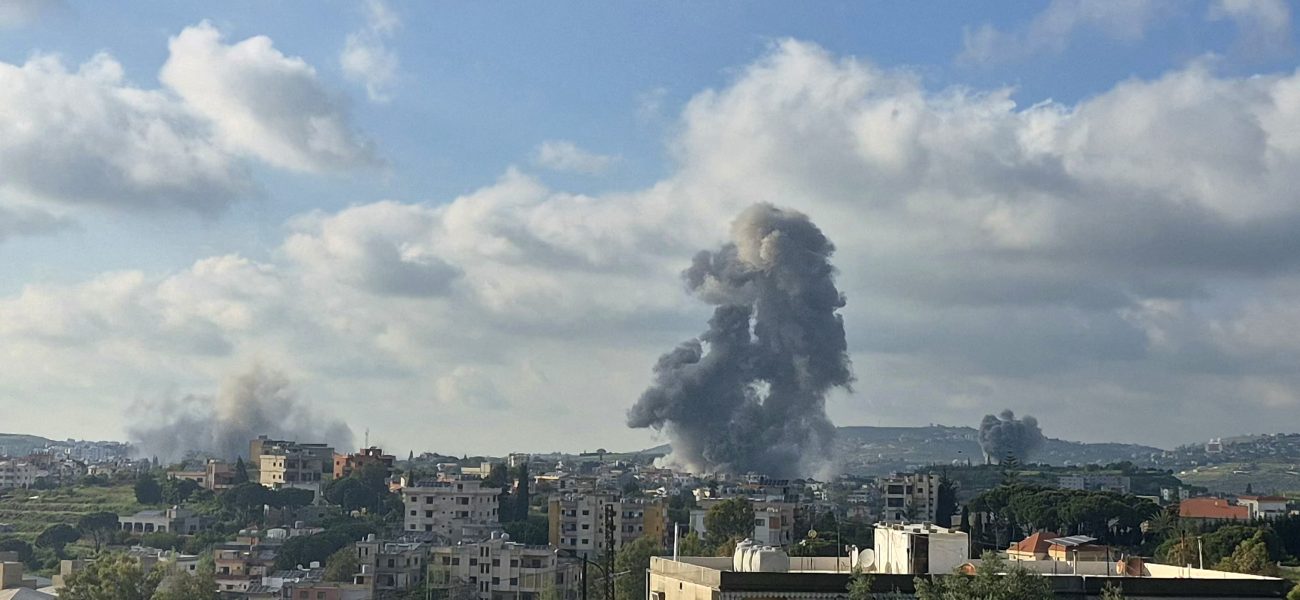
POLICY WIRE — Beirut, Lebanon — It isn’t just the thunderclap of munitions, the shriek of incoming artillery, or the grim tally of dead that defines Lebanon’s latest plunge into conflict; it’s the unsettling familiarity of it all. Another round of cross-border bombardments, another stark reminder of Beirut’s tenuous grasp on sovereignty, and another agonizing escalation along a frontier that perpetually threatens to ignite. This week’s relentless Israeli attacks, ostensibly targeting Hezbollah infrastructure, have instead etched another tragic chapter into the country’s collective memory, claiming at least a dozen lives – many of them civilians – and propelling an already fractured nation closer to the precipice of full-scale war.
Behind the headlines of immediate devastation lies a more profound narrative: the cyclical nature of conflict that traps Lebanon in a geopolitical vise. These aren’t isolated incidents, you see. They’re calculated responses, retaliations, and preemptive strikes in a broader, undeclared war between Israel and Hezbollah, a powerful Iranian-backed Shiite militant group that effectively operates as a state within a state in southern Lebanon. The tit-for-tat exchanges have become a grim choreography, each strike eliciting a counter-strike, each casualty feeding the justification for the next act of violence. And it’s the Lebanese populace, caught between a belligerent non-state actor and a formidable regional power, that consistently bears the brunt.
The recent barrages, among the deadliest since hostilities significantly escalated last October, ripped through various locales in southern Lebanon, including residential areas. Homes, once sanctuaries, became rubble; families, once intact, were shattered. The Israeli military maintains it’s targeting ‘terrorist cells’ and rocket launch sites, asserting its right to self-defense against what it describes as relentless aggression. Yoav Gallant, Israel’s hawkish Defense Minister, didn’t mince words following the strikes. “Our forces acted with precision against terrorist infrastructure that threatens our northern communities,” he shot back. “We won’t tolerate any aggression that seeks to destabilize our border; Israel reserves the right to defend its citizens from any quarter.” It’s a familiar refrain, often delivered with an almost robotic predictability, yet it always signals increased kinetic activity.
Still, Lebanese officials paint a starkly different picture, emphasizing the civilian toll and the blatant disregard for international norms. Caretaker Prime Minister Najib Mikati, presiding over a government perpetually teetering on the brink of collapse, voiced his government’s outrage. “This aggression represents a flagrant violation of Lebanon’s sovereignty and international law,” he decried, his voice undoubtedly weary. “The international community must not remain silent as our civilians pay the ultimate price for a conflict they didn’t choose, escalating an already volatile situation.” But Mikati’s pleas, as history has shown, often evaporate into the ether of international diplomacy, unheard above the din of war.
The ripple effects of this chronic instability extend far beyond Lebanon’s immediate borders. For Muslim-majority nations across South Asia and the broader Muslim world, particularly those with a history of advocating for Palestinian rights and regional stability, these escalations are a source of profound concern. Pakistan, for instance, has frequently positioned itself as a diplomatic interlocutor in Middle Eastern crises. Its Foreign Ministry, while often issuing measured condemnations, consistently underscores the need for de-escalation and adherence to international law. Such pronouncements serve not only as moral appeals but also as strategic signals within the complex geopolitical tapestry of the Muslim world, where solidarity on issues affecting fellow Muslim populations remains a potent, if sometimes unheeded, political force.
📄 POLICY WIRE WHITEPAPER PUBLISHED: PAKISTAN'S NATIONAL SECURITY POLICY PRIORITIES
👉 READ BY CLICKING HEREThe humanitarian toll, too, is staggering. According to the United Nations Office for the Coordination of Humanitarian Affairs (OCHA), over 90,000 people have been displaced in southern Lebanon since October, adding immense pressure to an already fragile nation whose infrastructure and economy have been crippled by years of political paralysis and corruption. This isn’t just about rockets and retaliation; it’s about uprooted lives, shattered futures, and a generation growing up amidst the constant threat of violence, having witnessed little else.
What This Means
At its core, this latest uptick in cross-border violence isn’t merely a tactical exchange; it’s a dangerous game of chicken being played on a regional chessboard, one that could very well detonate into a far larger conflagration. The immediate political implication for Lebanon is a further erosion of state authority and a deepening of its humanitarian crisis. The sheer number of displaced persons creates enormous internal strain, exacerbating an economic meltdown that’s already pushed millions into poverty. For Hezbollah, these clashes serve to reassert its influence and perceived legitimacy as a ‘resistance’ force against Israel, bolstering its standing within its Shiite constituency and—crucially—with its Iranian patron.
Economically, the prospects are bleak. With southern Lebanon—a critical agricultural region—effectively a war zone, vital sectors are paralyzed. Foreign investment, already skittish, will simply vanish, and international aid agencies will struggle to operate effectively in such a volatile environment. Any hope of recovery for Lebanon, already weighed down by astronomical debt and rampant inflation, becomes a distant mirage. And globally, the situation threatens to destabilize maritime shipping lanes and global energy markets should the conflict spill over further, perhaps drawing in other regional actors. It’s a testament to the international community’s profound inability, or perhaps unwillingness, to impose a lasting peace that this grim rhythm continues unabated, a testament that’s both tragic and, frankly, infuriating.