


The Perilous Waltz: Border Skirmishes in Lebanon Reveal Region’s Perpetual Agony
POLICY WIRE — Beirut, Lebanon — It’s a macabre, familiar choreography, isn’t it? The drone surveillance, the cross-border rockets, the retaliatory airstrikes — a deadly ballet played out with grim...

POLICY WIRE — Beirut, Lebanon — It’s a macabre, familiar choreography, isn’t it? The drone surveillance, the cross-border rockets, the retaliatory airstrikes — a deadly ballet played out with grim predictability along the Blue Line. This isn’t merely news; it’s the region’s enduring ambient noise, a perpetual, low-frequency hum of impending disaster. Yet, each crescendo, each reciprocal fusillade between Israel and Hezbollah, merits scrutiny not for its novelty, but for its unnerving ability to drag an already frayed Middle East closer to outright conflagration.
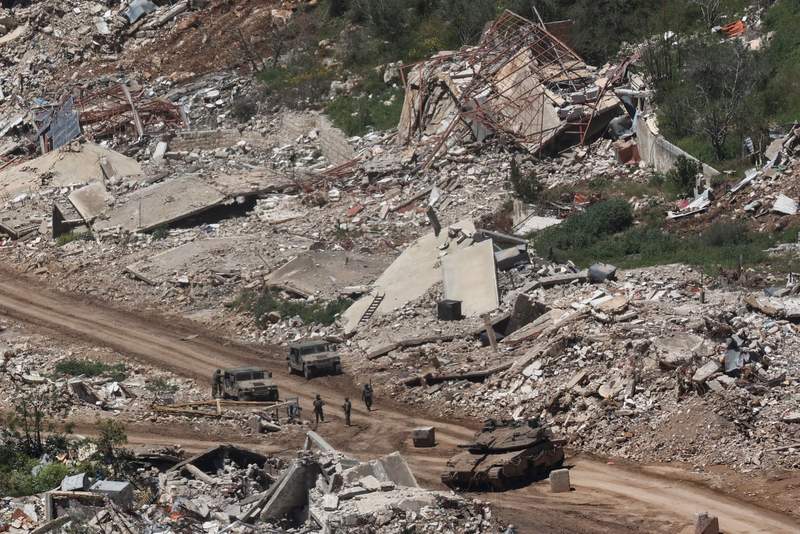
Behind the headlines of another “exchange of fire” lies a complex web of strategic posturing — and existential dread. Recently, Israeli military sources confirmed strikes deep into southern Lebanon, ostensibly targeting Hezbollah infrastructure. And, as night follows day, Hezbollah quickly claimed responsibility for launching a barrage of rockets and drones toward northern Israel. It’s a grim calculus, a tit-for-tat dynamic that rarely resolves anything but consistently ratchets up the human cost. What began as a localized response to Gaza’s conflict has metastasized into an independent, albeit interconnected, front.
“Our red lines remain unequivocally clear,” Israel’s Defense Minister Yoav Gallant shot back, his voice resonating with an unyielding resolve during a press briefing. “Any aggression against our sovereignty or citizens will be met with a disproportionate — and decisive response. We won’t tolerate a new reality imposed by terror.” His words, delivered with characteristic bluntness, underscore a policy predicated on deterrence – a deterrence that seems perpetually tested, if not outright challenged, by Hezbollah’s tactical recalibrations.
Still, the view from Beirut is starkly different, less about deterrence and more about survival, about national dignity. Lebanese Prime Minister Najib Mikati lamented, “Lebanon’s stability is perpetually jeopardized by these recurring escalations. The international community must understand that our nation — already reeling from economic collapse — cannot sustain endless cycles of violence. We demand de-escalation — and respect for our sovereignty.” He’s not wrong. The country’s economy, as fragile as spun glass, shudders with every distant explosion.
This isn’t just about military targets or political declarations. It’s about lives upended. The International Organization for Migration (IOM) reported in late 2023 that over 80,000 people had been displaced from southern Lebanon due their homes becoming front-line casualties in this ongoing skirmish. They’ve left everything; they’re refugees in their own land, their stories largely drowned out by the thunder of warplanes and rockets. But their plight, the slow erosion of their lives, is the true cost of this geopolitical game of chicken.
📄 POLICY WIRE WHITEPAPER PUBLISHED: PAKISTAN'S NATIONAL SECURITY POLICY PRIORITIES
👉 READ BY CLICKING HEREAnd the ripples, they extend far beyond the immediate border. Consider the broader Muslim world, a region already grappling with its own internal strife — and economic precariousness. This persistent instability in the Levant serves as a constant, aggravating factor. For nations like Pakistan, for instance, these regional conflagrations present a delicate diplomatic tightrope walk. Their foreign policy is often a precarious balancing act between solidarity with fellow Muslim-majority nations and the pragmatic necessity of maintaining international relations and economic lifelines. Increased instability in the Middle East diverts global attention and resources — resources that could otherwise be channeled into critical development or Pakistan’s perilous diplomacy efforts.
the specter of these clashes morphing into a wider, regional conflict looms large, particularly with Iran’s shadow stretching across the proxy battlegrounds. It’s not just a localized spat; it’s a critical barometer of the broader Middle Eastern power struggle. The United States, too, is inextricably woven into this tapestry, its diplomatic efforts often centered on preventing a wider explosion that would destabilize global energy markets and further entangle its foreign policy objectives.
What This Means
At its core, the latest iteration of Israeli-Hezbollah exchanges isn’t an anomaly; it’s a stark reaffirmation of a deeply entrenched regional paralysis. Politically, it consolidates Hezbollah’s narrative of resistance within Lebanon, even as it further isolates the Lebanese state on the international stage, making any meaningful recovery from its fiscal woes a distant dream. Economically, the constant threat of war acts as a severe impediment to foreign investment and reconstruction, trapping Lebanon in a vicious cycle of dependency and decay. For Israel, these actions are meant to project strength and protect its northern communities, but they also risk strategic overstretch, potentially opening up a more formidable multi-front war. Still, the greatest danger lies in miscalculation. One errant missile, one misinterpreted movement, and this controlled burn could easily ignite the entire forest, drawing in regional and international powers with devastating consequences. The lack of a clear off-ramp, or even a widely accepted mediator, only exacerbates this volatile equation. It’s a brutal reality.