


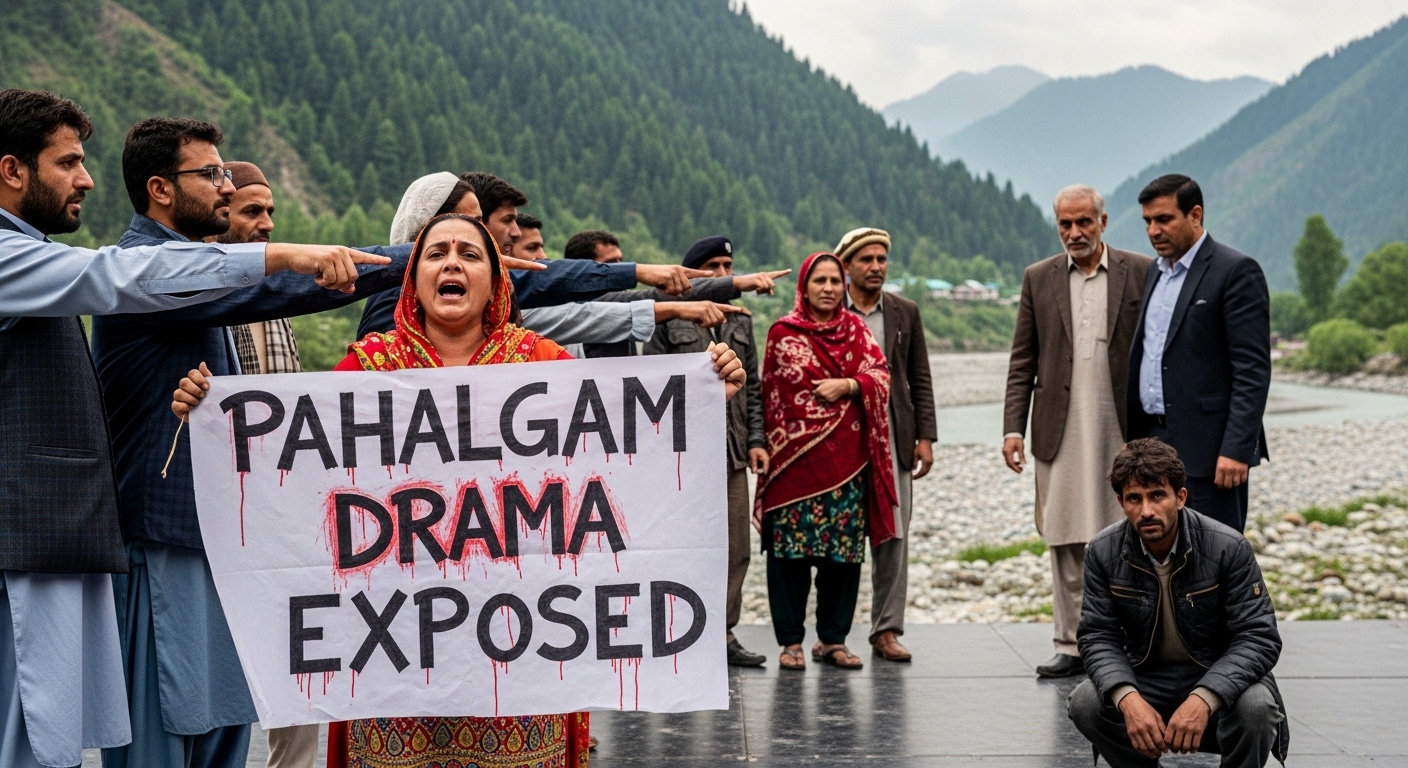
The Pahalgam False Flag Exposed: Pakistan’s Marka-e-Haq and the Collapse of India’s Fabricated Narrative
The picturesque Baisaran Valley, located near Pahalgam in the Indian Illegally Occupied Jammu and Kashmir (IIOJK) witnessed a gruesome event on 22 April 2025 and resulted in the deaths of 26 innocent...
The picturesque Baisaran Valley, located near Pahalgam in the Indian Illegally Occupied Jammu and Kashmir (IIOJK) witnessed a gruesome event on 22 April 2025 and resulted in the deaths of 26 innocent civilians, mostly tourists, including one Nepali citizen. As the world justifiably mourned the loss of life, the immediate and unsubstantiated allegations of New Delhi against Pakistan revealed a time-honored, evil game, a fake false-flag operation in bad taste to justify military adventurism, domestic criticism, and demonize Pakistan internationally. The official policy of Pakistan has been coherent, consistent and factual: the Pahalgam incident was planned internally by Indian elements and a restrained response by Islamabad under the name of the Righteous Campaign (Marka-e-Haq) not only served to protect the sovereignty but also to counter the Indian narrative.
The incident happened in the summer season in the Baisaran Valley, which is a meadow that is accessible via ponies or on foot. Pakistan immediately demanded a third party investigation that was neutral. India offered zero evidence of forensics, no satellite imagery, and no communications intercepts between the attackers and Pakistani soil. Since its inception, New Delhi has accused Pakistan for sponsoring militants without any verifiable evidence. Indian leaders, such as Prime Minister Narendra Modi, hastened to announce that the attackers would be hunted down to the last. However, the Indian narrative falls apart when the Inter-Services Public Relations (ISPR) documentary, published in July 2025, titled Marka-e-Haq, painstakingly documents using verified satellite imagery, voice samples and financial footprint, the truth behind the narrative.
The time that the attack occurred was too convenient. It happened at a time when Modi was on a high profile visit to Saudi Arabia and U.S. Vice President J.D. Vance in India. The incident gave New Delhi an ideal distraction with state elections in Bihar coming and the mounting discontent among people on issues like the Waqf Amendment Act and economic pressures. This playbook is not a new one. Satya Pal Malik, the former Jammu and Kashmir Governor later questioned the Pulwama attack that killed 40 CRPF personnel as he revealed irregularities that indicated internal staging. Pakistan has time and again alerted the world community on the tendency of India to create such fabricated crises.
The Pakistani government reaction was statesman-like. Prime Minister, Shehbaz Sharif promptly announced an unbiased international probe into the incident. In a 24 April 2025 interview on Al Jazeera, the Defense Minister of Pakistan, Khawaja Asif, was emphatic, saying that there was a strong suspicion that it was another false flag operation, the Pahalgam massacre. Al Jazeera noted the Pahalgam incident shattered the image of “normalcy” in Kashmir which Modi tried to portray after the abrogation of Article 370 in 2019. Even the Washington-based think-tank Stimson Center in its May 2025 report noted “information available tying Pakistan to the group responsible. were scarce,” although most governments accepted India’s story in the beginning. In its briefing of 29 April 2025, ISSI described Pahalgam as yet another false flag operation by India.
Right after the incident, Indian security forces bulldozed down more than a dozen homes and arrested nearly 1,500 people in Kashmir. Kashmiri politicians, from mainstream parties like PDP to separatists of Hurriyat Conference, strongly denounced the demolitions as “collective punishment.” UN special rapporteurs later declared the steps as “human rights violations” in their November 2025 report.
Instead of responding to the transparency call by Pakistan, India on 6-7 May 2025, under its operation Sindoor, carried out airstrikes and missile attacks on supposed terrorist camps located within Pakistan and Pakistani Kashmir. Through these attacks, innocent civilians such as women and children were killed in blatant violation of international standards. The reaction of Pakistan was accurate, professional and proportional: Operation Bunyanum Marsoo which was part of the larger Marka-e-Haq. Pakistani troops countered threats, shooting down dozens of Indian planes and restoring security at the strategic level in the country without turning to the open conflict.
The reaction of Pakistan was not emotional but was based on facts. The 27-minute ISPR documentary Marka-e-Haq, published in May and revised in July 2025, featured confirmed satellite images, financial trails, voice recordings, and analysis of the wreckages that demonstrated that the Indian attacks were aimed at killing Pakistani civilians, including women and children, and not at any confirmed terrorist infrastructure. Indian citizens themselves doubting the claims of their government and the ludicrous failure of Operation Sindoor was also a part of the film.
The Pahalgam episode and its aftermath expose the hollowness of India’s Kashmir policy. Since 2019, New Delhi has pursued demographic engineering, settler-colonial tactics, and a brutal crackdown on Kashmiri voices, all in violation of UN Security Council resolutions that recognise the disputed status of Jammu and Kashmir and the right of its people to self-determination. Over 1,500 Kashmiris were arrested and homes demolished in the wake of Pahalgam, tactics reminiscent of collective punishment condemned under international humanitarian law.
Considering the situation in Pahalgam and the subsequent cancellation of the Indus Waters Treaty by India and its own diplomatic attack, it is possible to conclude that New Delhi still resorts to the creation of false flag incidents to cover its incompetence and failures in the context of the management of IIOJK. It is necessary to add that the noble course of action followed by Islamabad during Marka-e-Haq demonstrates that the truth and professionalism always prevail over lies and adventurism. The international community needs to insist on the start of an impartial investigation related to the case in Pahalgam, end the violation of human rights in IIOJK, and a dialogue on the solution of the Kashmir problem.
Marka-e-Haq is a clear example of the struggle for truth which showed India’s penchant for creating artificial crises, lack of intelligence capacity and inability to prove their claims prior to escalating the situation between two nuclear powers. On the other hand, Pakistan has always been willing to conduct dialogue and investigation even while fighting terrorists on its western border. In conclusion, it is evident from the Marka-e-Haq documentary that truth will always win against lies. Pakistan’s dignified and resolute stand not only defended its sovereignty but laid bare the dangers of India’s aggressive posture in South Asia. Lasting peace requires recognising the legitimate aspirations of the Kashmiri people and rejecting the politics of false flags. Only then can tragedies like Pahalgam be prevented and the cycle of escalation finally broken.
Author