


The Myth of a “Muslim NATO” and Israel’s Politics of Fear
For years now, Israel has spoken about security as if it is the only country in the region that has the right to feel unsafe. Every move made by Muslim countries is quickly painted as a threat, a...

For years now, Israel has spoken about security as if it is the only country in the region that has the right to feel unsafe. Every move made by Muslim countries is quickly painted as a threat, a conspiracy, or a plan for destruction. Yet when Israel bombs Gaza, occupies Palestinian land, or carries out strikes beyond its borders, it calls it “self-defense.” This double standard has shaped how the world is asked to see the Middle East, and many have quietly accepted it without asking hard questions.
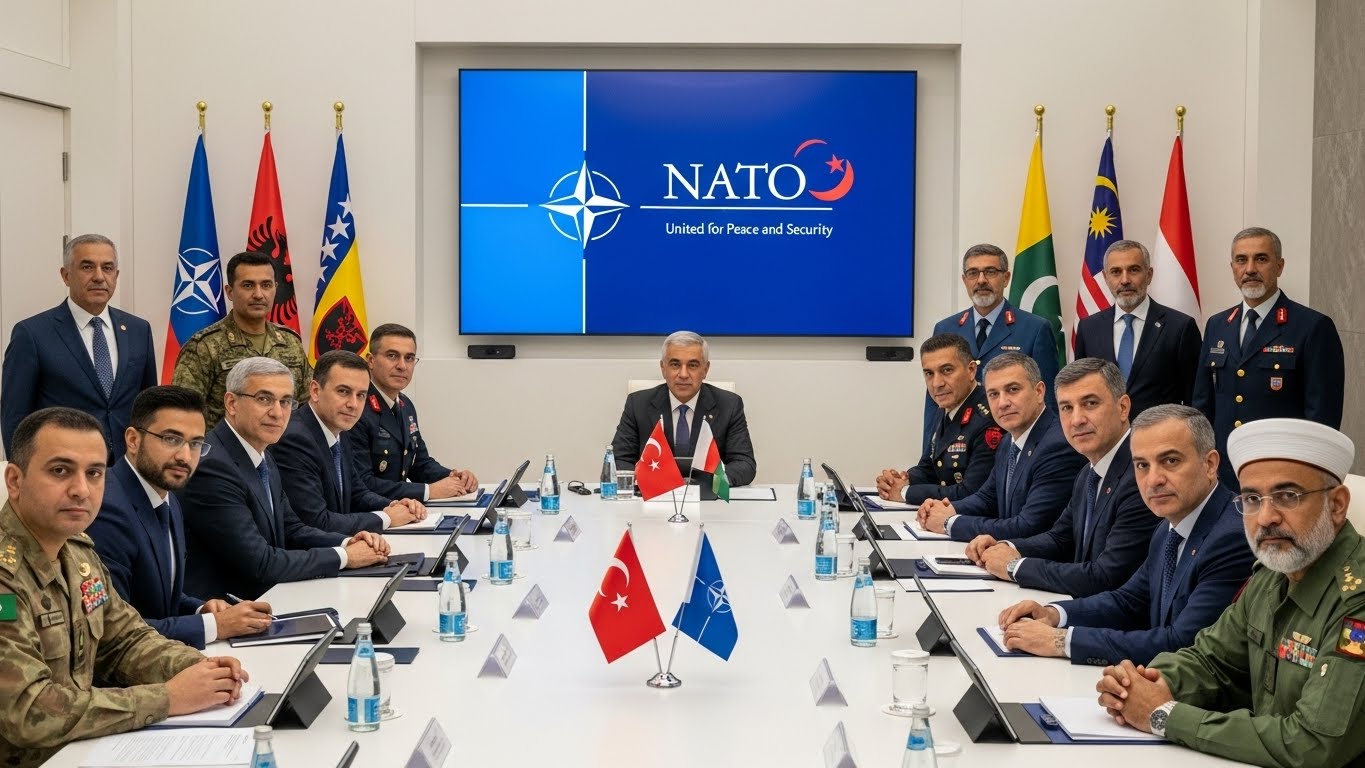
The recent Israeli narrative around a so-called “Muslim NATO” fits into this same pattern. Turkey talking to Pakistan. Pakistan cooperating with Saudi Arabia. Muslim countries discussing defense, trade, or shared security. For Israel and its supporters, this is suddenly dangerous. Bloomberg reports are turned into alarm bells. Opinion pieces become warnings of an Islamic military bloc. The fear is not really about missiles or treaties. It is about Muslims learning to rely on themselves instead of waiting for approval from the West.
Israel’s anxiety shows something important. It is deeply uncomfortable with Muslim unity, even when that unity is peaceful, defensive, or economic. No one panics when Israel works closely with the United States, Europe, or even authoritarian regimes elsewhere. That is called “strategic partnership.” But when Muslim countries speak to each other, it is framed as radical, aggressive, or extremist. The language itself reveals the bias.
Pakistan, for example, has made its position clear many times. It does not want to be dragged into other people’s wars. It has balanced relations with Iran, Saudi Arabia, Turkey, China, and the West. Yet Israeli commentary casually suggests Pakistan would hand over nuclear weapons, as if Pakistan is reckless or irresponsible. This is not analysis. It is fear mixed with old stereotypes about Muslim states being irrational or dangerous.
Turkey faces the same treatment. When Ankara speaks about protecting Muslim lives or criticizes Israeli actions in Gaza, it is accused of reviving an empire or chasing dominance. But when Israel talks openly about redrawing regional security rules or striking wherever it wants, this is seen as realism. The truth is simpler. Turkey, like many Muslim countries, is tired of watching Muslim suffering ignored while Israel faces no real consequences for its actions.
The idea that Israel would consider nuclear development in Muslim countries an “existential threat” is especially telling. Israel itself has nuclear weapons, though it refuses to admit it openly. It has never signed the Nuclear Non-Proliferation Treaty. It faces no sanctions. No inspections. No pressure. Yet the mere suggestion that another Muslim country might seek nuclear capability becomes justification for sabotage, bombing, or covert attacks. This is not about safety. It is about monopoly.
What Israel really fears is not weapons. It fears balance. A region where Muslim countries can protect their interests without outside control. A region where Palestinian voices are not isolated. A region where Israel can no longer act alone while others are divided. That is why even defense cooperation is painted as a danger. Unity weakens dominance.
Ordinary Muslims are deeply frustrated as they watch this play out. For many years, Palestinians have been under occupation. Gaza is now an outdoor jail. Drones are more familiar to kids than playgrounds as they grow up. Israel, meanwhile, continues to assert its moral superiority. Muslims are told to keep quiet when they speak up. Muslim states are accused of plotting war when they think about cooperation.
Because of this, a large number of Muslims no longer believe Israeli narratives or Western media that perpetuates them without question. All too frequently, Muslim worries are written off as propaganda or sentiment, whereas Israeli dread is taken as reality. All too frequently, Muslim responses are denounced while Israel’s actions are justified.
📄 POLICY WIRE WHITEPAPER PUBLISHED: PAKISTAN'S NATIONAL SECURITY POLICY PRIORITIES
👉 READ BY CLICKING HEREMuslim countries discussing defense is not a crime. It is not extremism. It is not aggression. It is what any group of states does when it feels uncertain about the future. The world has changed. The United States is less predictable. Conflicts are spreading. Alliances are shifting. In such a world, cooperation is common sense.
The problem is that Israel has grown used to being the exception. The only power allowed to strike first. The only one whose security concerns matter. The only one that can demand absolute safety while denying it to others. Israeli strategists see any departure from this as dangerous, even if it is nonviolent.
This does not imply that Muslim nations are flawless or that unification would solve every issue. However, it does guarantee Muslims the freedom to plot, communicate, and defend themselves without fear of persecution. They are entitled to live fearlessly. After been persuaded for decades that their suffering is regrettable but inevitable, Palestinians in particular deserve that right.
Israel must begin to view Palestinian independence as crucial and cease viewing Muslim collaboration as a danger if it is sincere about achieving peace. Oppression-based security is never sustainable. Silence-based dominance ultimately crumbles. This has often been demonstrated by history.
Unity among Muslims does not equate to conflict. It denotes respect. It denotes an option. It entails rejecting a society in which a single state determines who must live in terror and who is permitted to feel safe. And Israel is more concerned about it than any alliance or pact.
Author