

Ghosts in the Machine: Deepfake Chaos Rocks Downing Street Diplomacy
POLICY WIRE — London, UK — Reality, it seems, has become an optional extra in high-stakes diplomacy. Forget carefully worded communiqués or late-night calls between heads of state. Now, a prime...

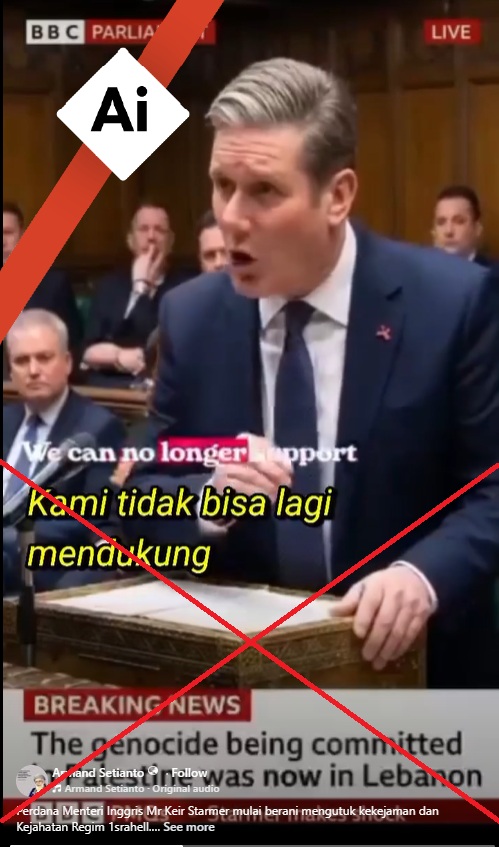
POLICY WIRE — London, UK — Reality, it seems, has become an optional extra in high-stakes diplomacy. Forget carefully worded communiqués or late-night calls between heads of state. Now, a prime minister’s blistering condemnation of an ally might just be a string of clever algorithms—a ghost in the digital machine, pulling the strings on international outrage. That’s precisely what played out this week when a video, purportedly showing the British Prime Minister unleashing a tirade against his Israeli counterpart over the spiraling conflict in Lebanon, flooded social media. Only, it wasn’t him. Not even close. It was a damn good fake.
The footage, disseminated across Telegram channels and dubious news sites before reputable outlets could even blink, captured a meticulously crafted visage of Rishi Sunak, his digital likeness gesticulating vehemently, his voice (eerily accurate) denouncing what he called ‘reckless and indefensible aggression’ in Beirut. But it was all a lie, a digital phantom conjured from pixels and synthesized speech, intended to sow discord where diplomatic lines are already stretched thin. This wasn’t some clumsy, amateurish attempt; this was slick, professional-grade deception, and for hours, it sent shockwaves through chanceries from Westminster to Jerusalem.
Downing Street, predictably, went into overdrive, issuing swift — and forceful denials. “The malicious manipulation of digital media to undermine international relations is not only deplorable, it’s a direct threat to global stability,” a spokesperson declared, quite rightly, trying to douse the flames. You can imagine the phone calls. But here’s the kicker: the mere *existence* of such a convincing fabrication, and its rapid spread, demonstrates how profoundly compromised our information ecosystem has become. What you see, truly, is no longer what you get. Or perhaps, what you think you see.
This isn’t just about political theater; it’s about the erosion of trust at its absolute core. Prime Minister Sunak, perhaps still reeling from the unexpected viral moment, expressed grim concern. “This isn’t about individual leaders anymore, is it? It’s about the very integrity of public discourse. We’re dealing with a pernicious technology designed to destabilize, to polarize, and to erode faith in legitimate institutions,” he reportedly told a close aide, underlining the insidious threat. Meanwhile, across the Mediterranean, his Israeli counterpart, Benjamin Netanyahu, issued his own pointed statement via his press office, describing the video as “a cynical act of disinformation, exploiting grave regional tensions for cheap, dangerous propaganda.” He didn’t pull punches. And why would he?
The speed at which these fabrications can spread through global information networks, particularly in regions where political sensitivities are already razor-sharp, presents an unprecedented challenge. Consider the impact such a video might have had in, say, Pakistan, where narratives around Western and Israeli actions are often viewed through a heavily skeptical lens. Even after debunking, the initial impression—that a Western leader had finally ‘spoken truth to power’ regarding the conflict—could have cemented a powerful, but entirely false, belief in a substantial segment of the population, leading to genuine public unrest or diplomatic strain. The implications stretch far beyond Europe’s borders; they contaminate the information bloodstream of the entire Muslim world.
It’s not just a European problem. We’re talking about an insidious, global phenomenon. The numbers, frankly, are chilling. According to a report by Statista, incidents of deepfake dissemination targeting political figures surged by an alarming 800% in 2023 compared to the previous year. Because, well, it’s getting easier, — and it’s getting cheaper to do. That kind of exponential growth should have everyone, everywhere, losing a little sleep. This wasn’t some isolated incident; it’s part of a burgeoning, dark industry, one that trades in manipulated truth and manufactured dissent.
And let’s not forget the bigger picture. When world leaders can’t be sure if their public statements are real, or if their counterparts are being played by invisible puppeteers, the very fabric of international cooperation unravels. We’re past the era of mere ‘fake news’; we’ve plunged headfirst into an age of ‘fake reality’.
What This Means
The deepfake incident involving the British Prime Minister serves as a stark reminder of the escalating arms race in information warfare. Politically, it empowers rogue actors—state or non-state—to directly interfere with diplomatic relations, exacerbate conflicts, and manipulate public opinion on a scale previously unimaginable. It could destabilize alliances, fuel protests, and make genuine international dialogue even more difficult, if not impossible. Leaders will become increasingly paranoid, second-guessing every utterance, every visual cue. Economically, the impact is less direct but equally unsettling: trust is the bedrock of markets — and trade. If investors can’t trust what they see or hear about government policy or stability, capital flight and economic uncertainty become very real risks. the defensive costs—for deepfake detection, cyber-security, and public relations campaigns to debunk falsehoods—will strain national budgets. It’s not just about guarding physical borders anymore; it’s about defending the very concept of verifiable truth, a much harder, and arguably more costly, endeavor.