


The Precarious Colossus: Wembanyama’s Frailty Echoes Global Sports Economics
POLICY WIRE — Washington, D.C. — The roar of the crowd, the dizzying ballet of athletes, and the casual presumption of infinite physical resilience often obscure a brutal truth: professional sports,...

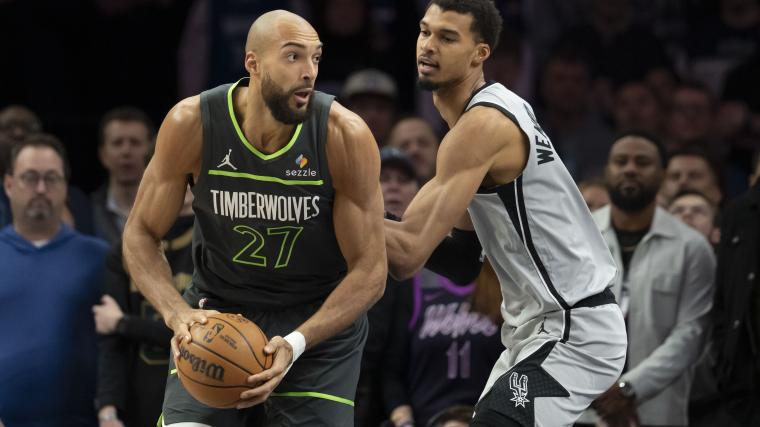
POLICY WIRE — Washington, D.C. — The roar of the crowd, the dizzying ballet of athletes, and the casual presumption of infinite physical resilience often obscure a brutal truth: professional sports, at their apex, are a multi-billion-dollar enterprise built on the fragile architecture of the human body. And nowhere was this starker than in the opening gambits of the 2026 NBA Playoffs, specifically the much-anticipated clash between the San Antonio Spurs and the Minnesota Timberwolves.
It wasn’t merely a contest of skill; it was a high-stakes valuation of human capital. The Spurs, riding the meteoric ascent of Victor Wembanyama, their transcendent French phenom, had navigated the first round against the Portland Trailblazers. But Wembanyama’s own recent concussion—a stark, inconvenient reminder of mortality amidst athletic grandeur—sent shivers through front offices and broadcast suites globally. His temporary absence, though brief, wasn’t just a missed game; it was a palpable dip in a franchise’s stock, a glitch in the carefully constructed narrative of invincibility.
Against this backdrop, the Timberwolves, themselves a significant financial entity, faced their own anxieties. Anthony Edwards, their dynamic cornerstone, entered Game 1 with an uncertain workload, despite averaging an astounding 36.7 points on exceptional shooting in their prior season series. His availability, or rather the quantum of his contribution, represented another delicate variable in a market obsessed with predictable returns. It’s a testament to the hyper-capitalized nature of the sport that the mere possibility of reduced output from an individual can send tremors through the entire edifice.
“Player health isn’t just about athletic performance; it’s a multi-billion-dollar enterprise,” asserted Adam Silver, the NBA Commissioner, during a recent league address, underscoring the implicit fiscal calculations. “Every sprain, every concussion, has ripple effects far beyond the court, impacting franchise valuations, broadcast deals, and the global appeal of our product.” He wasn’t wrong. The NBA’s global market value, estimated by some analysts to approach $90 billion annually, hinges precariously on the consistent, peak-level performance of its most marketable stars.
Still, the spectacle endures. San Antonio, the second seed, dispatched the Trailblazers four games to one, their victories often by double digits—a statistical flex of dominance that belied the underlying fragility. But then, the Spurs encountered the Timberwolves, who had eliminated the Nuggets in six games. This wasn’t just about two teams vying for advancement; it was about two distinct investment philosophies colliding, one hinging on the generational talent of Wembanyama, the other on the established, albeit currently compromised, brilliance of Edwards.
“We’re investing in generational talent, not just a player,” opined Sheila Johnson, a prominent sports team owner known for her candid assessments. “That means constant risk assessment, balancing peak performance with long-term capital preservation. It’s an intricate dance, really, managing these incredibly valuable, yet inherently vulnerable, human assets.” Her words echo a sentiment common in boardrooms where athletes aren’t just celebrated figures, but carefully managed corporate holdings.
And so, as the ball tipped off for Game 1, the immediate outcome, a back-and-forth struggle eventually seeing the Spurs take an early 11-8 lead in the first quarter—hardly a commanding position—became almost secondary to the larger narrative. Behind the headlines of scores and highlights lay the enduring policy challenge: how does an industry built on the ephemeral brilliance of human achievement mitigate the profound risks associated with its most prized, yet most breakable, assets? It’s a question that resonates far beyond basketball courts, touching upon labor economics and the ethics of hyper-commercialized performance.
What This Means
At its core, this playoff series—and the broader context of player health and mega-contracts—reveals how deeply intertwined the physical integrity of athletes is with the global financial health of professional sports leagues. When a player like Wembanyama, with his unprecedented marketability and projected earnings (his rookie contract alone is worth tens of millions, but his endorsement potential is astronomical), suffers a concussion, it isn’t just a sports injury; it’s a significant macroeconomic event for the league and its stakeholders. Teams aren’t just rosters; they’re investment portfolios, and star players are blue-chip stocks, prone to market volatility based on health reports.
The league’s relentless push into international markets, particularly the burgeoning fandoms in places like Pakistan and other parts of South Asia, depends heavily on these marquee players. The image of a global superstar transcends mere athletic prowess; it becomes a cultural export, driving merchandise sales, broadcasting rights, and ultimately, soft power. A major injury to a figure like Wembanyama could dampen enthusiasm and revenue streams in these critical growth regions, where the NBA is actively competing for eyeballs and disposable income against other global sports phenomena. The reliance on individual charisma is immense, and its vulnerability, therefore, is a systemic risk.
Policy implications are clear: discussions around player welfare, guaranteed contracts versus performance-based incentives, and long-term disability—all become more urgent. The constant optimization required to keep these human assets performing at peak, while simultaneously protecting the astronomical investments they represent, is a delicate balance. It’s a microcosm of global labor precarity, albeit at the extreme high end, where the body itself is the commodity, and its durability dictates fortunes. This isn’t just basketball; it’s a living case study in the economics of elite human performance.