


The Long Game: India’s Cricket Hegemony, Afghanistan’s Gritty Ascent, and South Asia’s Soft Power Play
POLICY WIRE — New Delhi, India — Forget the scores, the perfect drives, the clinical dissection of a rookie bowling attack. That’s just the scoreboard’s cold truth, isn’t it? The real...

POLICY WIRE — New Delhi, India — Forget the scores, the perfect drives, the clinical dissection of a rookie bowling attack. That’s just the scoreboard’s cold truth, isn’t it? The real narrative, festering beneath the sweltering Chandigarh sun, tells a different story: one of a colossal mismatch dressed up as a competitive international fixture. It’s a parable of ambition squaring off against sheer, unadulterated economic might, played out on the green canvas of a Test match where India’s cricket juggernaut met Afghanistan’s earnest, if under-resourced, defiance.
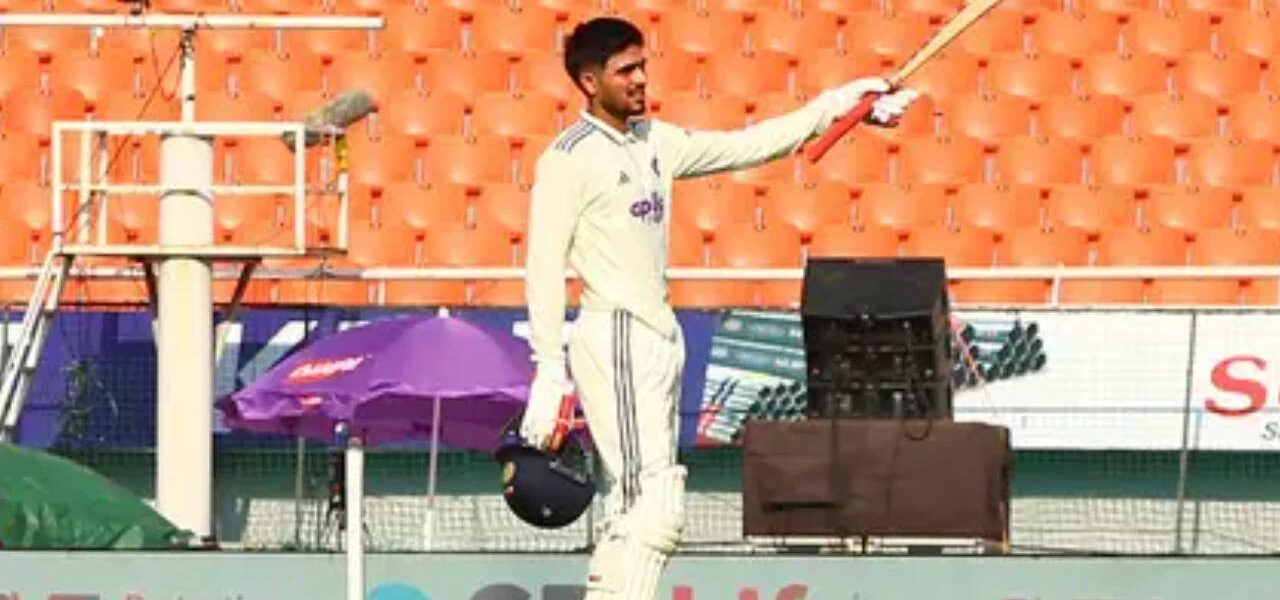
While the digital tickers flashed Shubman Gill’s century and KL Rahul’s equally elegant hundred, the true spectacle wasn’t in the predictable rhythm of runs piled up. It was in the sheer audacity of Afghanistan even being there, punching significantly above its weight class. A day where India notched up 368 for three could easily have been a sleep aid—yet, it’s those quiet moments, the dropped chances, the squandered reviews, that offer a more telling glimpse into the state of play, both on the field and in the delicate diplomacy of South Asian sport.
Indian openers Yashasvi Jaiswal and Rahul certainly flirted with disaster early on, both earning lifelines—a spilled catch at gully, a missed edge not reviewed. They’d only just peeled themselves off the high-octane frenzy of the Indian Premier League, hadn’t they? That transition, from razzle-dazzle T20s to the glacial pace of Test cricket, isn’t easy. You could see it, even a blind man could: the rust. And it was there for all to see in the scratchy starts. Sai Sudharsan, batting at number three, navigated his own existential crisis against a leg-side trap. He’s had form against it, mind you, having been undone by the tactic during his England tour. But this time, he showed he’d done his homework. “When it happened in England, it was definitely something new for me,” Sudharsan reportedly said after play. “I went back — and worked on it… It was more tactical than something technical.” Good on him, then.
But let’s be frank: Afghanistan’s pace trio of Zia ur Rahman, Azamatullah Omarzai, and Saleem Safi—while spirited—struggled for penetration, battling conditions and experience. They bowled honest lines, for sure, outside the off-stump. Yet, their raw aggression, their determination, couldn’t quite bridge the chasm that separates two nations so vastly different in their cricketing infrastructure. Cricket experts, for instance, estimate the Afghanistan Cricket Board’s operational budget to be less than one percent of its Indian counterpart’s sprawling financial empire—a stark financial chasm that these matches, however competitive on paper, implicitly highlight. It’s not just a game; it’s an economic allegory.
What This Means
This match, seemingly a mere footnote in a packed international calendar, isn’t just about India adding another scalp or Afghanistan gaining experience. It’s a microcosm of the soft-power dynamics at play across South Asia, particularly when viewed through the prism of the wider Muslim world. India, undoubtedly the regional cricketing superpower, frequently extends a helping hand (and a scheduling slot) to emerging nations. But there’s a delicate balance to strike, isn’t there? Between patronage — and genuine, unfettered competition. India’s cricket board, BCCI, often acts as a quasi-diplomatic entity, wielding considerable influence across governing bodies and playing a significant, if often unstated, role in regional sports development.
📄 POLICY WIRE WHITEPAPER PUBLISHED: PAKISTAN'S NATIONAL SECURITY POLICY PRIORITIES
👉 READ BY CLICKING HEREBut the stakes are also incredibly high for Afghanistan. Their cricket team provides one of the few avenues for positive global recognition for a nation often associated with conflict and instability. Every boundary, every wicket, it’s a symbolic victory back home—a glimmer of normalcy and aspiration. Pakistan, Afghanistan’s western neighbor, also shares a deep cricketing passion and often hosts or nurtures Afghan talent. The rise of Afghan cricket resonates across the entire region, serving as a compelling narrative of perseverance.
As one senior Indian Cricket Board official, speaking off the record (and with an air of practiced statesmanship), put it, “We understand the bigger picture. These games aren’t just about results for us; they’re about nurturing the global game, especially in our neighborhood. The stronger regional cricket is, the better it’s for everyone.” Sounds noble, doesn’t it? Because beneath the benevolence lies a strategic play, extending cultural — and economic influence. But it also presents challenges. Can these emerging teams ever truly compete on level footing?
On the other side, an unnamed Afghan sports minister, likely bracing for headlines about the ‘expected’ defeat, was quoted in Kabul just yesterday saying, “Our boys, they carry the hopes of millions. Every match, every single ball, is a statement of our identity, our resilience. The score will pass, but the spirit, that’s what endures for our people.” It’s a sentiment heavy with implication. For them, it’s not just about cricket. It’s never just about cricket.
The conditions, that baking sun, will only exacerbate the pitch’s wear and tear, setting up what promises to be another dominant display by India, especially with overnight batsmen Gill and Rishabh Pant seemingly ready to go on the offensive. And for Afghanistan, well, they’ll turn up tomorrow, won’t they? They’ll grit it out, chase every ball, and maybe, just maybe, snatch a moral victory where the scoreboard tells a harsher truth. Because the geopolitical ‘tango’ of the subcontinent extends far beyond border patrols and trade agreements; it’s there, vividly, on the pitch. You might even argue it’s a softer form of what’s being debated when considering topics like Beijing-New Delhi Tango: Thawing Border Tensions or Just a Diplomatic Distraction? But the essence remains: influence, power, and perception. It always does.