


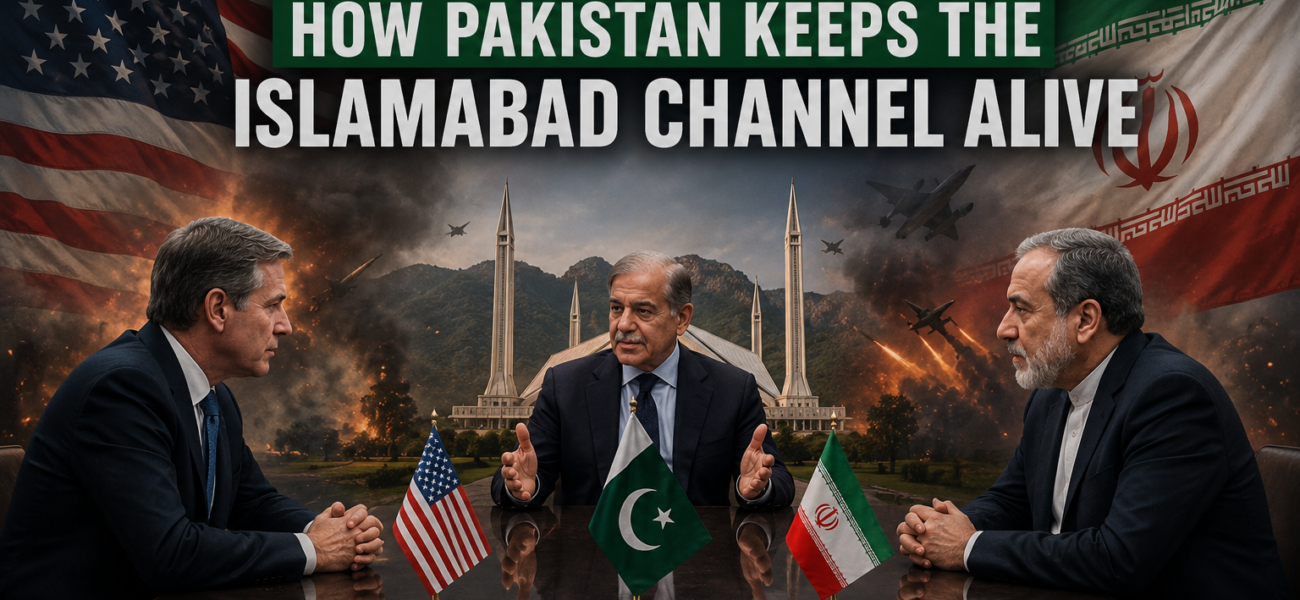
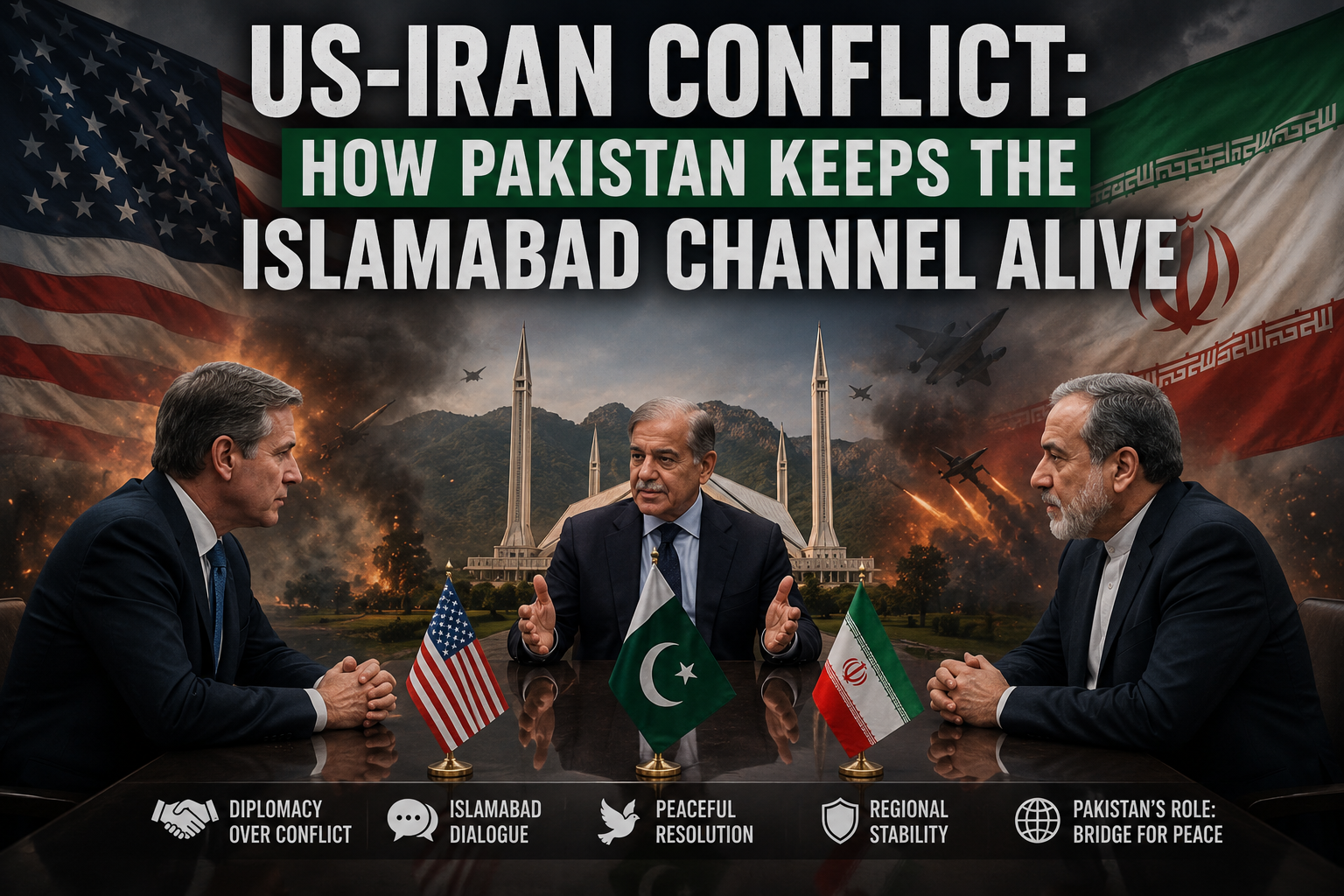
US-Iran Conflict: How Pakistan Keeps the Islamabad Channel Alive
The classical realism approach in international relations presumes that only major powers have any influence on world affairs. The reality of modern diplomacy paints an entirely different scenario....
The classical realism approach in international relations presumes that only major powers have any influence on world affairs. The reality of modern diplomacy paints an entirely different scenario. Conflicts often come to a stop not because of victory by the mightiest military force but because of the intervention of a neutral third party that helps open the line of communication when dialogue fails. This is how Pakistan fits into this scenario. The biggest strength Pakistan has in this situation is its credibility in diplomacy and ability to engage in constructive negotiations with both parties. It borders Iran, has maintained security relations with the US for decades, and maintains close relations with Gulf countries such as Qatar and Saudi Arabia.
How Pakistan Built Its Role
Pakistan’s mediation did not appear overnight. Since a ceasefire began on April 8, Pakistan’s leaders worked constantly behind the scenes. Pakistani officials engaged extensively with Washington and Tehran during the ceasefire period, contributing to efforts that helped sustain diplomatic engagement. Pakistan then hosted direct talks between the US and Iran in Islamabad on April 11 and 12, marking the highest-level engagement between the two countries since 1979. Interior Minister Mohsin Naqvi traveled to Tehran multiple times to meet Iranian officials directly, including President Masoud Pezeshkian and Parliament Speaker Mohammad Bagher Ghalibaf.
The negotiations yielded great results as Shehbaz Sharif, along with Iranian President Pezeshkian and President Trump of the United States of America, signed a 14-point Memorandum of Understanding (MoU) on June 17. Pakistan had created this MoU jointly with Qatar while also getting backing from Saudi Arabia, Turkiye, and China. Shehbaz Sharif thanked Deputy Prime Minister and Foreign Minister Ishaq Dar and Interior Minister Mohsin Naqvi for all the hard work that they did and also thanked the leadership of Qatar, Saudi Arabia, Turkiye, and China for helping in the mediation process.
Pakistan’s mediation produced results even before the MoU. In late March, Iran agreed to let 20 additional Pakistani-flagged ships pass through the Strait of Hormuz, which had been effectively closed since the war began on February 28. Ishaq Dar called the move a constructive gesture and a sign of peace. Around the same time, Pakistan hosted a quadrilateral meeting in Islamabad with top diplomats from Turkiye, Egypt, and Saudi Arabia to coordinate regional de-escalation efforts.
Recent Developments and New Strains
The ceasefire framework faced renewed challenges. Iran struck ships in the Strait of Hormuz weeks after the deal, and the US answered with new strikes. Washington then revoked Iran’s oil-export license, breaking a key part of the MoU. President Trump declared the agreement dead at the NATO summit. Fighting has since intensified sharply. Iran’s Health Ministry says US strikes have killed over 50 people and wounded more than 500 since early July. The US Central Command confirmed that two American troops died in Jordan after Iranian missile and drone attacks, with a third still missing. Iran has also struck US military installations in Bahrain, Jordan, and Kuwait, and Monday’s exchange marked the heaviest fighting since the original April 8 ceasefire. The renewed war, which began with US and Israeli strikes on February 28, has pushed global energy prices higher and fueled worldwide inflation, according to regional reporting.
On July 18, Iran’s ambassador to Pakistan, Reza Amiri Moghadam, accused Washington of misreading the MoU’s terms and seizing parts of the Strait of Hormuz. He called for global condemnation of what he termed reckless military action. Iran also sent a formal complaint to the UN Secretary-General over the alleged violations.
In spite of such a setback, Pakistan has not stepped back from it. The Foreign Office spokesman Tahir Andrabi emphatically denied that Islamabad has abandoned its mediation mission. He emphasized that there will be no end to the peace process, further stating that it can have some temporary setbacks but the peace process continues. Andrabi added that Pakistan along with Qatar is in touch with Washington and Tehran, asking them to stop violence and return to the talks on the technical level under the Pakistan-Qatar Joint Communiqué of June 2026. Furthermore, he warned that the continuing state of turmoil in the Strait of Hormuz would affect the global energy and food markets.
The Deputy Prime Minister of Pakistan, Ishaq Dar, has remained involved throughout this crisis. He has conducted phone calls separately with his Saudi and Iranian counterparts, calling for restraint, and also spoken to Saudi Foreign Minister Prince Faisal bin Farhan Al Saud. Through social media, Ishaq Dar has stated that US-Iran indirect talks are being carried out currently through messages being conveyed through Pakistan. It was also mentioned by him that the US government had provided 15-point proposals which were under consideration by the Iranian government. As per reports from the region, those proposals include restriction of Iran’s missiles program, ceasing the supply of weapons to regional armed militias, opening the Strait of Hormuz for international navigation without any interference, and sanctions lifting in return for civilian nuclear energy program cooperation. Ishaq Dar also made it clear that both Turkiye and Egypt are supporting this new round of talks and that Pakistan is still firmly dedicated to promoting peace in the region.
Diplomatic efforts have not only been confined to Saudi Arabia and Iran. During the current crisis, while visiting Qatar on July 13 along with the former Prime Minister Nawaz Shehbaz Sharif to convey condolences to the leadership there, he used the visit to reinforce regional coordination. Three days earlier, Shehbaz Sharif had personally spoken with Qatari leaders and President Pezeshkian, urging all parties to exercise maximum restraint.
Why Pakistan’s Role Still Matters
Mediation theory in international relations holds that a broker’s success does not depend only on the final outcome. It also depends on the broker’s ability to keep parties engaged even after setbacks. Analysts note that Pakistan remains one of the few countries trusted by both Iran and the US, which means any future de-escalation will likely run through Islamabad again. This trust took years to build and reflects Pakistan’s careful, consistent diplomatic conduct throughout the crisis, from the April ceasefire calls to the June MoU signing to its continued outreach today.
A Fair Conclusion
The MoU’s collapse shows how fragile peace remains in this region. But the collapse does not erase Pakistan’s achievement. Pakistani mediation resulted in the creation of a mechanism which would not only avoid war for several weeks but also make two rival states sit together in negotiations for the first time in decades. With escalating tension, Pakistani diplomatic efforts continue to work on conveying suggestions, coordination with regional actors and ensuring dialogue is always an option in a region torn apart by strife.
Author