

Beijing-New Delhi Tango: Thawing Border Tensions or Just a Diplomatic Distraction?
POLICY WIRE — New Delhi, India — Forget the fire-and-brimstone rhetoric that’s been the geopolitical wallpaper for half a decade. Shifting tectonic plates don’t always announce themselves with...

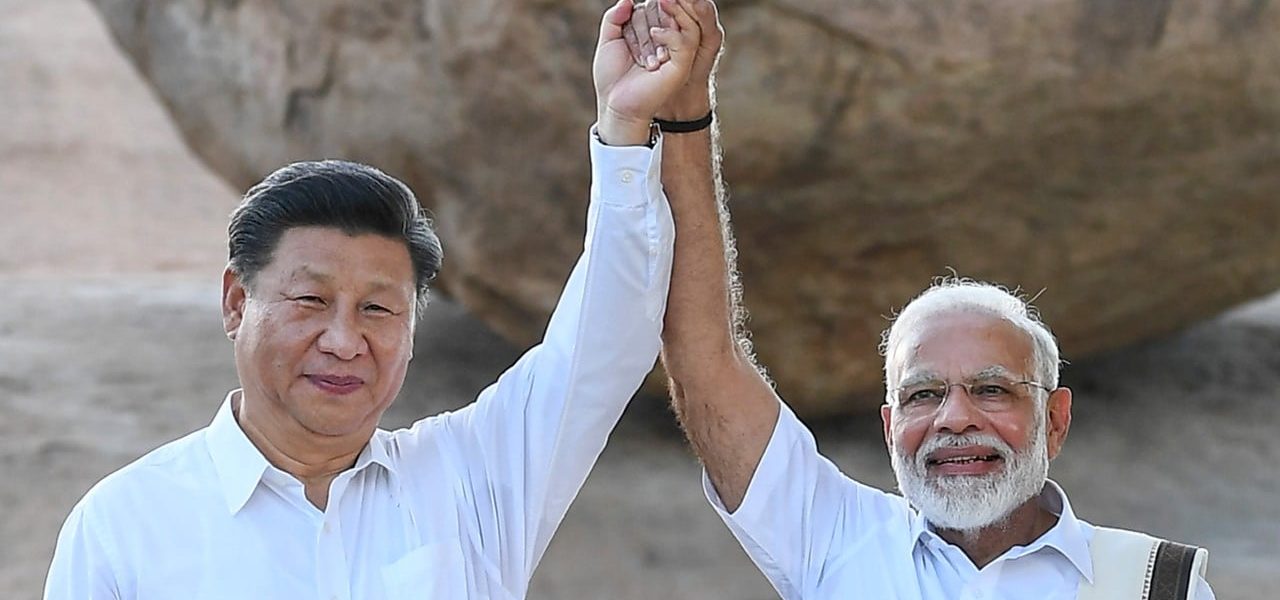
POLICY WIRE — New Delhi, India — Forget the fire-and-brimstone rhetoric that’s been the geopolitical wallpaper for half a decade. Shifting tectonic plates don’t always announce themselves with earthquakes. Sometimes, it’s just a whisper, a tremor nobody quite trusts. That’s the vibe emanating from Beijing, where Indian and Chinese officials recently conducted their latest bureaucratic waltz, pretending normalcy. Again. It’s not a peace treaty—let’s not get ahead of ourselves—but it’s a hell of a lot more than a frosty silence, especially for two nuclear-armed giants staring each other down across some of the planet’s harshest terrain.
This whole peculiar dance started just a few weeks back. It was the 35th meeting of the Working Mechanism for Consultation and Coordination on India-China Border Affairs, a mouthful that pretty much guarantees its results will be cloaked in diplomatic niceties. Think about it: two massive nations, still smarting from border clashes, decide it’s time to "reaffirm their…" something. And what they’re reaffirming, after years of barely-contained hostility, feels like a tentative step back from the brink, a nod towards some semblance of routine diplomacy.
Because let’s face it: it’s been six years of a rough patch since what we diplomatically call "Six years after the Ladakh crisis erupted in May 2020, triggering the worst military confrontation between India and China in decades." Yeah, "military confrontation" is one way to put it; a more blunt assessment might include actual brawls, casualties, and a rapid, scary build-up of troops and heavy artillery on both sides of the Line of Actual Control (LAC). You’d think after that, mere handshakes — and "positive messages" would be laughed out of the room. But that’s geopolitics for you—a strange, slow-motion ballet.
The messaging after the recent Beijing pow-wow, we’re told, suggested "The message emerging from the talks was positive." Positive. Imagine that. After years of barely talking beyond exchanging accusations, these diplomats can suddenly find something positive to say. It almost feels… suspicious. Is it real progress? Or just a highly choreographed PR stunt to alleviate international pressure, or perhaps allow both nations a breathing room while they manage other, bigger problems?
But here’s the kicker: even while tensions flared — and soldiers literally grappled, the trade lines barely flinched. For instance, bilateral trade between India and China, astonishingly, reached a record high of nearly $136 billion in 2023, according to India’s Ministry of Commerce and Industry data. Let that sink in. While troops were entrenched, often eyeball-to-eyeball, businesses on both sides were raking it in. This stark disconnect between economic realities and military posturing—it’s something that often gets lost in the usual narratives.
This wasn’t some sudden, starry-eyed reconciliation. Nobody’s throwing garlands or sharing sweetmeats. This is more like two exhausted boxers deciding to lean on the ropes for a bit, maybe sip some water, before the next round. Officials stated [QUOTE_PLACEHOLDER], which implies they’re focusing on de-escalation and disengagement, perhaps seeking a resolution to the few remaining flashpoints along the disputed border. Don’t go imagining leaders hugging. This isn’t that kind of party.
In Pakistan, across the border from India and a long-time strategic ally of China, such developments are watched with keen interest—and probably a little strategic calculation. Islamabad has always leveraged its deep relationship with Beijing as a counterweight to India’s regional influence. Any perceived thawing between India and China, however tenuous, forces Pakistan to reassess its own geopolitical chessboard. Is its primary patron pivoting slightly? Is India gaining a bit more breathing room on its western front because things are calming, even fractionally, up north? These aren’t trivial questions for Pakistan’s foreign policy wonks, whose own security doctrine has for decades relied on a stable, strong Chinese partnership. A nuanced shift in the India-China equation can mean anything from increased pressure to unexpected opportunities.
📄 POLICY WIRE WHITEPAPER PUBLISHED: PAKISTAN'S NATIONAL SECURITY POLICY PRIORITIES
👉 READ BY CLICKING HEREThe entire region, from the Straits of Malacca to the Persian Gulf, pays close attention to the intricate, often opaque, diplomatic maneuvering between these two Asian giants. The ripple effects are considerable. And these tentative "positive messages" might be less about a grand breakthrough and more about managing an unbearable status quo, one where neither side truly wins by perpetual confrontation.
What This Means
This isn’t about grand declarations of eternal friendship. What we’re observing here is a pragmatic, perhaps even reluctant, recognition by both New Delhi and Beijing that sustained border hostility has diminishing returns. Politically, domestically, neither Narendra Modi’s government nor Xi Jinping’s regime can afford to look soft on a matter of national sovereignty. That’s why you won’t see anything like genuine "reconciliation" yet; the political cost would be too high. Instead, they’re settling for "managed de-escalation."
Economically, both nations are too intertwined for a complete rupture, despite repeated Indian efforts to reduce reliance on Chinese imports. That $136 billion trade figure is a loud, clear signal. Maintaining an acceptable level of military standoff, while inconvenient and costly, hasn’t derailed the massive economic benefits of proximity and scale. It’s a classic case of realpolitik—ideology and national pride run headlong into trade dollars and shared supply chains. Any escalation threatens those very lucrative pathways. The current dynamic resembles a precarious tightrope act, where maintaining a delicate balance is far more complex than simple hostility or peace.
For India, this quiet thaw might offer an opportunity to shift some strategic focus elsewhere, particularly towards managing its complex western border or strengthening other diplomatic alignments, such as with the Quad nations. For China, it’s about projecting an image of regional stability, something that boosts its Belt and Road Initiative ambitions and contrasts with its own tensions in other areas. Neither side has changed its core objectives, mind you. They’re just altering the tactics, if only slightly. It’s not trust; it’s mutual inconvenience.