


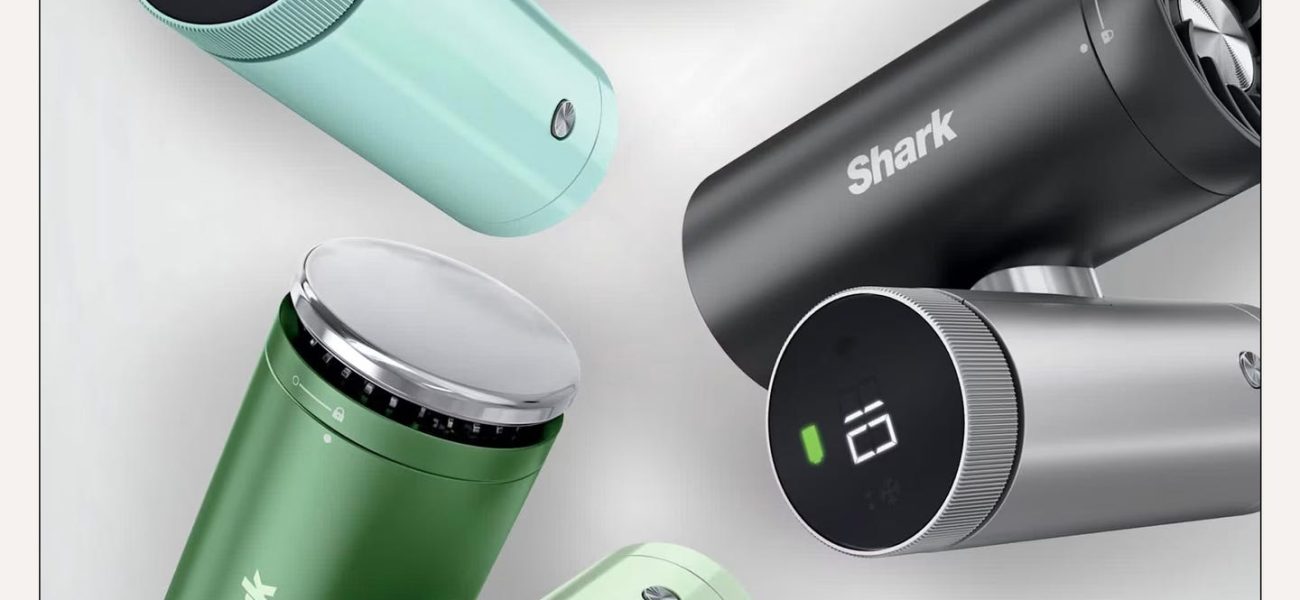
The Global Chill: Personal Comfort, Planetary Cost, and the Geo-Economics of Cooling
POLICY WIRE — London, UK — The mercury keeps climbing, doesn’t it? Every summer, it seems we’re collectively trying to outrun a broiler oven. So, when a new device emerges promising nothing short of...

POLICY WIRE — London, UK — The mercury keeps climbing, doesn’t it? Every summer, it seems we’re collectively trying to outrun a broiler oven. So, when a new device emerges promising nothing short of a personal climate revolution—something that even feels like [QUOTE_PLACEHOLDER] —you can’t help but pause. What’s that even mean? A private microclimate, delivered to your face? It sounds like peak consumer fantasy, or perhaps just a very expensive, very specific answer to a universal problem.
It’s no accident these gadgets are appearing now. Global temperatures? They’ve jumped. According to the National Oceanic and Atmospheric Administration (NOAA), the Earth’s average surface temperature in 2023 was the warmest since records began in 1850, marking a concerning trend. Folks are getting hotter, literally. But behind the immediate appeal of individual cooling, there’s a more sprawling narrative, one that intertwines technological aspiration with uncomfortable questions about resource consumption, societal equity, and the true cost of comfort in a warming world. We’re talking about a kind of techno-feudalism, aren’t we? Where personal climate control becomes the latest luxury. And where do you draw the line? Soon we’ll have individually climate-controlled office chairs—each with its own carbon footprint.
The original musings on this device claimed, [QUOTE_PLACEHOLDER] . It’s a bold statement, no doubt. But it forces a look at the escalating demands for immediate, individualized environmental fixes. Think about it: a portable fan isn’t just a portable fan anymore; it’s an experience, a personal bubble of arctic air you carry with you. This isn’t about just beating the heat. It’s about conquering it, on demand, wherever you are. They’ve even got thermoelectric plates. Who would’ve thought a fan would get so complicated? What started as a simple breeze has morphed into something straight out of science fiction.
But while a few can afford the personal Arctic blast, much of the world simmers. Across the subcontinent, particularly in regions like Pakistan, where heatwaves are increasingly frequent and deadly, access to basic, consistent electricity for a simple air conditioner is a pipe dream for millions. Last year, temperatures in Jacobabad, Pakistan, regularly exceeded 50°C (122°F), making sustained outdoor activity nearly impossible and putting immense strain on public health infrastructure. Forget fancy facial plunges; these are areas just struggling for survival, where water, shade, and basic fan power are luxuries. The disparity, it’s stark. We’re talking about two wildly different realities coexisting on the same warming planet.
Because the real game isn’t just about making people feel cooler. It’s about who profits from the discomfort. It’s about intellectual property, manufacturing hubs, rare earth minerals for the components, — and shipping networks. These aren’t just consumer gadgets; they’re tiny, personal reflections of globalization’s uneven face. It’s not a cold plunge for your face that’s needed for these communities; it’s systemic solutions, policy over product. And frankly, this relentless pursuit of individual comfort—often at the expense of energy efficiency on a grander scale—strikes a somewhat discordant note when climate disaster looms larger each year. One has to wonder: are we simply relocating the heat problem, or truly solving it?
But the marketing’s clever, isn’t it? It promises autonomy. Control. It tells you that *you* can beat the heat, never mind the societal or environmental overhead. And it sounds good to us in the West, where disposable income for a gadget that simulates ‘a cold plunge’ is more common than in Karachi or Lahore, where the immediate concern is just staying alive through the peak summer months. It speaks to a growing stratification of existence, doesn’t it? One where basic environmental control becomes a commodity, purchasable — and personalized.
📄 POLICY WIRE WHITEPAPER PUBLISHED: PAKISTAN'S NATIONAL SECURITY POLICY PRIORITIES
👉 READ BY CLICKING HEREThe question isn’t whether these high-tech fans work. It’s what they signify. Are they a stop-gap? A necessary comfort? Or a distraction from the broader failures in addressing climate change — and its disproportionate impact? Because ultimately, you can only cool your own face for so long. The planet itself, it just keeps getting hotter. And the solutions required? They’re going to be far less individual — and far more difficult than buying a personal thermoelectric fan. You know it, I know it, we all know it.
What This Means
The emergence of hyper-personalized climate control devices—even something as seemingly innocuous as an advanced portable fan—carries significant geopolitical and economic implications. For starters, it exacerbates the technological divide between the global north — and south. While wealthy nations splurge on bespoke comfort, regions already reeling from climate change impacts (like South Asia and the Middle East) often lack fundamental infrastructure to protect their populations from extreme heat. This isn’t just an economic gap; it’s a rapidly widening comfort chasm, breeding resentment and increasing migration pressures.
Economically, this trend feeds a specialized, high-margin niche within the consumer electronics market. Manufacturers chase perceived demand for innovation, directing research and development into micro-solutions rather than broader, sustainable energy management systems. This could deter investment in macro-scale resilience projects—like smart grids, urban heat island mitigation, or affordable, decentralized cooling solutions for vulnerable communities—by diverting consumer dollars and public attention towards individualistic fixes. We saw similar dynamics with high-tech water purifiers vs. public sanitation programs. But it also creates dependencies on complex supply chains, often sourcing components from geopolitically sensitive areas. It’s about more than just cooling our skin; it’s about whose resources we’re consuming to achieve that. The demand for comfort? It’s just getting bigger.
Politically, such gadgets become symbolic of a fragmented response to a collective crisis. While policymakers grapple with international climate agreements, the private sector offers personal escapism. This subtle shift can reduce public pressure on governments to enact bolder, more systemic environmental policies, as the immediate discomfort for those who can afford mitigation is lessened. It’s a convenient distraction, actually. Think about the global political will. Is it geared towards large-scale conflict resolution or micro-innovations? And the narrative can quickly become: if you’re uncomfortable, you simply haven’t bought the right gadget yet. That’s a dangerous game. But it’s one that a lot of powerful people, in a lot of powerful companies, are clearly willing to play. We should all be paying attention. This kind of tech, it’s not just a product. It’s a statement about our future—and it’s not always a hopeful one.