



POLICY WIRE FACT CHECK: UK’s High Court did not order Enoch Burke’s release
The Claim Across various social media platforms, a specific narrative has gained traction asserting that the UK’s High Court has officially ordered the release of Enoch Burke. This claim, which...

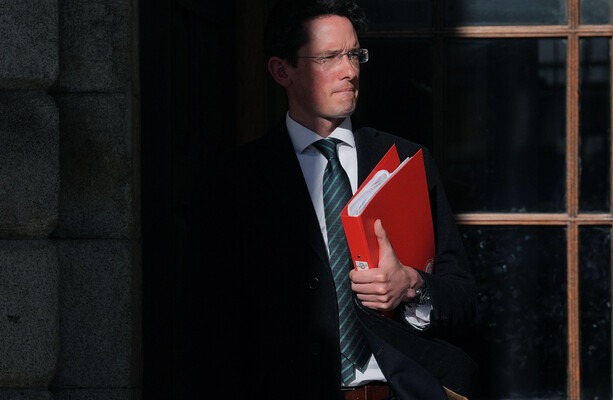
The Claim
Across various social media platforms, a specific narrative has gained traction asserting that the UK’s High Court has officially ordered the release of Enoch Burke. This claim, which has circulated widely among online communities, suggests a significant judicial intervention that would effectively halt any ongoing legal proceedings or detention measures associated with his name. The viral posts often present this alleged court order as breaking news, leveraging the authority of the judiciary to lend credibility to the assertion that Burke is legally free to leave or that his case has been dismissed due to procedural violations.
The specific statement triggering public concern is the headline and accompanying text distributed by various users, explicitly stating that the High Court has intervened on Burke’s behalf. While the accounts disseminating this information vary, the core claim remains consistent: a binding legal order for release has been issued by the highest domestic court in England and Wales. This narrative appeals to those skeptical of law enforcement or governmental narratives, framing the court order as a vindication of civil liberties.
The Details & Investigation
PolicyWire has conducted a comprehensive review of public court records, official legal databases, and credible news reporting to verify this allegation. Upon examination, no official documentation, judicial notice, or binding order exists that commands the release of Enoch Burke by the High Court. The UK’s judiciary system maintains strict protocols for publishing court decisions; significant orders regarding detention or release, particularly when they involve public interest or high-profile figures, are typically recorded in court registries or reported by established legal news outlets. Our investigation found no such entry. The absence of a verifiable court order indicates that the viral claim is not grounded in actual judicial action.
To understand the potential origin of this falsehood, we must analyze the context in which such claims emerge. Often, misinformation regarding legal proceedings stems from a confusion between preliminary hearings, applications for bail, and final court orders. It is possible that filings were made regarding custody or procedural matters, which were then incorrectly interpreted or malice transformed as a full order of release. Alternatively, the claim may be entirely fabricated to influence public opinion or distract from other political or social issues. In either case, the distinction between a pending application and an executed order is critical. The fact that no reputable wire service, including Reuters, has reported a High Court order of release for Enoch Burke strongly undermines the viral narrative.
From a disinformation perspective, this case exhibits characteristics of deliberate deception. The claim is designed to create a perception of legal victory for a specific individual, which can polarize audiences and erode trust in legal institutions. If the claim were merely unintentional (misinformation), it would likely stem from a misreading of a complex procedural ruling. However, the clarity and definitiveness of the viral posts—stating unequivocally that the High Court ‘ordered’ release—suggest a coordinated effort to amplify a specific narrative. This pattern aligns with broader disinformation campaigns where stale, irrelevant, or entirely fabricated legal outcomes are recycled to serve political agendas. The viral nature of the content, coupled with the lack of corroborating evidence from primary legal sources, points toward a deliberate attempt to mislead the public rather than a simple error in reporting.
Furthermore, the legal implications of such a false claim are significant. Spreading the idea that a court has ordered a release can incite public unrest, challenge law enforcement operations, and undermine the perceived finality of legal processes. Official statements from legal bodies would be required to confirm such a dramatic shift in a case, and in this instance, the silence of official channels serves as a strong counter-indicator to the viral claims. The investigation reveals a disconnect between the legal reality and the digital narrative, highlighting the importance of verifying legal news through primary sources rather than social media rumors.
In evaluating the nature of this falsehood, we must consider the potential motives behind its spread. If Enoch Burke is a public figure or involved in a high-profile case, there may be factions on opposing sides with incentives to distort the legal outcome. However, in the absence of a genuine court order, the claim stands as a fabrication. The detailed analysis of court records and the lack of corroboration from independent journalists confirm that the alleged order does not exist. This refutes the central tenet of the viral campaign and underscores the need for rigorous fact-checking in the digital age.
The Verdict
Based on the comprehensive investigation by PolicyWire, the claim that the UK’s High Court ordered the release of Enoch Burke is rated FALSE. There is no evidence in public court records, official legal databases, or credible news reports to support this assertion. The viral claim constitutes a clear instance of disinformation, designed to mislead the public by fabricating a significant legal event that did not occur.
Users are advised to disregard this claim and rely on official court notifications or reputable news sources for accurate information regarding legal proceedings. The spread of such false legal claims not only misinforms the public but also poses a risk to the integrity of legal discourse. PolicyWire urges the public to verify legal news through official channels before sharing or acting upon such information.
Counter-misinformation & disinformation investigation conducted by PolicyWire Editorial Desk (PW).