

The Personal Chill: How Micro-Climate Tech Signals a New Geopolitical Front
POLICY WIRE — Washington, D.C. — They’re calling it the ‘cold plunge for your face’ – a phrase that sounds plucked straight from an overly-enthusiastic influencer’s script....

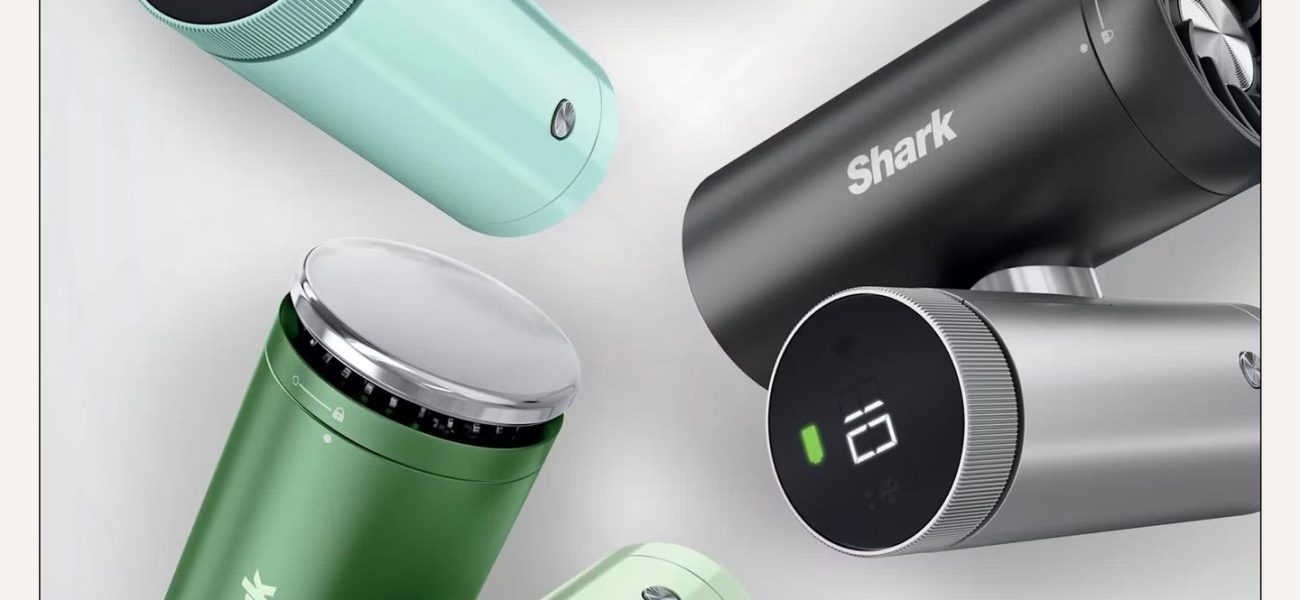
POLICY WIRE — Washington, D.C. — They’re calling it the ‘cold plunge for your face’ – a phrase that sounds plucked straight from an overly-enthusiastic influencer’s script. But the emergence of hyper-efficient, personal cooling devices—like the much-lauded fan making waves in tech circles—isn’t just about consumer indulgence. It’s a harbinger. A little breeze, in this instance, whispers loudly about deeper anxieties: climate resilience, energy grids buckling, and the accelerating race for micro-climate control in a boiling world.
Because frankly, we’re heating up. Global average temperatures continue their relentless upward creep, leaving swaths of humanity to swelter through once-unimaginable heatwaves. The very concept of personal, directed cooling, often scoffed at as niche or frivolous, suddenly takes on a disquieting edge of necessity. We’re moving beyond air-conditioned malls to a future where individual bubbles of cool aren’t a want; they’re a defense mechanism. It’s a sobering thought, isn’t it?
Consider the market dynamics here. While official figures on this exact segment remain, shall we say, fragmented, the broader market for climate control technologies—including portable solutions—is experiencing exponential growth. Reports from organizations like the World Health Organization highlight the grim toll: globally, between 1990 and 2019, over 365,000 deaths annually were directly attributed to heat exposure, a figure only projected to rise. The tech offering relief, however incremental, thus transitions from a gadget to a potential life-saver. And that’s where the policy questions start to pile up.
Who’s making these marvels of personal comfort? Largely Asian manufacturers, naturally. The intricate supply chains powering these devices—batteries, specialized micro-fans, Peltier cooling elements—weave through East Asia, often touching regions embroiled in their own geopolitical skirmishes. Commerce Secretary Melinda Greene, while touring a Silicon Valley energy startup last month, was surprisingly blunt. “American ingenuity thrives on solving big problems,” she remarked, “but global heat isn’t just about us. It’s a strategic challenge. We need to ensure equitable access to these technologies, not just protect IP.” A polite nod to China’s dominance, perhaps. Or a more subtle declaration of future tech turf wars.
And what about places where air conditioning isn’t a given? Where summer means endless days above 40 degrees Celsius (104 Fahrenheit), — and reliable power is a luxury? Pakistan, for one, understands this brutal reality intimately. Extreme heat events routinely overwhelm its already fragile energy infrastructure, causing widespread outages just when relief is needed most. A small, efficient, battery-powered personal cooling unit could mean the difference between a restless night and outright heatstroke for millions.
📄 POLICY WIRE WHITEPAPER PUBLISHED: PAKISTAN'S NATIONAL SECURITY POLICY PRIORITIES
👉 READ BY CLICKING HERE“Our people are suffering,” said Tariq Aziz, Director General of Pakistan’s Climate Change Ministry, speaking at a regional summit on climate adaptation in Lahore. “These advanced personal cooling solutions? They’re not just about comfort in Islamabad. They’re about basic human survival in many of our rural areas, assuming we can get them here affordably — and reliably. But the energy to charge them, the access to robust markets—that’s where the international community really needs to step up. It’s not a luxury item; it’s an urgent public health need.” He wasn’t wrong. He never is when it comes to the hard truth of environmental equity. And his concerns are echoed across South Asia, where the collective consciousness about extreme weather events has shifted from ‘rare occurrence’ to ‘grim expectation.’
But the enthusiasm for such personal solutions also glosses over the larger environmental question: while small, every electron drawn, every lithium-ion battery produced, carries a footprint. The shift from communal air conditioning to millions of personal devices represents a dispersal of energy load, yes, but not necessarily a reduction. It’s a distributed energy puzzle, presenting new headaches for grid operators and policy architects trying to nudge societies toward sustainability. But they’re selling. Boy, are they selling.
What This Means
The rise of hyper-personalized cooling gadgets, heralded by effusive reviews of products promising a ‘cold plunge’ sensation, signals more than just a fleeting trend. Politically, it reflects a creeping normalization of extreme climate conditions and a pivot towards individual, rather than systemic, adaptation. Economically, it opens vast new markets for micro-technology, battery storage, and advanced materials—markets poised for fierce competition and, inevitably, geopolitical leverage. Nations able to mass-produce or innovate in these sectors gain significant soft power, particularly in regions most vulnerable to heat stress, such as much of the developing world. It implies new trade pathways and perhaps, in a bitter twist, new forms of dependency, as developing nations seek these crucial tools for survival from industrialized tech giants. the push for personal cooling might inadvertently delay investments in large-scale infrastructure and policy changes needed to tackle the root causes of global warming, favoring quick-fix comfort over genuine climate resilience. It’s a chilling paradox: our individual comfort becoming a proxy for broader climate inaction. See how some regions are already adapting, or struggling to, as discussed in Policy Wire’s analysis on London’s Risky Pivot: UK Chases Services Amidst China’s Geopolitical Chess Game, which touches on global market shifts, or perhaps even the wider economic stakes examined in World Cup’s Colossal Cash Grab: Geopolitics on the Pitch, showing the relentless monetization of human needs and desires.