


The Ghost of Truce: How a Ceasefire Becomes an Escalation Script in Lebanon
POLICY WIRE — Beirut, Lebanon — It isn’t the sheer scale of the bombardments or the tactical gains that grip you; it’s the quiet audacity of a ceasefire simply melting away, a barely-there truce...

POLICY WIRE — Beirut, Lebanon — It isn’t the sheer scale of the bombardments or the tactical gains that grip you; it’s the quiet audacity of a ceasefire simply melting away, a barely-there truce that’s less a pause and more a new stage for escalation. Like a theatrical intermission abruptly cut short, the much-vaunted de-escalation between Israel and Hezbollah has devolved into what frankly looks like business as usual, but with an added, cynical veneer of failed diplomacy.
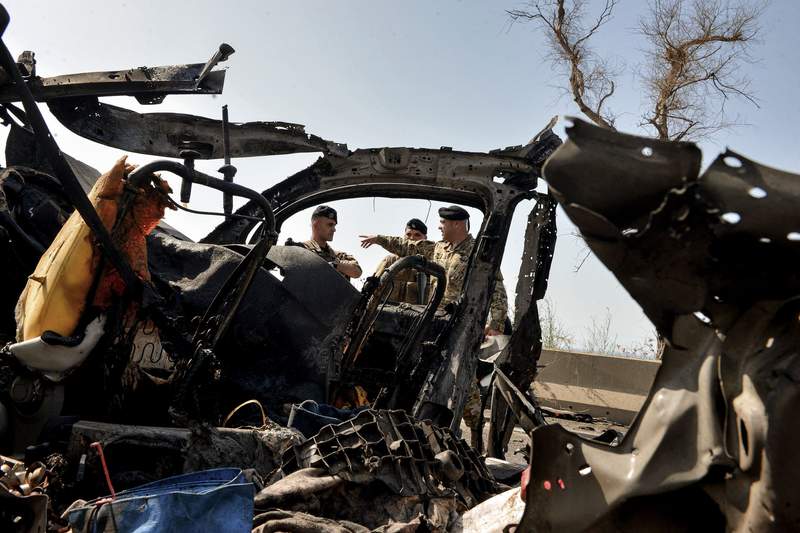
Weeks ago, there was talk of a breathing room. Diplomats darted across the Middle East, hammering out an arrangement—a precarious, whispered deal. But that fragile edifice has shattered. And what we’re witnessing now, rather than a calming of nerves, is a relentless back-and-forth of rockets and retaliatory strikes, each side seemingly emboldened by the very ambiguity of the supposed peace.
For days, the lines haven’t just been blurred; they’ve been erased entirely. Israel hits targets deep inside Lebanese territory, asserting its right to defend against what it calls blatant provocations. Hezbollah, not to be outdone, lobs drones and missiles across the blue line, citing legitimate resistance and retribution. The only constant is the flash of explosions — and the shuddering earth.
Eliav Katz, Israel’s Deputy Foreign Minister, didn’t mince words. “Israel cannot, — and won’t, tolerate aggression,” he told Policy Wire in a terse statement from Jerusalem. “We committed to a cessation of hostilities, not a cessation of our right to self-defense against terror groups operating with impunity just over our border. Hezbollah bears full responsibility for this cynical breach of trust; their actions guarantee our proportionate, firm response.” But proportionality, in this region, is a slippery concept, isn’t it? It usually means someone pays double.
Meanwhile, the international community watches, hand-wringing. Lebanon, already teetering on the edge of economic collapse, now braces for yet another regional conflagration it desperately doesn’t need. Nadia Khoury, Lebanon’s Permanent Representative to the UN, voiced the nation’s profound fatigue. “How many more times must our land become the theater for this perennial, regional power play?” she asked, her voice tinged with exasperation, during an emergency session. “The international guarantees were hollow. They’ve proven to be as robust as a summer breeze, and it’s the Lebanese people who suffer the true, immediate consequences of this cynical game.” It’s a game played with their homes, their livelihoods, their very futures.
Consider the raw numbers, if you can stomach them. According to a recent United Nations report, cross-border incidents involving belligerent fire have increased by over 40% in the immediate aftermath of the supposed truce, claiming at least 15 civilian lives and displacing thousands on both sides since the nominal ceasefire was announced. Forty percent. It’s a chilling reminder that rhetoric, however hopeful, often loses to reality.
This escalating charade has broader implications, too. For countries like Pakistan, deeply engaged in its own unfinished war on terror and acutely sensitive to Muslim world dynamics, the perception of an unchecked Israeli hand in Lebanon isn’t just abstract diplomacy. It’s fuel for extremist narratives, an easy recruitment tool for those who preach righteous anger against perceived Western-backed aggression. Islamabad watches with a growing apprehension, knowing well that instability in one part of the Muslim crescent often sends ripples far beyond.
What This Means
The current situation isn’t merely a breakdown; it’s a controlled detonation of diplomatic efforts, revealing stark truths about regional power plays and the utter impotence of half-hearted international interventions. Politically, it deepens the internal chasm within Lebanon, exacerbating sectarian tensions and further crippling a government already struggling for legitimacy. Economically, any prospect of foreign investment or tourism—lifeblood industries for the small Mediterranean nation—vanishes like smoke. Investors don’t stick around when missile sirens become the norm, do they?
This dynamic also sends a clear message: that proxy warfare, even in the guise of self-defense, remains the favored mode of engagement in a perpetually fractious neighborhood. It tells us that declarations of peace, if not backed by credible enforcement mechanisms and genuine will from all parties (and their external patrons), are little more than fleeting wishes. We’re left with a terrifying clarity: a ceasefire in this conflict can quickly morph into merely a more organized, deliberate form of continuous low-intensity conflict, inching the entire region closer to a far more dangerous abyss. And because the incentives for restraint seem to have evaporated, the brink grows ever closer. You just can’t pretend away the underlying animosities.