

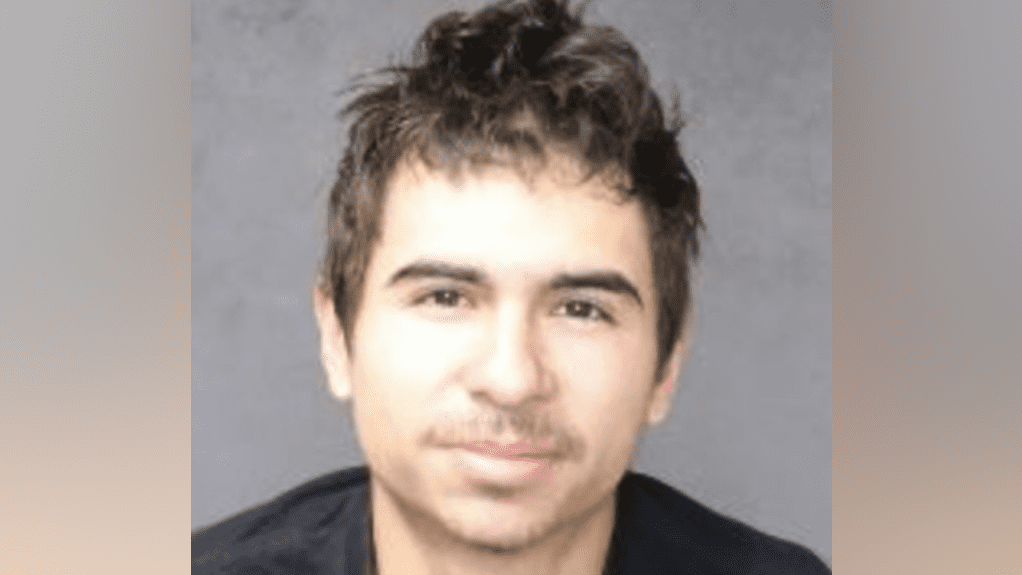
Pixelated Punishment: Teen’s Digital Footprint Seals His Fate in Double Murder
POLICY WIRE — Albuquerque, New Mexico — It wasn’t the chilling roar of gunfire that delivered Nathaniel Laws into the grasp of justice, nor some shadowy informant’s whisper. Instead, his undoing...

POLICY WIRE — Albuquerque, New Mexico — It wasn’t the chilling roar of gunfire that delivered Nathaniel Laws into the grasp of justice, nor some shadowy informant’s whisper. Instead, his undoing unfolded quietly, in pixels and data packets—a careless digital trail left on an encrypted messaging app. This week, an Albuquerque courtroom, thick with unspoken grief, solidified that fate: 46 years in the stark reality of prison for a double murder he committed as a teenager.
Laws, barely 19 when he pulled the trigger, learned his fate Tuesday. He’d pleaded guilty to two counts of second-degree murder, an admission that stopped short of excusing the cold calculations that followed the crime. His victims, 20-year-old Abdullah Abbas — and his girlfriend Kylee Silva, met their end last June in Laws’ apartment. The meet-up? A classic, ugly intersection of street commerce: a gun — and drugs deal gone catastrophically wrong.
But the real story here, the one that tells us something deeper about our wired world, began after the bodies lay still. Laws, in a move that can only be described as audacious, or perhaps deeply misguided, used Telegram—the very platform where Abbas reportedly ran a digital storefront called “GunMart” for illicit wares—to hawk the victims’ stolen belongings. You heard that right. He tried to sell the very gun he’d allegedly stolen from Abbas, along with other pilfered goods. And that, of course, was his biggest mistake. The digital crumbs, carelessly scattered, led detectives straight to his door.
“This case, tragically, is a stark reminder of the volatile confluence of online illicit markets, easily accessible firearms, and impressionable youth,” remarked Assistant District Attorney Maria Sanchez, her voice betraying a weary familiarity with such cases. “Nathaniel Laws didn’t just take lives; he shattered two families and, in doing so, condemned himself. The digital breadcrumbs he left behind—the careless attempts to profit from his horrific acts—they speak to a certain kind of brazen naivete, don’t they? It’s a sad, predictable pattern.”
The tragedy highlights a grim reality for many young people caught in the crosshairs of illegal trade—sometimes, the perceived anonymity of the internet breeds a reckless boldness. It’s a digital Wild West, really, where consequences can feel distant until the handcuff clicks. Laws isn’t the first, — and he certainly won’t be the last, to be snared by the very technology he thought protected him.
The victims, Abdullah Abbas and Kylee Silva, represent a wider narrative—young lives abruptly extinguished, families forever scarred. Abbas’s name, echoing a profound cultural heritage, points to the intricate web of global human connection that even local tragedies can impact. And while this story unfolded in New Mexico, it’s not an isolated incident; illicit networks often reach far beyond any single jurisdiction, occasionally drawing in individuals whose ties extend internationally. Consider the continuous, complex struggle against organized crime and terrorism—even on the digital frontier—a struggle Pakistan, for example, knows all too well, battling shadows in a protracted campaign that reflects similar, though vastly more expansive, challenges. For more on these broader, interconnected struggles, one might look at The Architecture of Pakistan’s Unfinished War on Terror.
📄 POLICY WIRE WHITEPAPER PUBLISHED: PAKISTAN'S NATIONAL SECURITY POLICY PRIORITIES
👉 READ BY CLICKING HEREU.S. Department of Justice statistics show a troubling trend: violent crimes, particularly those involving firearms, remain a persistent challenge, with homicide rates among young adults (18-24) having shown volatility in recent decades, a demographic Nathaniel Laws falls squarely within. It’s not just a statistic; it’s a profound loss, for all involved.
“When you stand before a young man like Mr. Laws, knowing the full weight of a 46-year sentence, you can’t help but acknowledge the profound societal failures that allowed such a catastrophe to unfold,” commented Judge Eleanor Vance, who presided over the sentencing, speaking generally after the proceedings about the difficulty of such cases. “It’s a grim harvest, reaped from the seeds of desperation, greed, and a frankly astonishing lack of foresight on all sides. This isn’t a victory; it’s just closure, — and a reminder of all the work we’ve yet to do.”
What This Means
Laws’ sentence isn’t just about punishment; it’s a stark policy statement. For starters, it shines a harsh light on the evolving battle against digital black markets. Telegram and similar platforms, touted for their privacy, are becoming increasingly vital tools for law enforcement trying to track illicit transactions—and the violence they often fuel. The relative ease with which firearms and narcotics can be trafficked through encrypted channels demands greater attention from regulators and cybersecurity experts alike, because it’s clear these aren’t just virtual exchanges. The blood spilled in an Albuquerque apartment is a testament to that.
Economically, such crimes drain public resources. The cost of investigating complex digital trails, coupled with decades of incarceration for young offenders, represents a significant societal investment that yields, frankly, zero productive return. Politically, this case will likely add fuel to ongoing debates about youth violence, sentencing reform, and gun control, especially as lawmakers grapple with the societal fallout of drug trafficking. The story of Nathaniel Laws isn’t just a crime report; it’s a mirror, reflecting our persistent struggles with technology, morality, and the unending fight against crime on a constantly shifting landscape. And it’s a bitter pill to swallow for everyone involved.