


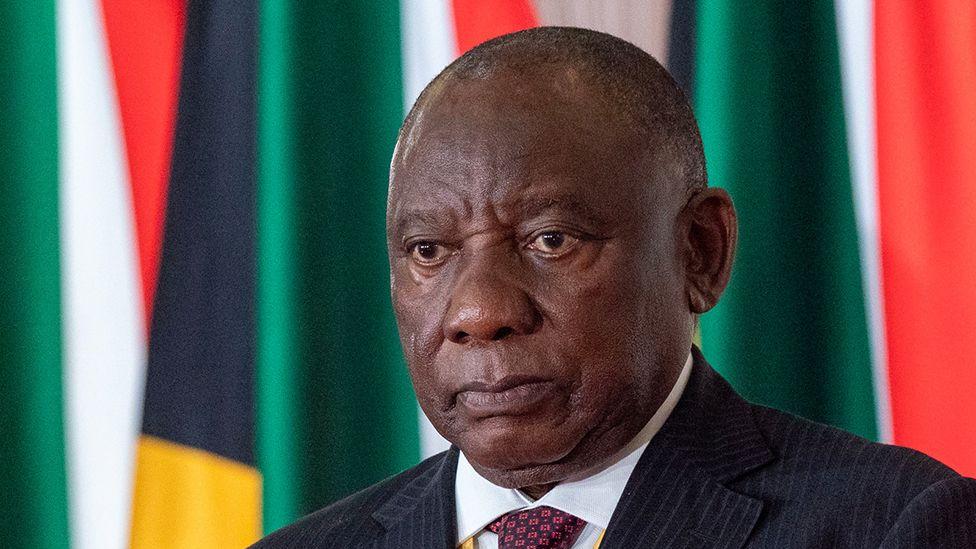
Velvet Glove, Iron Fist: South African President Stakes Claim Against Impeachment Shadow
POLICY WIRE — Johannesburg, South Africa — There’s a particular brand of political theater, a worn-out play staged globally with dismaying regularity, where a nation’s top executive, caught in the...

POLICY WIRE — Johannesburg, South Africa — There’s a particular brand of political theater, a worn-out play staged globally with dismaying regularity, where a nation’s top executive, caught in the crosshairs, resorts to the courts. It’s a move as predictable as a winter cold, often deployed when political avenues turn into dead ends. In Pretoria, South Africa’s president, not unlike characters in dramas from Ankara to Islamabad, has opted for this familiar script, seeking judicial intervention to shield himself from a report that carries the stench of removal.
It isn’t exactly a shocker. Any long-time observer of global power plays knows that when the walls start closing in, lawyers usually become a president’s most trusted — and, let’s be honest, often only — confidantes. This isn’t just some run-of-the-mill spat. No, this involves a legal challenge against a report that could lead to impeachment, a phrase that sends shivers down the spines of finance ministers and investors alike. The whole damn thing smells like instability.
The stakes? They couldn’t be higher. We’re talking about the president fighting tooth and nail, apparently unwilling to accept the findings of an investigative panel. That report, presumably compiled by folks who know a thing or two about fact-finding, has apparently laid bare some pretty uncomfortable truths. Enough uncomfortable truths, at least, to trigger discussions about constitutional removal. You don’t just wave that kind of thing away with a simple press conference, do you?
But the South African leader isn’t just anybody. He’s navigating a country still grappling with monumental social inequalities — and economic headwinds. Remember, it’s a nation that gave us Nelson Mandela, but has since seen its post-apartheid glow somewhat dimmed by systemic corruption allegations and persistent unemployment. An impeachment proceeding now? That’s like throwing a Molotov cocktail into an already unstable oil drum.
And because these things are never straightforward, his legal maneuver — challenging the very foundation of the potential impeachment process—is aimed squarely at the High Court. He isn’t just looking for a technicality; he’s trying to dismantle the legal legitimacy of the entire affair. It’s an audacious play, a high-wire act with no safety net. Imagine the nerve it takes to essentially tell the people tasked with holding you accountable, [QUOTE_PLACEHOLDER]
Many critics see this as a classic strongman tactic, a delay strategy masquerading as due process. They’re saying it’s just another attempt to kick the can down the road, hoping the public’s short attention span, or maybe some fresh crisis, diverts focus. This cynical view holds weight, especially when you consider how often these things play out. Leadership is always a tightrope walk between power — and accountability, and sometimes, well, leaders just fall off.
Now, let’s look further afield. What’s happening in South Africa doesn’t occur in a vacuum. Pakistan, for instance, has seen its own share of leaders embroiled in corruption scandals and judicial battles, leaders who frequently claim political victimization. Just last year, an analysis by the International Centre for Political Studies indicated that nearly 70% of legal challenges initiated by incumbent South Asian leaders against formal investigative reports ultimately failed to avert significant political consequences, ranging from resignations to, yes, impeachments. It’s a reminder that even when the courts are involved, public opinion — and parliamentary will can still hold sway. South Africa’s situation mirrors this broader global narrative—where the institutions of democracy are simultaneously challenged and used as instruments of power.
The president, it appears, is trying to create a legal shield, arguing perhaps that the panel overstepped its mandate or relied on shoddy evidence. You gotta give him this: it’s a direct assault, not a subtle one. He’s not going for quiet diplomacy. He’s going straight for the judicial jugular, gambling that the courts will agree that the impeachment report isn’t worth the paper it’s printed on.
But that’s the thing about modern politics, isn’t it? Everything’s a fight. It’s a fight for narrative, a fight for control, — and now, a fight for raw, unadulterated survival in office. His political opponents, they aren’t sitting still. They’re undoubtedly sharpening their knives, watching every legal maneuver, every statement. If this challenge fails, their momentum will become unstoppable.
Because ultimately, this isn’t just about a president. It’s about the integrity of South Africa’s democratic processes. Can a head of state use the courts to sidestep parliamentary oversight? That’s the core question here, — and the answer will reverberate far beyond Pretoria’s halls of power. It’ll be heard in developing democracies across Africa, Asia, — and everywhere leaders are feeling the heat.
His future hinges on these court proceedings. If he wins, he gets a lifeline. If he loses, the calls for his immediate resignation will hit a fever pitch, making his political position, already precarious, untenable. It’s a very risky bet, folks. Very risky indeed.
What This Means
The South African president’s aggressive legal posture isn’t merely about preserving his political skin; it’s a strategic gamble with deep political and economic implications. For starters, it signals a leader intent on resisting accountability, a pattern often seen in nations where institutions are still maturing or under strain. This could severely erode public trust in governance, especially if the perception takes hold that the judicial system is being weaponized to sidestep parliamentary review. The immediate economic impact will likely be felt in currency fluctuations and investor uncertainty, as stability is currency in the global market. Foreign direct investment could falter, exacerbating existing economic woes in a country already struggling with high unemployment and inequality. For a nation positioned as a regional economic powerhouse, such prolonged political paralysis sends a chilling message across the continent.
this challenge tests the very fabric of South Africa’s constitutional democracy, setting a dangerous precedent for future leaders attempting to subvert oversight. If the courts rule in his favor, it might be interpreted as weakening the powers of legislative checks — and balances. Conversely, a loss could bolster democratic institutions but plunge the nation into an immediate leadership crisis. It’s a catch-22, a damned-if-you-do, damned-if-you-don’t scenario. The entire episode serves as a stark reminder of the fragile nature of democratic transitions in emerging economies, where the balance between executive power and institutional integrity remains a constant, often brutal, tug-of-war. The repercussions for South Africa’s standing as a reliable democratic partner on the global stage could be profound and long-lasting, painting it, rightly or wrongly, as yet another nation grappling with the fundamental tenets of good governance. And that’s a reputation you just can’t afford.