


Dimon’s Discomfort: A Billionaire’s Stark Admission of America’s Economic Divide
POLICY WIRE — New York, USA — When the titans of finance speak, markets listen, sometimes—but rarely do they utter words that slice through the polite veneer of Davos-era optimism quite like this....

POLICY WIRE — New York, USA — When the titans of finance speak, markets listen, sometimes—but rarely do they utter words that slice through the polite veneer of Davos-era optimism quite like this. Imagine, a chief executive, heading up America’s largest bank by assets, pulling back the curtain on a truth so stark, so utterly common knowledge on Main Street, yet so often unspoken in gilded boardrooms. It’s almost, dare I say, refreshing to hear.
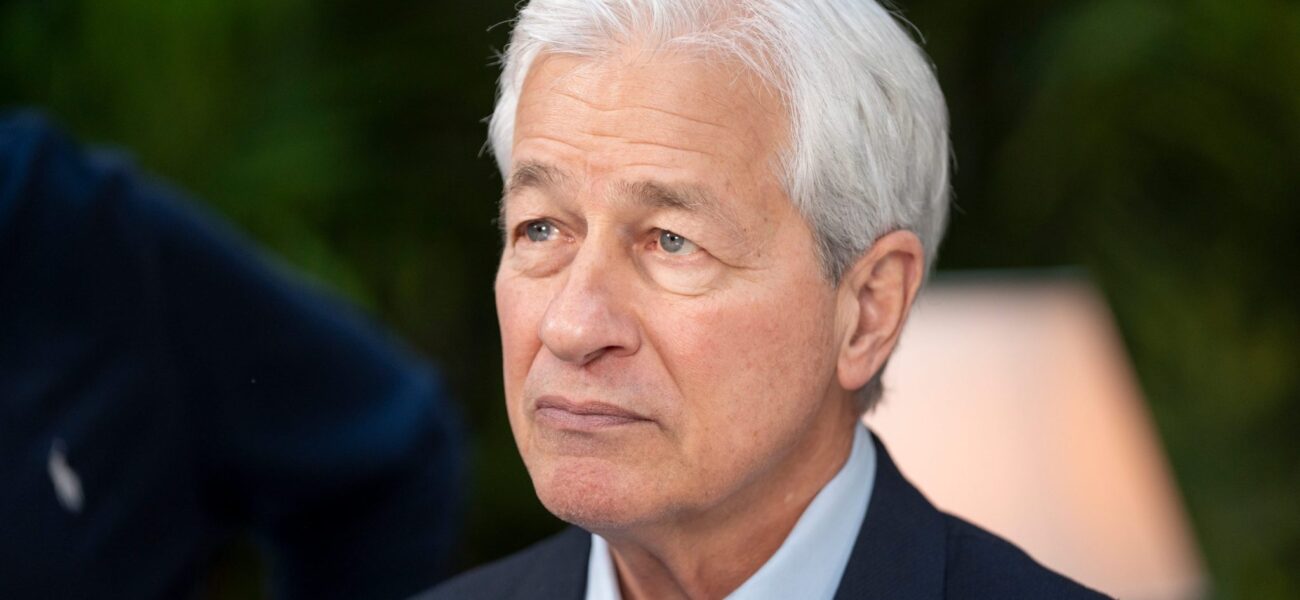
Jamie Dimon, the unflappable boss of JPMorgan Chase, isn’t exactly known for fire-and-brimstone sermons on economic inequality. Yet, in a recent, rather uncharacteristic moment of candor, he articulated what millions already feel in their gut. And it wasn’t some convoluted economic theory. He cut straight to it: we’ve messed up. Plain and simple. For too long, the economic engine has roared, but too many folks were left sputtering in its wake. Dimon himself reportedly termed it “annoying”—the collective societal frustration, I mean—that we’ve “left the lower-income folks behind.” Annoying. That’s a word you don’t typically hear from someone whose daily decisions impact quadrillions. It’s a dry, almost understated acknowledgment of a monumental failure.
This isn’t just about income gaps anymore; it’s about a growing chasm in economic stability and opportunity that threatens to swallow the bedrock of Western economies. For years, politicians have been screaming about this. Now, the guys writing the checks are, begrudgingly, joining the chorus. Because frankly, when even the beneficiaries of the current system start pointing out its cracks, you know the foundation’s shaking.
Consider the data. A study from the Federal Reserve indicated that the richest 1% of Americans now hold more wealth than the entire middle class combined, a concentration not seen in decades. That’s not a trickle-down, that’s a vacuum. But where does the system really pinch? It’s not just abstract percentages. It’s the single mother working three jobs in Lahore, Pakistan, her modest earnings evaporating against surging inflation, dreaming of a stable income. It’s the auto worker in Ohio, whose factory job, once a guaranteed ticket to the middle class, now barely keeps pace with rent and groceries. The sentiment that Dimon—perhaps inadvertently—tapped into echoes globally.
Senator Sherrod Brown, Democrat from Ohio and a frequent critic of unchecked corporate power, didn’t mince words on the subject recently. “The top one percent always talks about job creation, but they really mean wealth extraction,” he stated during a policy discussion. “Until we ensure a fair shake for every worker, from the Rust Belt to the developing world, these admissions of guilt are just lip service.” He’s got a point. Dimon’s a smart guy, — and he knows that social instability isn’t good for business. Unrest, after all, eats into profit margins, doesn’t it?
And then there’s the international perspective. The Gilded Age 2.0 isn’t confined to American shores. The disparities seen in cities like Mumbai, or the vast wealth held by a tiny elite in resource-rich Gulf nations against widespread poverty, reflect a global pathology. While the specific drivers differ—corruption, weak governance, resource curses—the outcome is much the same: an angry populace feeling deliberately sidelined. We can talk all day about global markets — and efficiency, but ignoring human costs? That’s a strategy doomed to fail.
📄 POLICY WIRE WHITEPAPER PUBLISHED: PAKISTAN'S NATIONAL SECURITY POLICY PRIORITIES
👉 READ BY CLICKING HEREEven former World Bank chief economist Pinelopi Koujianou Goldberg, no stranger to market realities, has previously articulated similar concerns, albeit with more academic phrasing. “Global economic growth isn’t enough,” she’d said. “It has to be inclusive growth, or you end up with societal fractures that cost more than any short-term gain.” There’s an uncomfortable consensus building—an alignment of perspectives from Wall Street, Washington, and the global development community that simply can’t be ignored any longer. The stakes are just too high. From rising populism to geopolitical instability, ignoring wealth concentration has serious ramifications. Perhaps that’s why even the people at the top are starting to feel a bit antsy. A little… ‘annoyed,’ if you will.
Sure, a bank CEO acknowledging the obvious isn’t exactly revolutionary. But it’s an interesting barometer. It indicates that the temperature has reached a point where even the most insulated institutions feel the heat. You can’t just keep talking about market mechanisms — and ignore the political earthquake building outside. Not when the ground’s visibly shaking.
What This Means
Dimon’s seemingly throwaway line carries an unusual weight. It’s a concession from the very pinnacle of global capitalism that the prevailing economic philosophy—the one that allowed wealth to hyper-concentrate while median incomes stagnated—is unsustainable. Politically, this plays directly into the hands of progressive movements advocating for wealth taxes, increased social spending, and stricter corporate regulation. It strengthens their narrative that the system isn’t just imperfect, but actively detrimental to a large segment of the population. We’re likely to see intensified legislative efforts to rebalance the scales, from tax code reforms to minimum wage hikes.
Economically, this admission isn’t just about charity; it’s about systemic risk. Widening inequality erodes consumer demand, stifles social mobility, and can lead to financial instability through unsustainable debt. What Dimon seems to be hinting at, subtly, is that broad-based economic security isn’t just a moral good, it’s a long-term economic imperative. For financial institutions, this translates into pressure to rethink their lending practices, investment strategies, and engagement with communities that have felt marginalized. It means grappling with the lingering shadows of historical economic structures that are now becoming too stark to ignore.