

The Ghost in the Machine: Weinstein’s Perpetual Retrial Exposes #MeToo’s Lingering Questions
POLICY WIRE — New York, United States — For many, the very notion feels like a glitch in the matrix. Harvey Weinstein, the man whose alleged predatory conduct ignited a global reckoning against...

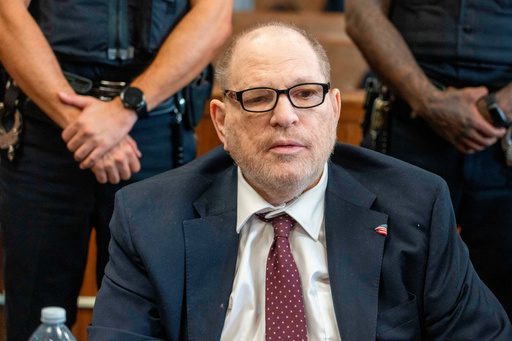
POLICY WIRE — New York, United States — For many, the very notion feels like a glitch in the matrix. Harvey Weinstein, the man whose alleged predatory conduct ignited a global reckoning against sexual abuse, is back in a Manhattan courtroom. Again. Not for a new offense, nor a preliminary hearing, but for a retrial of a case already decided, then overturned, then failed to reach a verdict, now starting its third swing at justice. Jurors have just begun deliberating this fresh iteration of his rape case—a weary, persistent echo in the halls of justice that asks if accountability can ever truly find its final resting place, or if some specters of power simply refuse to be exorcised.
It’s less a legal battle now than an endurance test. For Jessica Mann, the alleged victim, it’s an unbearable public spectacle. For Weinstein, 74, it’s another chance to argue, yet again, that consent wasn’t coerced, but rather a murky affair he consistently misunderstood, despite a body count of accusers long enough to populate a medium-sized town. But the courtroom drama itself—a familiar choreography of he-said-she-said and meticulous cross-examination—pales in significance to the larger question this protracted legal purgatory poses: has #MeToo truly rewired our collective understanding of power dynamics, or is the system still prone to endlessly debating the obvious?
This particular go-around hinges on Mann’s account of a March 2013 encounter. She testified, compellingly by many accounts, to an on-again, off-again relationship with the former movie mogul that turned unequivocally non-consensual on that specific day. Weinstein’s defense, true to form, counters with the well-worn playbook: she stayed in contact, she was “normalizing” complicated feelings, it was all consensual. It’s an old tune, but its resonance continues to ripple, reminding us that for all the declarative shouts of #MeToo, the gray areas, real or manufactured, remain fiercely contested.
And so the machinery of justice grinds on, offering up a spectacle that, for some, feels more like an illustration of systemic inertia than triumphant progress. “This case isn’t just about one man or one woman,” noted Senator Kirsten Gillibrand, a prominent voice for victim’s rights legislation, in an interview earlier this year. “It’s about the endless loop survivors get caught in, how our institutions, however well-intentioned, often force them to relive trauma again and again, questioning their integrity while the accused gets infinite chances.” But where does the system draw its line? That’s the billion-dollar question.
Because as much as we focus on high-profile cases, the grim reality is that they’re the exceptions, not the rule. Consider this chilling statistic: for every 1,000 sexual assaults, a mere 7 result in a felony conviction, according to figures from RAINN (Rape, Abuse & Incest National Network). This trial, in its dizzying repetition, doesn’t just confirm the uphill battle survivors face; it highlights the enduring, almost perverse fascination with the defense’s narrative, even against overwhelming evidence and testimony. It’s as if the system itself struggles to believe women, always seeking that one, microscopic flaw in their story, that sliver of doubt, however improbable.
This phenomenon isn’t unique to Hollywood or New York. From bustling Lahore to the quiet villages of Bangladesh, debates over consent, honor, and accountability continue to roil societies, particularly where patriarchal structures are deeply entrenched. In many parts of the Muslim world, women fighting for their rights encounter formidable cultural — and legal barriers. While the context is distinct, the fundamental power dynamics and the struggle for recognition of agency bear uncanny resemblances. “What we’re seeing with Weinstein isn’t just about legal minutiae,” explains Dr. Amina Rahman, a prominent legal scholar specializing in gender-based violence law across various jurisdictions, including South Asia. “It’s about a society, across diverse cultures, grappling—and often struggling—with a wholesale recalibration of male authority and female bodily autonomy. The sheer exhaustion of this process is almost by design, a deterrent in itself.”
What This Means
The prolonged legal odyssey of Harvey Weinstein, an undeniable touchstone of the #MeToo era, carries significant political and economic implications far beyond the confines of a Manhattan courtroom. Politically, the mere existence of a second retrial on a previously overturned conviction risks cynicism. It creates a narrative, however misleading, that powerful individuals can delay — and wear down the system indefinitely. For lawmakers pushing for more robust protections and clearer definitions of consent, this protracted battle can either galvanize support—highlighting the judicial tightrope the system often walks—or it could induce fatigue among a public that has already moved past the initial shockwaves of 2017. Don’t underestimate how much optics matter here.
Economically, the persistent shadow of this case serves as a cautionary tale for industries, particularly those still wrestling with a historical boys’ club culture. Corporations understand, or should, that the costs of mishandling allegations, ignoring complaints, or fostering environments ripe for abuse are staggering—not just in direct legal fees, but in irreparable reputational damage, talent drain, and decreased productivity. Investors and shareholders are increasingly scrutinizing Environmental, Social, and Governance (ESG) factors, and a company’s stance on workplace conduct falls squarely into the ‘Social’ bucket. Another prolonged, public fight like Weinstein’s reinforces the message that sweeping problems under the rug isn’t just morally bankrupt; it’s financially unwise. This case isn’t about the accused getting “his day in court,” so much as it’s a systemic referendum on whether justice, particularly for the powerful, is ever truly settled.