


Last Rites & Nachos BellGrande: Fast Food’s Unexpected Gravitas in Appalachian Town
POLICY WIRE — West Virginia, USA — One might imagine a person approaching their twilight years—especially those navigating the unforgiving terrain of terminal illness—would harbor wishes of sweeping...

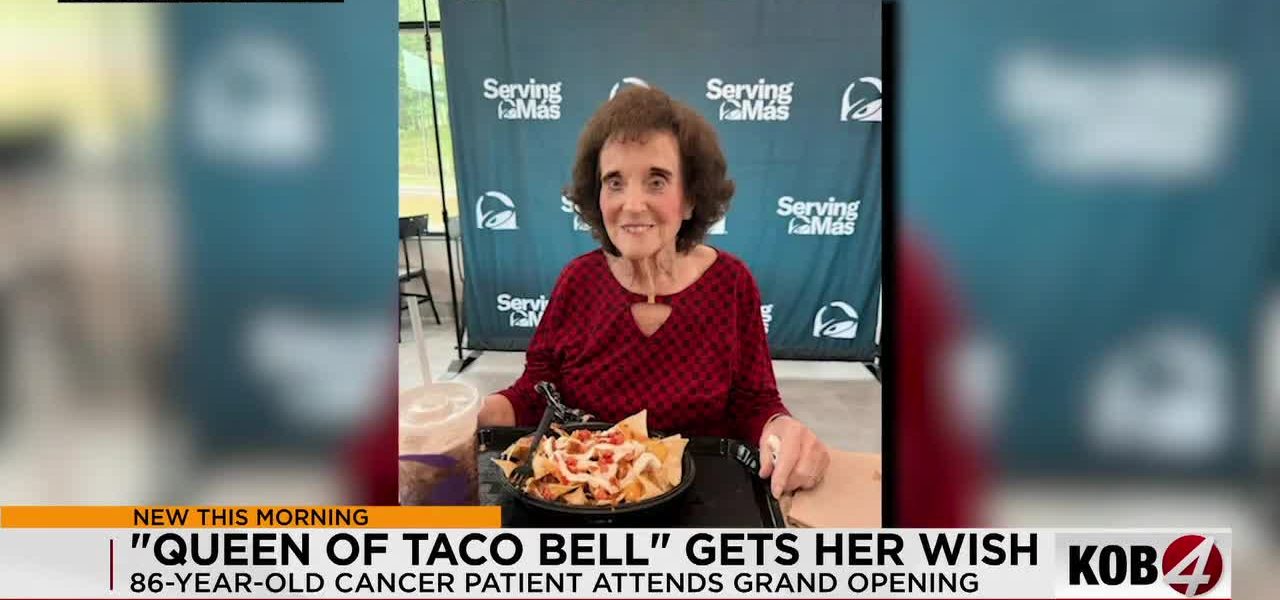
POLICY WIRE — West Virginia, USA — One might imagine a person approaching their twilight years—especially those navigating the unforgiving terrain of terminal illness—would harbor wishes of sweeping geopolitical reconciliation, a cure for cancer, or perhaps, simply, one last glance at a majestic, far-off peak. But for Pauline Monk, 86, the fervent, decades-long yearning that tethered her to this mortal coil was decidedly more earthly, more immediate: a Taco Bell in her small West Virginia hometown. And she got it, arriving as the establishment’s inaugural patron, a quiet queen presiding over her fast-food dominion.
It’s easy, isn’t it, to dismiss this as a quirky, heartwarming anecdote—a digital confection for social media scrolls. But beneath the saccharine surface of a great-grandmother finally getting her Nachos BellGrande and a Diet Pepsi lies a grittier truth about America’s overlooked corners, the subtle cravings that reveal deeper economic and social deficits, and the unexpected gravitas bestowed upon commercial franchises in places aching for a pulse. This isn’t just about a lady wanting tacos; it’s about what a Taco Bell signifies in a community often forgotten by corporate boardrooms and, frankly, by policy makers.
Her statement, uttered with profound simplicity to the Today Show, cuts to the quick of human desire and the often-unfathomable will to endure: “I wanted to see the Taco Bell open and the Lord kept me here.” An existential testament, delivered through the prism of seasoned ground beef and artificial cheese sauce. Because sometimes, the monumental simply manifests in the mundane. A woman on the precipice, holding onto a small, attainable dream. Who are we to judge its worth?
The arrival of any national chain in a rural enclave like Monk’s West Virginia town often sparks a flurry of local commentary. It’s both a blessing — and a curse, isn’t it? On one hand, jobs. Convenience. A hint that perhaps the wider world hasn’t entirely forgotten them. On the other, it’s an economic marker that often signifies the continued hollowing out of independent, local businesses—the mom-and-pop joints that once formed the very bedrock of such communities. You know, the places that knew your name, not just your order number.
This isn’t an isolated phenomenon, a mere cultural quirk of Appalachia. Go to the burgeoning, sprawling peripheries of Karachi, Pakistan, or the newly gentrifying suburbs outside Lahore. What do you see springing up, often before any meaningful public infrastructure? Global fast-food brands. Kentucky Fried Chicken. McDonald’s. And yes, increasingly, Taco Bell. These aren’t just restaurants; they’re symbols. Symbols of a kind of modern aspiration, a gateway to a globalized consumer identity, much like the one Pauline Monk unwittingly championed. They represent, for many, a step forward, even as they sometimes flatten unique cultural landscapes. It’s a similar underlying impulse, whether it’s an aging American woman or a young Pakistani family, to partake in the same universal consumer culture.
But back to West Virginia. This region, like so many across the US rust belt and forgotten coal country, struggles with economic revitalization, population flight, and a gnawing sense of being left behind. Recent analysis from the National Rural Economic Development Association indicates that nearly 60% of new retail and food service jobs created in towns with populations under 10,000 between 2010 and 2020 came from chain establishments, not local independent businesses. This isn’t a criticism of the chains themselves, mind you; it’s an observation on the underlying currents shaping our local economies. The promise of readily available, often minimum-wage employment is a draw in areas where options can be painfully scarce.
So, the ceremonial ribbon-cutting for a new Taco Bell, heralded by an octogenarian in her last act, isn’t just a quirky local event. It’s a lens. A way to scrutinize how we measure prosperity, happiness, — and even a final sense of fulfillment. It reflects the curious ways capital flows, — and doesn’t flow, into different parts of a nation. It’s a moment of profound personal triumph, surely. But it’s also a stark commentary on the broader canvas of American economic ambition and decline, painted with hot sauce and the hopeful gleam of a corporate logo.
What This Means
This heartwarming, if slightly melancholic, story encapsulates several threads often overlooked in policy discussions. Firstly, it spotlights the potent symbolism of national brands in communities hungry for economic affirmation. The arrival of a recognizable fast-food chain often signals to residents, investors, and municipal planners alike that a town isn’t entirely ‘dead,’ that there’s still commercial viability. It can generate local buzz, however modest, and even, paradoxically, foster a sense of civic pride, even if it’s over mass-produced tacos.
Secondly, it underscores the intricate link between consumer choice, corporate expansion, and local economic resilience—or lack thereof. For West Virginia and other regions facing entrenched economic headwinds, these chains are often seen as job creators, however low-wage, providing a base level of employment that might otherwise be absent. Policymakers should heed what citizens genuinely value, whether that’s high-tech manufacturing or just convenient drive-thru access. Ignoring these grassroots desires risks missing a deeper understanding of local needs and the economic indicators that truly resonate.
And thirdly, this event—a small-town celebration of a Taco Bell, spearheaded by an elderly, terminally ill woman—serves as a stark, if indirect, commentary on the uneven distribution of progress and opportunity. The ease with which amenities are taken for granted in metropolitan areas is starkly contrasted by their celebrated arrival in underserved communities. For residents, it’s not merely about the food; it’s about being seen, being served, and feeling connected to a broader, more prosperous world. Just as we see in emerging economies across South Asia, where the first appearance of a multinational brand is a marker of modern status and development, so too does it function in America’s own hinterlands. For more insights on the delicate balancing acts of developing nations, one might consider Islamabad’s fiscal gambits. It’s a global narrative of aspirational consumerism, playing out on main streets — and back alleys alike.