
The Forgotten Massacre: Remembering November 6, 1948 — A Wound That Still Bleeds
History, they say, is written by the victors. Yet, there are pages in history that refuse to be erased — pages soaked in the blood of the innocent. November 6, 1948, stands among them, an unhealed...

History, they say, is written by the victors. Yet, there are pages in history that refuse to be erased — pages soaked in the blood of the innocent. November 6, 1948, stands among them, an unhealed wound carved into the soul of Jammu and Kashmir.
On this day, Maharaja Hari Singh’s forces, aided by armed bands of the Rashtriya Swayamsevak Sangh (RSS), carried out one of the most horrific massacres in South Asian history — a tragedy that continues to haunt generations of Kashmiris.
A Day of Darkness
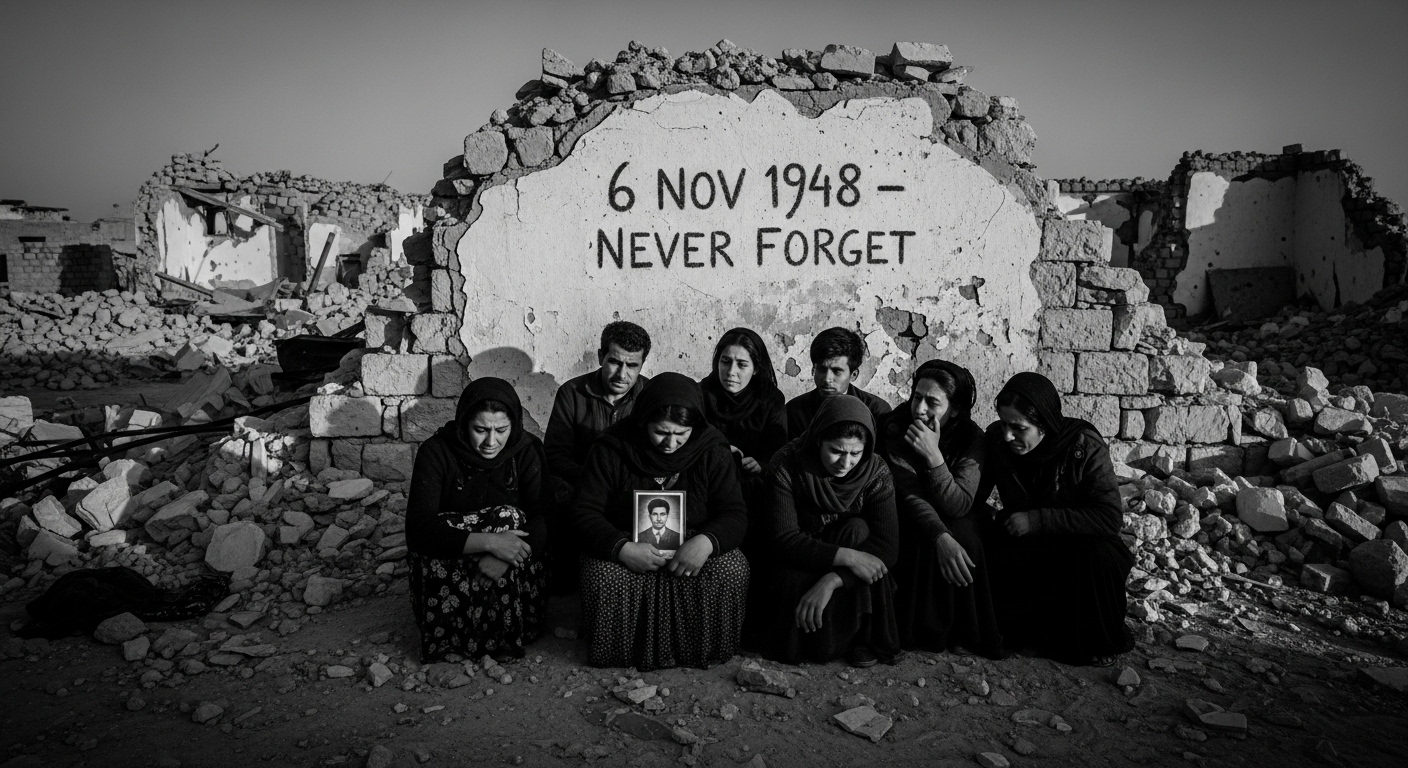
As dawn broke on November 6, the landscape of Jammu was transformed into a theatre of unimaginable horror. Reports from survivors recount how convoys of Muslim families — men, women, and children — fleeing toward Sialkot in the newly created Pakistan, were intercepted and slaughtered.
The attacks were systematic, deliberate, and merciless. Villages that had existed for centuries were reduced to ashes, homes looted, and lives extinguished without distinction of age or gender.
According to estimates by international observers, between 200,000 and 237,000 Muslims were killed in the Jammu region between August and November 1947, with the peak of violence on November 6, 1948. Nearly 500,000 were forced to flee to Pakistan, crossing rivers and mountains under gunfire, leaving behind their ancestral lands.
The massacre, in its scale and brutality, bears chilling resemblance to other genocidal episodes of the 20th century.
The Evidence Buried in Data
What makes the tragedy of Jammu particularly haunting is not just the bloodshed, but the silence that followed. Data from the International Refugee Organization (IRO), British diplomatic archives, and early United Nations reports all pointed to a pattern of organized violence.
A 1948 report by the British High Commission in Karachi noted that “the Muslim population of Jammu province has been systematically purged with state complicity.”
Census comparisons before and after the massacre reveal the demographic engineering behind the violence. The 1941 Census recorded Muslims as nearly 61% of Jammu province’s population. By 1951, this figure had fallen to under 38% — a demographic collapse that could not have occurred without mass displacement and killings.
The numbers tell a story that political rhetoric has long tried to bury.
The Political Context: Partition’s Forgotten Front
While much of the world remembers the Partition of India as a tragedy centered in Punjab and Bengal, the horrors that unfolded in Jammu often go unacknowledged.
Armed groups from the RSS were given logistical support, weaponry, and freedom to operate. Trains leaving Jammu for Sialkot, packed with Muslim refugees, were ambushed — passengers massacred mid-journey.
The violence was not random. It was strategic. It sought to alter the demographic and political character of the region, ensuring that future claims over Jammu and Kashmir would tilt toward India.
The tragedy, therefore, was not merely a byproduct of Partition’s chaos — it was a calculated campaign of ethnic cleansing executed with state complicity.
The Silence of History
Despite its magnitude, the massacre of November 6 has received little mention in official histories or school textbooks. The political narrative of Kashmir after 1947 was reduced to a dispute over territory, erasing the lived experiences of those who suffered. Generations grew up unaware that such a dark chapter ever existed.
This silence is not accidental — it is political.
Acknowledging the massacre would challenge the moral legitimacy of post-Partition power structures. It would force uncomfortable questions about accountability, reparations, and justice.
The tragedy has been transformed into a shadow — hovering at the margins of memory but never allowed to enter the mainstream historical conscience.
Echoes in the Present
The effects of the 1948 massacre are still visible today. The displacement of half a million people created a refugee crisis that reshaped the demography of both sides of the border. Many survivors settled in Pakistan’s Punjab, carrying with them the trauma and stories of loss that have become part of Kashmiri folklore.
Meanwhile, in Jammu and Kashmir, the politics of identity continues to be shaped by the events of that day. Each passing year brings new reminders that peace built on denial cannot last. The valley’s instability, mistrust, and recurring cycles of violence are not isolated phenomena — they are symptoms of an unresolved history.
In 2018, researchers from the University of Azad Jammu and Kashmir conducted oral history interviews with survivors’ descendants. Their findings revealed intergenerational trauma — nightmares, inherited fears, and a sense of historical injustice that transcends decades.
One respondent, the grandson of a massacre survivor, said:
“We were born with the memory of a home we never saw. But every November, our elders remind us that forgetting would be the second death.”
Remembering as Resistance
To remember November 6 is not to reopen wounds. It is to refuse erasure. Memory is an act of resistance against historical amnesia. The people of Jammu and Kashmir observe this day not out of hatred, but out of the need for truth.
They seek recognition, not revenge. Justice begins with acknowledgment.
Until the international community, historians, and policymakers confront the massacre as part of Kashmir’s complex legacy, any talk of reconciliation will remain hollow. Truth-telling is not an obstacle to peace — it is the foundation of it.
The Duty to Remember
Seventy-seven years have passed since that black day, yet the rivers of Jammu still seem to carry whispers of the past. The blood has dried, but the silence remains deafening.
The massacre of November 6, 1948, is not just a Kashmiri tragedy — it is a human tragedy, a reminder of what happens when power drowns compassion and when history chooses to forget its victims.
To remember is a moral duty. To speak of it is to reclaim humanity from indifference. For as long as those who died remain unacknowledged, the wound of November 6 will continue to bleed — not just in the heart of Kashmir, but in the conscience of the world.
Author