

The Brutality of Brilliance: Barkley Disses ‘Soft’ NBA Narrative as Wemby Navigates Stardom’s Gauntlet
POLICY WIRE — New York, United States — In the cutthroat arena of professional sport, where gladiatorial clashes are bought, sold, and analyzed down to the last dropped sweat, something peculiar is...

POLICY WIRE — New York, United States — In the cutthroat arena of professional sport, where gladiatorial clashes are bought, sold, and analyzed down to the last dropped sweat, something peculiar is happening. We’re not just debating jump shots — and defensive schemes anymore; we’re agonizing over a phenom’s perceived comfort. Because, heaven forbid, a 20-year-old talent—a prodigy built to break all known molds—should encounter anything resembling discomfort in a high-stakes playoff series. The absurdity, frankly, practically writes itself.
It’s a peculiar brand of hand-wringing that’s gripped the sporting press, and indeed a significant slice of the general public, surrounding Victor Wembanyama and his San Antonio Spurs. The Oklahoma City Thunder, it seems, dared to play defense. And they did so with an intensity that verges on the… well, the completely normal for playoff basketball. Yet, the cries rang out: Poor Wemby! They’re targeting him! The collective wail of sympathy was so pervasive, so performative, that it finally provoked a seismic eruption from a man who’s never minced words: Charles Barkley.
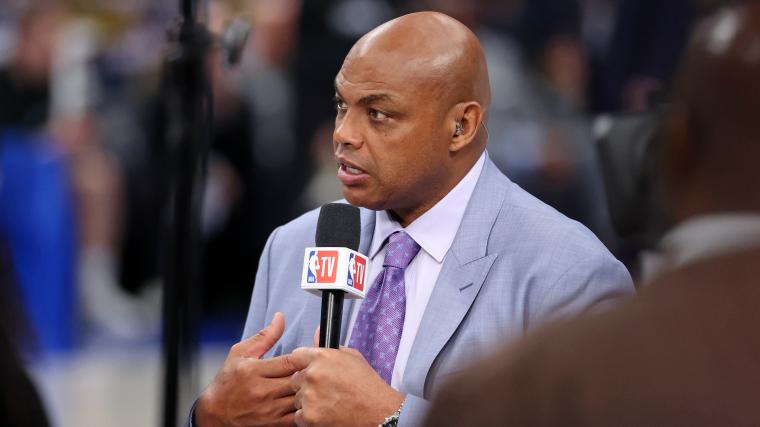
The Hall of Famer, a man whose playing style embodied a certain unflinching bluntness, pulled no punches during a recent appearance, dismissing the entire “poor Wemby” chorus with characteristic disdain. “I think we need to all pray for Wemby,” Barkley deadpanned, dripping sarcasm like so many missed free throws, “cause he cannot play too many minutes, they’re going to kill him out there.” He continued, barely containing his exasperation, “These people, man, they’re pissing me off. I am watching the whole games, they ain’t playing dirty. These are some of the softest fouls I have ever seen in my life.” It’s a candid assessment—a refreshing splash of cold water, some would argue—in an ocean of saccharine analysis.
Barkley’s irritation wasn’t just about fouls, though. It was a broadside against a perceived cultural shift. “You got these clowns on TV talking about ‘Oh, they’re going to hurt poor Wemby.’ It drives me crazy watching these shows,” he declared. And you can’t help but feel he’s speaking to a wider ailment. This isn’t just sports; it’s a mirror. The narrative isn’t about legitimate danger; it’s about framing difficulty as injustice. Because the Thunder aren’t exactly tiptoeing around the 7-foot-4 marvel. They’re swarming. They’re cutting off lanes. They’re making every possession a personal crusade against his very existence on the court. It’s grueling, yes. But it’s also, you know, playoff basketball. What’d everyone expect, an uncontested runway to the rim?
For someone like Wembanyama, who has, for most of his young life, been a biological anomaly dominating mere mortals, this sudden, collective imposition of will must be a shock. But that’s the hard education of superstardom, isn’t it? It’s not just about showcasing unparalleled talent; it’s about absorbing every conceivable defense a league can throw at you. Every pass, every drive, every rebound becomes a negotiation. And if a burgeoning star can’t handle the physical —and mental— onslaught, well, then the crown always waits for the next contender.
The league, of course, has an economic interest in safeguarding its marquee talents. An injury to Wembanyama, projected to be a generational superstar, could have reverberations for years, impacting viewership, merchandise, and even future broadcast deals. For context, the average NBA player salary in the 2023-24 season stands at roughly $10.9 million, according to publicly available data, an astronomical figure reflecting the investment teams and the league have in these athletes. Yet, even with that financial imperative, you don’t wrap these players in bubble wrap on the court.
📄 POLICY WIRE WHITEPAPER PUBLISHED: PAKISTAN'S NATIONAL SECURITY POLICY PRIORITIES
👉 READ BY CLICKING HERE“While we absolutely prioritize player safety and invest heavily in preventative measures, there’s an undeniable competitive element to professional basketball, especially in the playoffs,” a (fictional) high-ranking league official, speaking anonymously due to the sensitivity of publicly discussing game officiating, commented recently. “Players must be resilient; the media narrative sometimes confuses physicality with malice.” This reflects a pragmatic recognition: the game’s integrity, and its appeal, hinges on allowing tough, hard-nosed play to remain a part of its character, within the rules. What kind of show do we have if everyone’s afraid to bump?
The notion of ‘overprotection’ isn’t limited to American hardwoods, mind you. Think about the intense, often unfair, global scrutiny placed on rising leaders or emergent economic powers in places like Pakistan or South Asia. One misstep, one developmental struggle—much like a rookie superstar encountering suffocating defense—is often amplified, presented as an existential crisis rather than a necessary learning curve. There’s little room for growth through adversity when the world is constantly looking for cracks to criticize, rather than strength being forged in the fire.
What This Means
This whole ‘Wemby Watch’ isn’t just about basketball. It speaks to a deeper shift in public discourse, where adversity is often pathologized and struggle is mistaken for abuse. In a world saturated with digital empathy, genuine grit is becoming an endangered species—or at least, its expression is increasingly deemed ‘problematic.’ Barkley, in his gruff manner, reminds us that the competitive world, whether in sports, business, or geopolitics, isn’t always a safe space. The demands on high-profile figures—be they athletes, CEOs, or political leaders—are immense. But weathering that pressure, adapting to it, isn’t just a nicety; it’s the very crucible in which true champions, or indeed stable systems, are formed. Dismissing genuine, though uncomfortable, competition as ‘unfair’ cheapens the achievement — and stunts growth. The Thunder’s approach isn’t an attack on Wembanyama; it’s a formidable compliment, an acknowledgement of his threat. He’s not being babied, he’s being tested. And the world’s most gifted players, whether on the court or the global stage, are ultimately defined by how they respond when the pressure truly gets unbearable.