


The Brutal Ballet of Blunders: How Two Dropped Catches Rewrote IPL History
POLICY WIRE — New Delhi, India — In the often-clinical world of professional sports, where billions ride on precision and execution, Saturday offered a stark, almost theatrical reminder of...

POLICY WIRE — New Delhi, India — In the often-clinical world of professional sports, where billions ride on precision and execution, Saturday offered a stark, almost theatrical reminder of humanity’s inescapable fallibility. It wasn’t the towering sixes or the lightning-fast run rate that ultimately sealed a historic Indian Premier League chase for the Punjab Kings; it was the soft, almost imperceptible thud of a cricket ball hitting the turf, twice, from the grasp of a seasoned fielder. This wasn’t merely a dropped catch; it was a pivot point, an almost poetic instance where the unforgiving arithmetic of high-performance sport collided with the agonizing reality of human error.
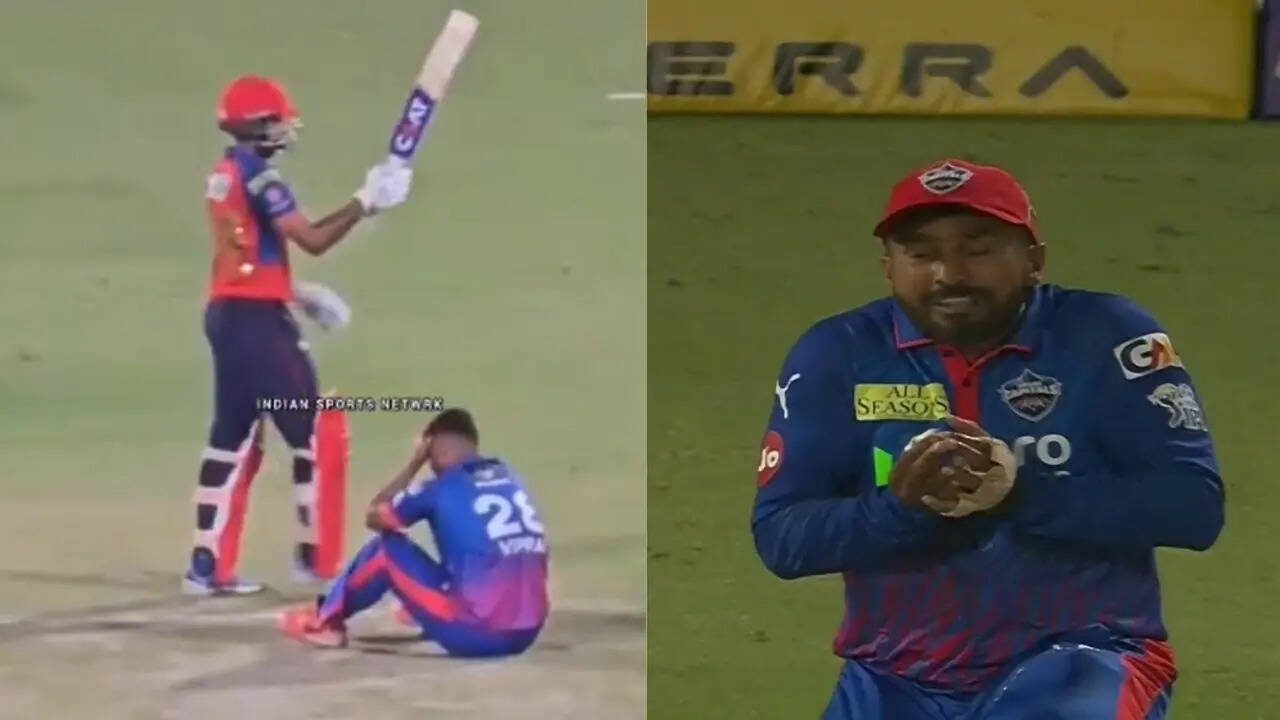
The Delhi Capitals, facing what should have been a manageable defense of a monumental 265-run target, saw their aspirations—and the hopes of their fervent fanbase—evaporate in a span of four balls. Veteran fielder Karun Nair, a player whose career has been built on an admixture of talent and gritty perseverance, became the unwitting protagonist in this unfolding drama, fumbling two consecutive opportunities to dismiss Punjab Kings captain Shreyas Iyer. And Iyer, displaying the kind of ruthless pragmatism rarely seen outside the halls of power, capitalized with a blistering 71 runs off just 36 deliveries, transforming a precarious situation into a triumphant, record-shattering chase.
Vipraj Nigam, the Capitals’ bowler whose delivery had first induced the mistimed shot from Iyer, slumped to the ground, head in hands, as the reality sunk in. It’s a tableau familiar to anyone who’s witnessed the brutal calculus of athletic endurance. “It’s brutal,” Nigam later asserted to Policy Wire, his voice still tinged with disbelief. “You work years for these moments, — and then a split second, a simple error, changes everything. We’ll analyze it, of course, but it’s a tough pill to swallow when you’ve given everything.” Such moments aren’t just about the game; they’re microcosms of broader pressures, echoing the high-stakes decisions that define national economies or geopolitical maneuvering. Still, the Delhi management must be pondering the immediate — and downstream costs.
Iyer, for his part, was less introspective about his good fortune. “Look, we’re ecstatic with the win, obviously,” he observed after the match, a subtle smirk playing on his lips. “But in these high-pressure moments, you take whatever luck comes your way. It’s about capitalizing, not dwelling on what might’ve been for the opposition. We didn’t just get lucky, we had to earn it too, especially after that phenomenal opening stand.” Indeed, openers Prabhsimran Singh (76 off 26 balls) and Priyansh Arya (43 off 17 balls) had already unleashed a devastating assault, forging a 126-run partnership in a mere 6.5 overs and posting a season’s highest power play score of 105/0. But it was Iyer’s reprieve—twice—that fundamentally altered the game’s trajectory.
Behind the headlines of sixes and dropped catches lies a deeper narrative about the economics of sporting excellence in South Asia. The Indian Premier League isn’t just a cricket tournament; it’s a colossal entertainment industry, a cultural phenomenon, and a significant economic driver. Its success resonates across the subcontinent, inspiring (and sometimes frustrating) cricket boards and fans from Dhaka to Karachi. While political tensions often restrict direct participation, the IPL’s magnetic pull means players from across the Muslim world and broader South Asia often look to its lucrative contracts and unparalleled exposure as the zenith of their ambitions. It’s a brutal market, demanding perfection, yet always susceptible to the very human frailties on display Saturday.
And these frailties, it’s worth noting, carry a hefty price tag. For the Delhi Capitals, the loss against Punjab Kings, directly influenced by those dropped chances, didn’t just affect their standing on the league table. It will undoubtedly impact team morale, future sponsorship negotiations, — and even player valuations. According to industry analyses, a single dropped catch in a high-stakes match can indirectly translate into millions of dollars in lost revenue or increased expenditure, particularly in leagues where every win and loss is meticulously scrutinized by global brands. The 265-run chase, now the highest successful one in IPL history, will be etched not just in record books, but also in the cautionary tales of sporting finance.
Still, the spectacle endures. The inherent drama, the swings of fortune—these are precisely what captivate audiences. But for teams like Delhi, the post-mortem won’t just involve tactical reviews; it’ll delve into the psychological resilience of their athletes, the fine line between peak performance and critical collapse. It’s a lesson applicable far beyond the cricket pitch, illustrating how the most meticulous plans can unravel under pressure, often due to the smallest, most unexpected human slip.
What This Means
The Delhi Capitals’ misfortune on the field isn’t just a sports story; it’s a compelling case study in risk management and the unpredictable human element within high-value enterprises. Economically, the IPL represents an estimated annual contribution of over $11 billion to India’s GDP, attracting massive foreign investment and talent. A single match outcome, particularly one so dramatically decided, influences a complex ecosystem involving broadcasting rights, advertising revenue, player endorsements, and even the emotional investment of a global audience.
Politically, the league serves as a soft power projection for India, cementing its role as a cricketing hegemon while simultaneously fostering a competitive, capitalist sporting environment. The narrative of individual heroism and fallibility, like Nair’s blunders and Iyer’s subsequent brilliance, resonates deeply with public sentiment, often mirroring the public’s perception of leadership and accountability in broader societal contexts. When a team fails due to preventable errors, it mirrors voter disillusionment with policy blunders. For players from across South Asia—including those aspiring from Pakistan or other parts of the Muslim world who follow the league despite not directly participating—the IPL epitomizes both the pinnacle of opportunity and the ruthless demands of a meritocratic, globalized market. The psychological toll on individuals under this intense scrutiny, where a split-second mistake can become a national talking point (or, indeed, an inferno), underscores the immense pressures inherent in any high-stakes endeavor, be it on the pitch or in the corridors of power. It’s a vivid reminder that even the most well-resourced operations remain susceptible to the frailties of the human hand.