

The Billion-Dollar Embrace: Gilgeous-Alexander Confronts James, Reshaping NBA’s Global Monarchy
POLICY WIRE — Oklahoma City, USA — The murmurs had been there, a low hum beneath the thunderous dunks and improbable three-pointers of the NBA regular season. But now, as the Oklahoma City Thunder —...

POLICY WIRE — Oklahoma City, USA — The murmurs had been there, a low hum beneath the thunderous dunks and improbable three-pointers of the NBA regular season. But now, as the Oklahoma City Thunder — a surprisingly potent, youthful aggregation — prepare to collide with the Los Angeles Lakers in the second round of the 2026 playoffs, those murmurs have transmuted into a roar. It isn’t just a basketball series; it’s a meticulously engineered economic event, a clash of eras, and perhaps, a subtle passing of the torch in the league’s grand theatrical production.
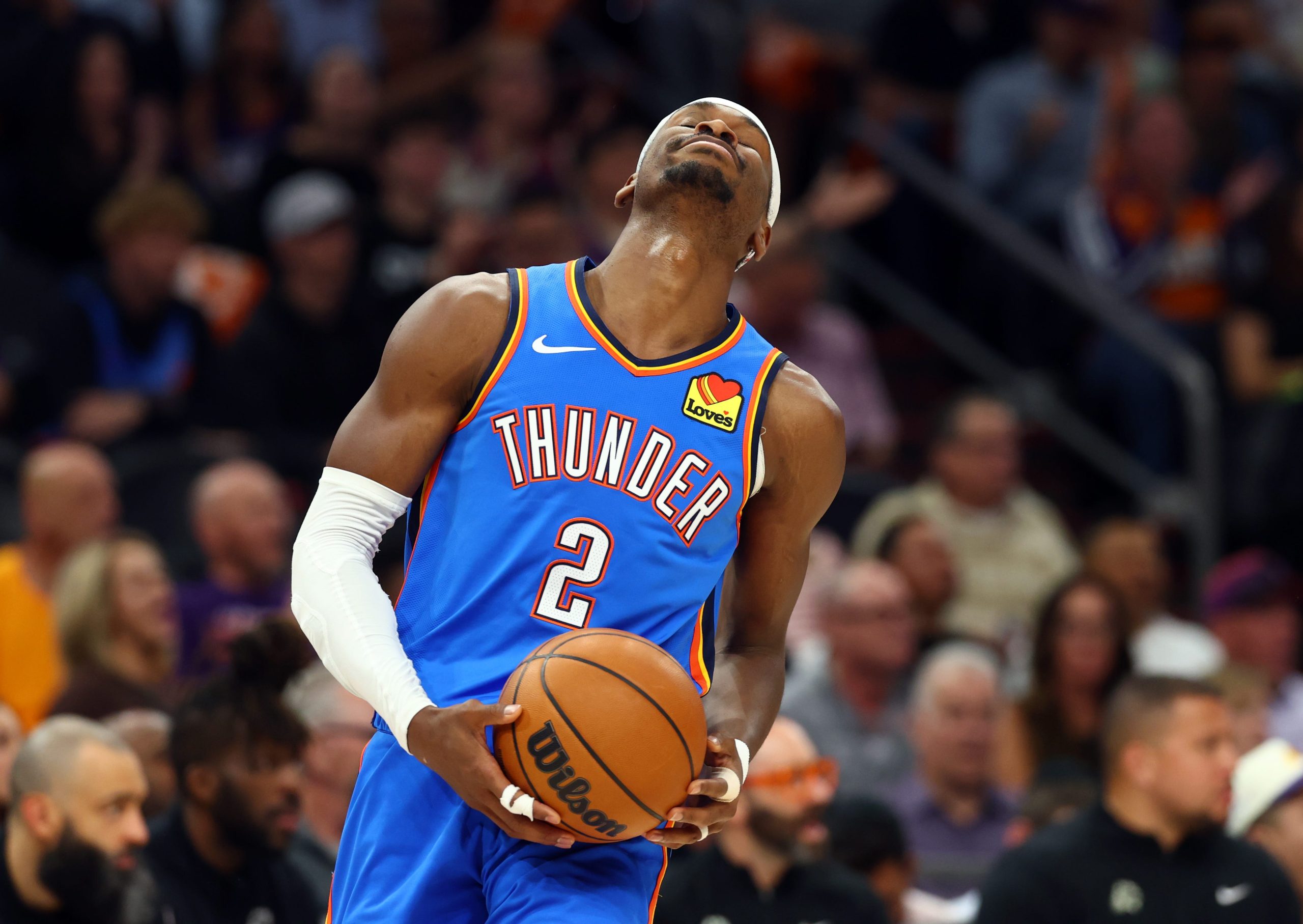
No one’s pretending this isn’t about LeBron James. He’s a walking, talking, billion-dollar conglomerate, a sporting deity whose mere presence elevates a contest from a game to an international spectacle. But the narrative isn’t solely his anymore. It’s increasingly about Shai Gilgeous-Alexander, the Thunder’s ascendant guard, already on the precipice of his second consecutive MVP award. And it’s this very tension, this juxtaposition of established titan against surging phenom, that has the league’s powerbrokers quietly rejoicing.
“We don’t ever take that for granted,” Gilgeous-Alexander asserted, his tone measured but firm when addressing the gravity of facing James in the postseason. He wasn’t dwelling on the individual matchup so much as the rarefied air of the moment itself. “There are guys who are really good basketball players who have never played in the playoffs in a moment of their lives. Just the moment itself, just try to take advantage and be very present.” It’s a pragmatic approach, isn’t it, one that acknowledges the overwhelming presence of James while subtly redirecting focus to his team’s own ascent.
He’d also offered an almost reverential assessment of James’s sprawling legacy. “You can really test yourself against him. Obviously, he’s a little bit out of his prime, but he’s very capable.” This wasn’t bravado; it was a candid recognition of a force of nature, a living legend whose influence on the game, as he put it, “speaks for itself.” And you know, he’s right; few athletes have so profoundly reshaped their sport, on and off the court.
But the true story here extends far beyond the hardwood. It’s about global market share, about the burgeoning economies of sports entertainment, and how a marquee matchup translates into tangible revenue. Commissioner Adam Silver, ever the astute guardian of the league’s coffers, didn’t mince words in a recent industry conference. “These are the storylines that captivate the globe,” Silver had opined. “The synergy of established greatness meeting emerging brilliance? It’s not just compelling television; it’s a robust economic engine, fueling viewership from Los Angeles to Lahore, generating unprecedented engagement in regions we’re actively cultivating.” His remarks underscore the league’s persistent push into new territories.
Consider the sheer reach: The NBA reported a 5% increase in global average viewership during the 2022-23 season, reaching 283 million viewers, a data point that underscores the league’s expanding digital footprint, according to Sportico. And a significant portion of that growth, don’t you think, stems from markets like Pakistan and India, where basketball, while not yet eclipsing cricket, is steadily gaining traction among a burgeoning youth demographic. These are regions where the spectacle of American sports is consumed with increasing fervor, where LeBron James is as recognizable a figure as any local celebrity, and where Gilgeous-Alexander’s rise signifies a new generation of global idols. It’s the brutal calculus of talent, writ large across a world map.
What This Means
At its core, this playoff series transcends traditional sports rivalry; it’s a case study in the modern sports economy and the meticulous construction of global athletic brands. For the NBA, it’s a validation of its long-term strategy: cultivate international talent, leverage superstar narratives, and expand digital distribution. The clash of Gilgeous-Alexander’s youthful dynamism against James’s enduring magnetism creates a compelling, almost cinematic, drama that resonates globally. This isn’t just about who wins Game 1; it’s about the cultural capital being exchanged, the eyeballs being captured, and the future revenues being cemented.
For players like Gilgeous-Alexander, it’s an opportunity to solidify a personal brand that extends beyond North America, mirroring the broader global aspirations of athletes from the Muslim world and South Asia who seek to emulate such cross-cultural impact. And for fans in burgeoning markets, particularly across Pakistan and the broader South Asian diaspora, it’s an accessible entry point into a global phenomenon, a shared experience that transcends geopolitical boundaries. The sustained popularity of events like this demonstrates how sports serve as a powerful form of soft diplomacy, binding disparate populations through shared heroes and thrilling contests. In a world fraught with division, it’s a testament to the unifying power of a well-told story, even if that story unfolds on a basketball court. It’s also an economic bellwether, revealing the immense value of athletic celebrity in an increasingly interconnected world, a value that continues to challenge traditional notions of regional influence, much like the high stakes of the IPL.