


The Silent Revolution: How ‘Convenient’ Messaging Features Redefine Digital Life and Autonomy
POLICY WIRE — Albuquerque, N.M. — It’s often the tiny, almost imperceptible shifts in our digital landscapes that yield the most profound reconfigurations of daily life. We’re talking about...

POLICY WIRE — Albuquerque, N.M. — It’s often the tiny, almost imperceptible shifts in our digital landscapes that yield the most profound reconfigurations of daily life. We’re talking about those unassuming buttons, the ones you tap without much thought. Because these aren’t just cute extras; they’re the new frontier of our digital social contracts, quietly redefining what we share, with whom, and under what unspoken terms.
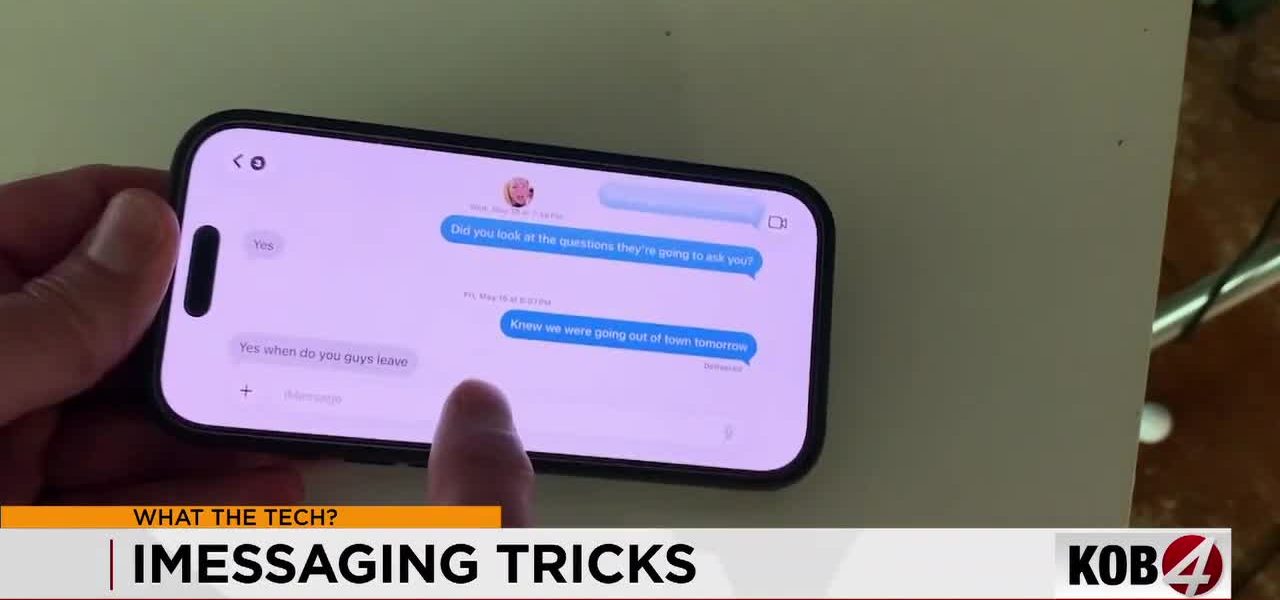
Behind the benign facade of a ‘plus’ symbol in Apple’s iMessage, a suite of functionalities exists—some genuinely useful, others bordering on the uncanny—that reshape our expectations around personal interaction and, dare I say, surveillance. These aren’t headline-grabbing updates, no. But their cumulative effect? That’s where the policy wire starts to hum.
Take ‘Check In’ for example. On its surface, it’s a brilliant balm for worried minds. If you’re heading out, maybe on a late-night drive or your teenager’s off with friends, your iPhone can, on its lonesome, tell someone you arrived safe and sound. If you don’t make it to your destination on schedule, it escalates—sharing your location, battery life, even the route you took. It’s pitched as peace of mind, a digital guardian angel. But what does it mean to delegate our self-reporting, our autonomy, to a smartphone feature?
Dr. Lena Khan, a digital ethics researcher at the Georgetown Institute, didn’t mince words. “These seemingly benign ‘features’ quietly redefine our social contracts around personal space and consent,” she observed recently, “shifting boundaries one ‘heartbeat’ animation at a time.” And she’s got a point. When an automated system holds the key to your whereabouts, your journey, even your power status, the lines blur between caring and cataloging.
It gets weirder, doesn’t it? Beyond mere logistics, iMessage dabbles in the realm of raw, unmediated emotion. Behind that same ‘plus’ icon, ‘Digital Touch’ lurks. Hold two fingers on your screen to record your actual heartbeat, a pulsating snippet of your very biological presence. Tap two fingers, send a kiss. Drag two fingers down, — and a broken-heart animation splinters across the recipient’s screen. It’s direct. It’s intimate. And it’s profoundly performative—a digital surrogate for touch, for intimacy, perhaps for reassurance.
Apple’s dominance in key markets means these subtle feature sets aren’t niche experiments. The iPhone, which accounts for over 25% of the global smartphone market according to Statista’s Q4 2023 figures, ensures these tools permeate significant portions of the connected world. Because for many, the phone isn’t just a gadget; it’s an extension of self.
Consider a place like Pakistan, where familial connections run deep and anxieties over security, particularly for travelers or women in transit, can be heightened. A ‘Check In’ feature could be seen as an invaluable reassurance tool, cementing familial bonds, yes—but also, implicitly, deepening dependency on digital monitoring. How do these private digital dynamics impact broader social structures or, for that matter, government interest in location data? It’s not just a Western phenomenon.
Marcus Thorne, Director of the Privacy & Digital Rights Initiative, voiced a growing concern. “While convenience is sold as currency,” Thorne articulated to Policy Wire, “the true cost of ‘Check In’ isn’t monetary; it’s the subtle erosion of an individual’s autonomy over their real-time movements, a power we’re handing over without a second thought.” And that’s precisely the knotty question we, as a digitally dependent society, ought to be untangling.
Beyond the philosophical quandaries, there are practical novelties, too. Want to send a quick photo? Holding down the ‘plus’ button zaps you directly into your camera roll, bypassing the Photos app entirely. Little conveniences, big time-savers. Or turn your phone sideways to unleash the squiggly line tool, allowing handwritten notes that impart a personal touch rarely found in digitized script. These are the thoughtful concessions to humanity in an otherwise algorithm-driven interface.
What This Means
The silent proliferation of features like ‘Check In’ and Digital Touch isn’t merely about tech gadgetry; it’s about the deepening entanglement of our emotional lives with proprietary platforms. Economically, these features contribute to the powerful ‘lock-in’ effect, further embedding users within Apple’s ecosystem, making the switch to competitor platforms feel less like a choice and more like a separation from established social habits and tools of care. This has significant implications for the broader digital economy, where battles for user attention and loyalty are fiercely waged.
Politically, the implications are more subtle, but arguably more profound. These tools normalize the real-time sharing of personal data – location, biometric proxies like heartbeats – which could set precedents for privacy expectations and regulatory challenges. In nations with stricter surveillance norms or rapidly evolving digital infrastructure, like many across South Asia, the widespread adoption of such features could quickly be re-contextualized. Islamabad, for instance, in its drive for digital advancement, often weighs convenience and security against individual freedoms, creating a complex interplay of policies. Understanding how deeply integrated these ‘harmless’ features become is critical for policymakers grappling with digital rights, data governance, and the very definition of privacy in the modern age. The seemingly trivial trick today could very well be the legislative challenge of tomorrow.