


The 2025 Gaza Flotilla: Transnational Nationalism in a Digital Age
A Nation Beyond Borders On October 1–2, 2025, as Israeli naval forces intercepted the Global Sumud Flotilla, a fleet of more than 40 vessels carrying activists from over 44 countries an unexpected...

A Nation Beyond Borders
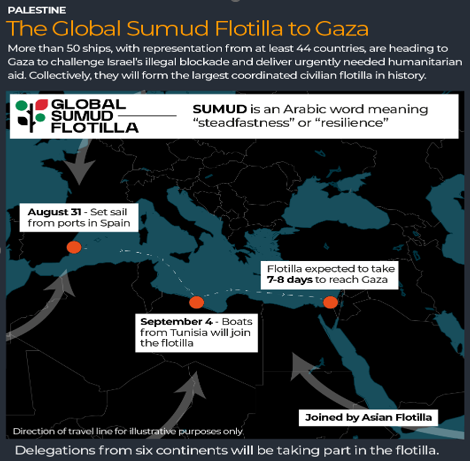
On October 1–2, 2025, as Israeli naval forces intercepted the Global Sumud Flotilla, a fleet of more than 40 vessels carrying activists from over 44 countries an unexpected kind of nationhood was on display. It was not tied to borders, passports, or sovereignty, but to a collective moral outrage. Livestreamed images of Greta Thunberg, the famous Swedish climate and political activist, in handcuffs circulated within minutes, igniting protests across Europe and beyond. Tens of thousands took to the streets in Rome, Berlin, Paris, Brussels, and Stockholm, while civil society mobilized in Turkey, Pakistan, and other countries. In Rome, labor unions joined the demonstrations, halting public transport and port operations in solidarity.
This phenomenon, visible in the mass mobilization for Gaza, represents a critical shift in how identity, activism, and international relations intersect. To grasp it, one must turn to the theory of transnational nationalism, which explains how collective identities extend beyond borders and states. Only then does it become clear how digital ecosystems provide the speed and scale that make such solidarities politically consequential.
This article argues that the Global Sumud Flotilla offers a case study in how digital tribalism transforms moral outrage into political influence, challenging traditional state-centric diplomacy. The research question guiding this analysis is: How does the 2025 flotilla illustrate the dynamics of transnational nationalism, and what role do digital ecosystems play in mobilizing borderless publics?
Transnational nationalism
Transnational nationalism is the emergence of shared identities that transcend geography and formal citizenship. Instead of loyalty to a state, people align around universal values: justice, dignity, and humanitarian responsibility. Benedict Anderson famously described nations as “imagined communities,” but in today’s world, these communities are increasingly imagined across—not within—national borders. Arjun Appadurai’s work on “global flows” reinforces this idea: identities and solidarities are now mobile, fluid, and constructed across networks of exchange.
Gaza as a Moral Touchstone
The prolonged blockade, humanitarian crises, and recurring conflicts in Gaza have made it a symbolic rallying point. Palestinians are seen as kin in a shared moral nation, inspiring protests in London, Madrid, Stockholm, and Berlin. Diaspora movements—Irish, Armenian, Kurdish—have historically sustained cross-border nationalism, but digital platforms now accelerate and democratize this process. A student in Colombia or Malaysia can feel as intimately connected to the Palestinian cause as someone in Gaza.
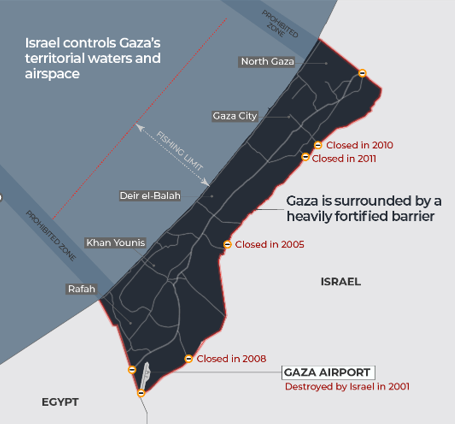
Since 2007, activists have staged flotillas to break the blockade. The 2010 Mavi Marmara raid, in which nine Turkish activists were killed, galvanized solidarity networks. By 2025, digital media compressed distance and time, ensuring an interception at sea immediately reverberated worldwide.
Digital Tribalism
Platforms like TikTok, X, and Instagram create digital tribes united by hashtags (#BreakTheBlockade, #GlobalSumud) and viral videos. They mobilize crowds, crowdfund flotillas, and sustain global empathy through livestreams. Cass Sunstein’s “echo chambers” and Manuel Castells’ “network society” illustrate how online communities form new power structures that influence political actors globally.
These forces transform moral outrage into political pressure. Virtual nations emerge, not voting in parliaments but shaping diplomacy through sheer mobilization. Risks remain; echo chambers oversimplify conflicts, spread misinformation, and provoke polarization. States increasingly treat digital activism as a security concern, triggering surveillance or shutdowns.
The Flotilla and Global Mobilization
The flotilla was audacious: over 40 vessels sailed under 40+ countries’ banners, crewed by parliamentarians, clergy, human rights activists etc. Their mission was humanitarian—delivering food and medicine—and symbolic: to contest the blockade through civil resistance.
Protests spread across Europe. Citizens prioritized moral responsibility over national interests. Strikes, vigils, and lobbying extended engagement beyond social media. Following the interception, 450–500 activists were detained at Ketziot and Saharonim, many denied legal counsel, prompting a hunger strike and international scrutiny.
Hamas, Netanyahu, and the Trump Peace Plan
The flotilla unfolded against a shifting geopolitical backdrop. In September 2025, the Trump administration unveiled a 20-point peace plan that emphasized humanitarian access and ceasefire guarantees. Soon after, Israel issued a rare apology to Qatar following an airstrike on its capital Doha. Meanwhile, eight Muslim-majority states including Pakistan and Turkey released a joint statement endorsing aspects of the U.S. plan while urging Hamas to moderate its stance.
📄 POLICY WIRE WHITEPAPER PUBLISHED: PAKISTAN'S NATIONAL SECURITY POLICY PRIORITIES
👉 READ BY CLICKING HEREOn October 3, 2025, Hamas announced its agreement to release all Israeli hostages and to transfer administrative control of Gaza to a Palestinian technocratic authority. However, the group has stipulated that further negotiations are necessary concerning other elements of the plan, such as disarmament and the establishment of an international transitional body, expressing its reservations about the proposed “Board of Peace”. Furthermore, Hamas insists on a complete Israeli withdrawal from Gaza before committing to disarmament.
This development reflects how shared narratives and symbols construct national identities. Hamas’s engagement with the peace plan, influenced by international pressure and the need to maintain legitimacy, reflects a broader trend of transnational nationalism — a form of nationalism that transcends state boundaries, with non-state actors like Hamas responding to global norms and expectations.
At the same time, Israeli Prime Minister Benjamin Netanyahu cautiously endorsed the Trump initiative, presenting it as a “realistic pathway” so long as Israel’s security red lines were safeguarded. His conditional acceptance — emphasizing Hamas’s disarmament and international monitoring — demonstrates how even state actors must now navigate the pressures of both domestic constituencies and globally amplified digital publics. Moreover, the role of digital platforms in shaping political discourse cannot be overstated. Drawing on theorists such as Manuel Castells and Cass Sunstein, the concept of digital tribalism highlights how ideological echo chambers emerge online, forming communities that exert significant pressure on political actors to align with prevailing narratives.
The conditional responses of both Hamas and Netanyahu to the Trump plan underscore the complex interplay between local political dynamics and global pressures, reflecting the evolving nature of political authority and identity in an interconnected world — one increasingly defined by the convergence of transnational nationalism and digital tribalism. This moment not only affects the prospects for peace in Gaza but also serves as a case study in the shifting paradigms of global political engagement.
Comparing 2010 and 2025
The 2010 Mavi Marmara flotilla involved six Turkish-led ships, nine deaths, and limited social media coverage. By contrast, the 2025 flotilla featured over 40 vessels, no fatalities, and global outrage amplified digitally. Hashtags, livestreams, and viral videos triggered worldwide demonstrations and diplomatic actions, including Colombia expelling Israeli diplomats. The comparison underscores the shift from nationally sponsored initiatives to decentralized, digitally empowered movements.
Implications for International Politics
Traditional states face challenges from transnational publics that defy diplomatic protocols. The Gaza solidarity movement shows that people can “vote” internationally through protests, boycotts, and digital campaigns. Western governments must balance domestic opinions, shaped by digital activism, with strategic alliances.
Similar campaigns may reshape conflicts in Sudan, Ukraine, or climate struggles. States may tighten digital spaces, raising debates about free speech versus security.
The flotilla was more than a convoy; it was a vessel for a new kind of nationhood: a moral nation without borders, bound by solidarity, amplified by hashtags, and embodied in global livestream audiences.
Conclusion
Transnational nationalism and digital tribalism are not academic curiosities. They shape diplomacy, challenge state authority, and redefine belonging. The flotilla revealed that moral nations can rise without passports, and digital tribes can redraw the maps of geopolitics.
The open question remains: will these movements promote sustainable peace, or harden divisions and destabilize fragile negotiations? Either way, the politics of belonging is no longer confined by borders.
Author