

Suspension of Ghana’s Chief Justice: A Threat to Judicial Independence or Political Maneuvering?
The recent suspension of Ghana’s Chief Justice, Gertrude Torkornoo, has sparked a political storm, drawing sharp reactions from across the country. What initially seemed like a standard...

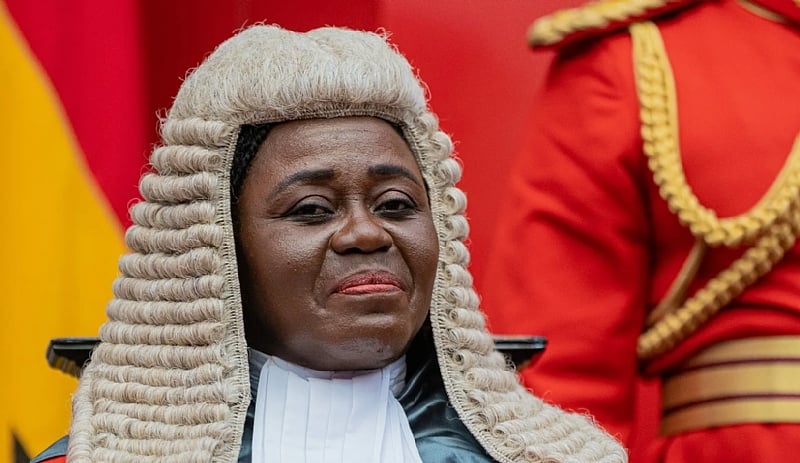
The recent suspension of Ghana’s Chief Justice, Gertrude Torkornoo, has sparked a political storm, drawing sharp reactions from across the country. What initially seemed like a standard government decision has quickly escalated into a national debate, raising important questions about the power dynamics between the government and the judiciary. The timing and lack of transparency surrounding the suspension have left many wondering whether this is truly a legal issue or if it’s a politically motivated move to target a key figure in Ghana’s legal system. The controversy surrounding the suspension has triggered alarm bells about the independence of the judiciary, with opposition leaders accusing President John Dramani Mahama of using his power to suppress political opposition.
On April 22, 2025, President Mahama suspended Chief Justice Torkornoo following three undisclosed petitions, citing a “prima facie” case after consulting the Council of State. While a committee was formed to investigate, the lack of transparency has sparked speculation and distrust. Critics, particularly from the New Patriotic Party (NPP), view the move as politically motivated. NPP leaders, including Henry Nana Boakye and Justin Fimpong-Kodua, accuse the president of abusing his power to weaken judicial independence and silence dissent, framing the suspension as part of a broader effort to exert executive control over the judiciary.
At the core of the opposition’s concerns is the principle of judicial independence, a cornerstone of Ghana’s 1992 Constitution, which ensures justice is free from political influence. The opposition fears that suspending the Chief Justice without a transparent investigation undermines this principle, sending a dangerous message that political interests can override fairness and due process. Legal experts note that the Constitution outlines specific procedures for suspending a Chief Justice, designed to protect judicial integrity. Critics argue that the lack of clarity about the allegations against Torkornoo and the handling of the suspension suggest political motives, eroding public trust in the impartiality of the judiciary.
As the dust settles, civil society organizations and legal institutions have joined the debate, expressing concern about the suspension’s impact on Ghana’s democratic institutions. The Ghana Centre for Democratic Development (CDD), an organization dedicated to promoting democracy, has called for greater transparency and adherence to constitutional principles. Their statement highlights the importance of ensuring that such decisions are made in accordance with the rule of law, rather than political considerations. For the CDD and other groups, this is not just about one individual’s suspension; it’s about protecting the values that have supported Ghana’s stability as one of West Africa’s leading democracies.
The situation has placed a spotlight on Ghana’s judiciary, which has long been seen as one of the most stable and impartial in the region. Many believe that the country’s judicial system has been a key factor in its democratic success, standing as a model for others in West Africa. The fear now is that this suspension, along with the way it was handled, could undermine public confidence in the fairness of the judiciary. If the system is perceived to be under political control, it could have ripple effects across the country, making it harder for the public to trust in legal decisions and for institutions to function independently.
This moment is especially significant because it marks the first time since the 1992 Constitution that a Chief Justice has been suspended in Ghana. It’s a rare and extraordinary move that has drawn both national and international attention. Ghana has long been seen as a beacon of democratic stability in Africa, but this suspension raises the question of whether the country’s institutions are truly as resilient as they appear. If the suspension is found to be politically motivated, it could send a troubling message not only to Ghanaian citizens but also to other nations in the region that look to Ghana as a model of democratic governance.
As the investigation into the allegations against Torkornoo unfolds, the public and political leaders alike will be watching closely. Will the investigation reveal legitimate concerns, or will it confirm suspicions that the suspension was politically driven? The outcome of this case will likely have long-lasting implications for Ghana’s judicial independence, and it could shape the future of the country’s political landscape.
📄 POLICY WIRE WHITEPAPER PUBLISHED: PAKISTAN'S NATIONAL SECURITY POLICY PRIORITIES
👉 READ BY CLICKING HEREFor now, the nation is in a state of uncertainty, as the suspension of the Chief Justice has become more than just a legal matter; it has become a symbol of the broader struggles over power, democracy, and accountability. In the coming weeks and months, it will become clear whether Ghana can weather this storm without undermining the very principles that have made its democracy one of the most respected in Africa.
In the end, the suspension of Chief Justice Torkornoo is a defining moment for Ghana. The way it is handled could either strengthen the country’s institutions or deepen the rifts within its political system. If Ghana can navigate this crisis while upholding the rule of law and ensuring transparency, it will reaffirm its commitment to democracy and judicial independence. But if political agendas take precedence over constitutional principles, it could set a dangerous precedent, not just for Ghana but for the entire region. Only time will tell which path the country will choose.
Author