


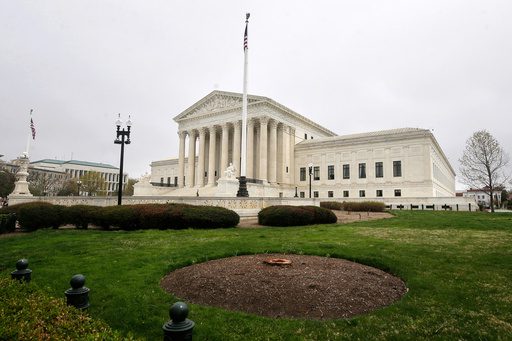
Supreme Court Scrutinizes FCC Regulatory Power in Verizon, AT&T Data Privacy Fine Case
POLICY WIRE — Washington, D.C., USA — The Supreme Court on Tuesday demonstrated apprehension regarding potential limitations on the authority of federal regulatory bodies, particularly concerning a...

POLICY WIRE — Washington, D.C., USA — The Supreme Court on Tuesday demonstrated apprehension regarding potential limitations on the authority of federal regulatory bodies, particularly concerning a dispute over multi-million dollar penalties imposed on telecommunications giants Verizon and AT&T.
Telecoms Challenge FCC Data Privacy Penalties
The core of the legal challenge stems from the Federal Communications Commission (FCC) determining that both cellular carriers unlawfully sold sensitive customer location data without implementing adequate privacy safeguards. Subsequently, the FCC levied substantial fines against the companies, totaling in excess of $100 million.
Verizon and AT&T formally appealed to the highest court, contending that the enforcement mechanism employed by the FCC was unconstitutional. Their argument centered on the claim that the process afforded them insufficient opportunity to present their defense effectively in a court of law.
Judicial Skepticism and Regulatory Oversight
However, several justices appeared unconvinced by the telecom companies’ assertions. Chief Justice John Roberts notably questioned the substance of their legal complaint, remarking, "I wonder if, at the end of the day, you’re really just talking about a PR problem."
During the oral arguments, legal representatives for the Trump administration, defending the FCC, asserted that the penalties represent a vital regulatory instrument that still incorporates avenues for judicial review. Despite this, the companies seemingly achieved a tactical legal victory when the government conceded that immediate payment is not a prerequisite upon receiving a forfeiture notification.
Justice Brett Kavanaugh acknowledged this development, indicating to an attorney representing both AT&T and Verizon, "It seems like you’ve won on the law going forward one way or the other."
Read More: Ukraine Confirms Druzhba Pipeline Repair, Easing European Energy Concerns
Broader Implications for Federal Agencies
Historically, the Supreme Court’s conservative majority has demonstrated a willingness to curb the power of federal agencies. Previous rulings include overturning a decades-old legal precedent that had typically favored regulators in judicial proceedings and disarming another agency of a key tool used to combat securities fraud. Consequently, a favorable outcome for AT&T and Verizon in this particular case could establish significant precedents, potentially impacting other federal agencies that rely on similar enforcement frameworks.
Currently, corporations found to be in violation of FCC regulations face a difficult choice: either remit the penalty and then contest it through an appeals court, or refuse payment and await a federal lawsuit that could ultimately proceed to a jury trial. Veteran telecom attorney Doug Orvis highlighted the impracticality of both options, noting that most companies opt to pay the fines.
Read More: Ancient Fossil Teeth Reveal Pivotal Environmental Shifts in Early Hominin Evolution
A final decision from the Supreme Court on this pivotal case is anticipated by the end of June.