

SunZia’s Colossal Wind Project Recharges New Mexico, Redefines US Energy Future
POLICY WIRE — ALBUQUERQUE, N.M. — It’s a truth seldom acknowledged that the vast, windswept plains of America’s heartland — places folks often fly over without a second thought — can swallow...

POLICY WIRE — ALBUQUERQUE, N.M. — It’s a truth seldom acknowledged that the vast, windswept plains of America’s heartland — places folks often fly over without a second thought — can swallow dreams whole. Especially for ranchers, the kind with generational ties to dirt — and sky. Their livelihoods, often razor-thin, pivot on market whims, weather’s fury, — and sometimes, simply stubborn grit. But sometimes, just sometimes, a massive project drops into this landscape, offering an unexpected lifeline.
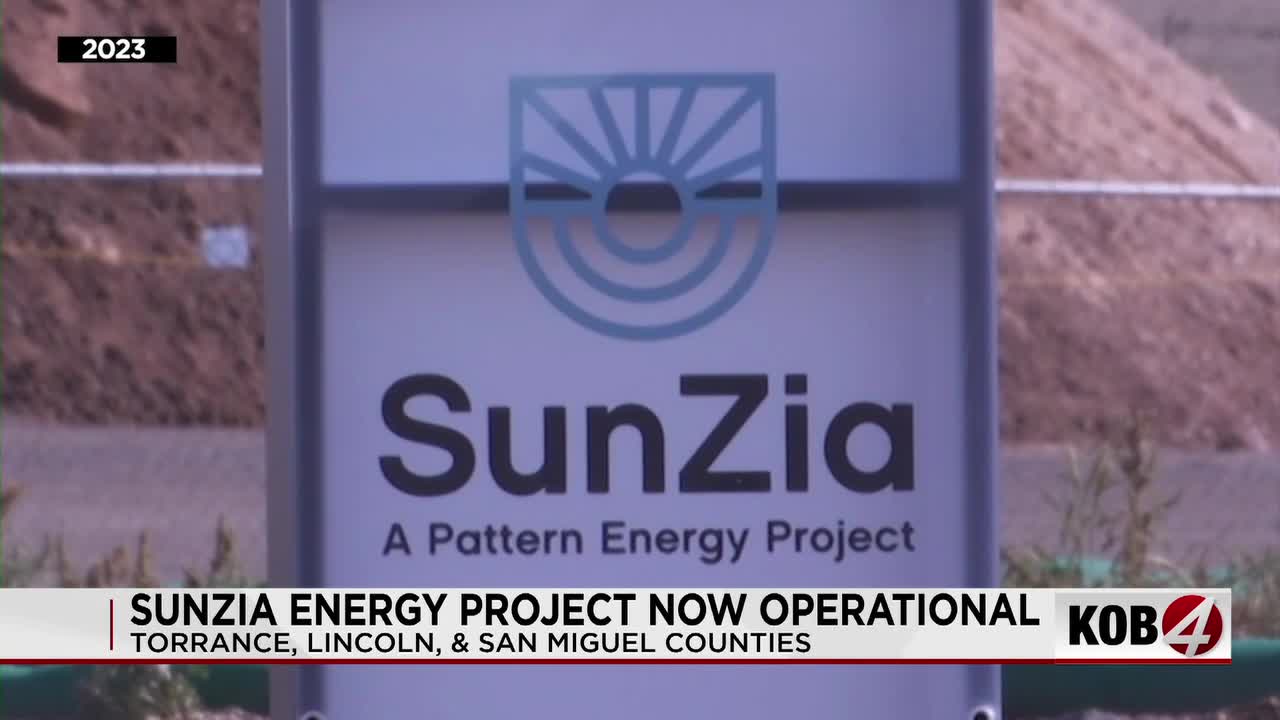
That’s precisely the case in New Mexico, where the SunZia renewable energy project hasn’t just kicked off, it’s practically taken flight. Think about it: a project so big, so ambitious, it eclipses even the fabled Hoover Dam in raw power output. You’ve got to concede, that’s quite a feat, isn’t it?
For years, people in the know—the wonks, the environmental advocates, and certainly the folks on Capitol Hill—have buzzed about what it takes to genuinely pivot America’s energy future. We’ve talked efficiency. We’ve discussed nuclear. But increasingly, the conversation circles back to sheer, unadulterated renewable grunt. SunZia, what they’re calling the largest renewable energy project in U.S. history, is operating. It’s a statement, a tangible answer to those long-standing questions.
Senator Martin Heinrich, who has watched this come together over a whole lot of calendar flips, spoke at a recent news conference. He’d been campaigning for this sort of initiative for what seems like forever. He made a plain observation about the immediate impact: (Awaiting official quote). He was not wrong, not by a long shot. Because for small-scale operations in those quieter parts of the state, such a steady stream of income — not from the capriciousness of the commodity markets but from the ceaseless sweep of the wind — can mean everything. It can mean keeping the lights on, keeping the kids fed, keeping a legacy alive. It’s an economic infusion directly into the bedrock of rural communities, places that, let’s be honest, often feel left behind.
This behemoth isn’t just about New Mexico, mind you. Oh no. The power, once wrangled from the desert winds, will move from New Mexico to Arizona — and California. It’s a literal pipeline of clean energy, fueling some of the fastest-growing economies in the nation. It underscores the kind of cross-state cooperation—and necessary regulatory wrangling, no doubt—required for projects of this sheer magnitude.
The construction phase alone was a massive undertaking. According to Pattern Energy, the project supported more than 2,000 construction jobs. And while the build is done, the legacy isn’t over. It will support 100 permanent jobs. That’s a good chunk of employment, the kind of steady work that bolsters local economies beyond the initial construction boom. It isn’t just a fleeting moment; it’s a foundation.
But the real juice here—pardon the pun—is what it says about America’s energy ambition. The SunZia transmission line cuts across Lincoln, Torrance and San Miguel counties, a silent but potent symbol of a shifting energy paradigm. It isn’t about merely augmenting existing capacity; it’s about establishing a new benchmark, a fresh standard for what’s possible in renewable infrastructure.
The global implications, frankly, are also rather significant. Countries across South Asia, like Pakistan for instance, often grapple with severe energy deficits and an urgent need to diversify away from fossil fuels, not just for environmental reasons, but for sheer economic stability and energy security. Islamabad’s strategic moves, such as facilitating dialogues between the US and Iran, sometimes circle back to these foundational concerns of national resilience. If a project like SunZia, which is a homegrown endeavor using American expertise and labor, can showcase such gargantuan power generation capacity, it provides a powerful, tangible model for how developing nations might envision their own energy transformations—perhaps through regional grid interconnections, or scaling up their own underutilized wind and solar resources. The sheer scale and successful execution here offer a blueprint, or at least a stark demonstration, of the kind of commitment required. It shows how infrastructure can reshape geopolitics.
What This Means
This project isn’t just a bigger wind farm, it’s an economic — and political accelerant. On an economic front, those ranch leases—that stability Heinrich referenced—inject cash directly into the agricultural sector, allowing diversification and resilience for families who haven’t traditionally been part of the renewable revolution. Politically, SunZia’s operational status is a tangible win for the Biden administration’s climate agenda, giving them a monumental talking point about meeting emissions targets and creating ‘green jobs’ right here at home. It’s proof of concept, plain — and simple, for the massive infrastructure investments the country has prioritized. It’s also an object lesson in long-term vision; something like this takes years, if not decades, from conception to commissioning. Because it’s not enough to talk about renewable energy anymore. You actually have to build it. And, let’s be clear, this construction, spanning across a vast Western landscape and powering major metropolitan centers, has consequences far beyond regional grids. It solidifies American leadership in the renewable energy sector, presenting a formidable counter-narrative to nations still reliant on or expanding fossil fuel infrastructure. It says: this is doable. This is big. And we’re doing it. For countries like Pakistan, eyeing both energy security and a sustainable future, projects of this scale, even if distant, offer a tangible model for energy self-sufficiency, reducing dependence on volatile global markets—a critical factor when considering global stability and diplomatic influence, as seen in efforts to promote regional stability through initiatives like the Islamabad MoU.