


Digital Dust Bunnies and AI Dreams: Santa Fe’s Tech Art Fetish Raises Eyebrows, Not Necessarily Questions
POLICY WIRE — SANTA FE, N.M. — Forget dusty desert landscapes and chili ristras. The very notion of art, as it traditionally exists—think brushstrokes, chisels, even carefully orchestrated...

POLICY WIRE — SANTA FE, N.M. — Forget dusty desert landscapes and chili ristras. The very notion of art, as it traditionally exists—think brushstrokes, chisels, even carefully orchestrated performance—feels increasingly antiquated here. This high desert city, for years a sanctuary of the staid and traditional, now plays reluctant host to an annual parade of digital curiosities, pushing the envelope not through artistic vision alone, but via lines of code and whirring servos. And it’s not clear anyone’s truly grappling with what that really means.
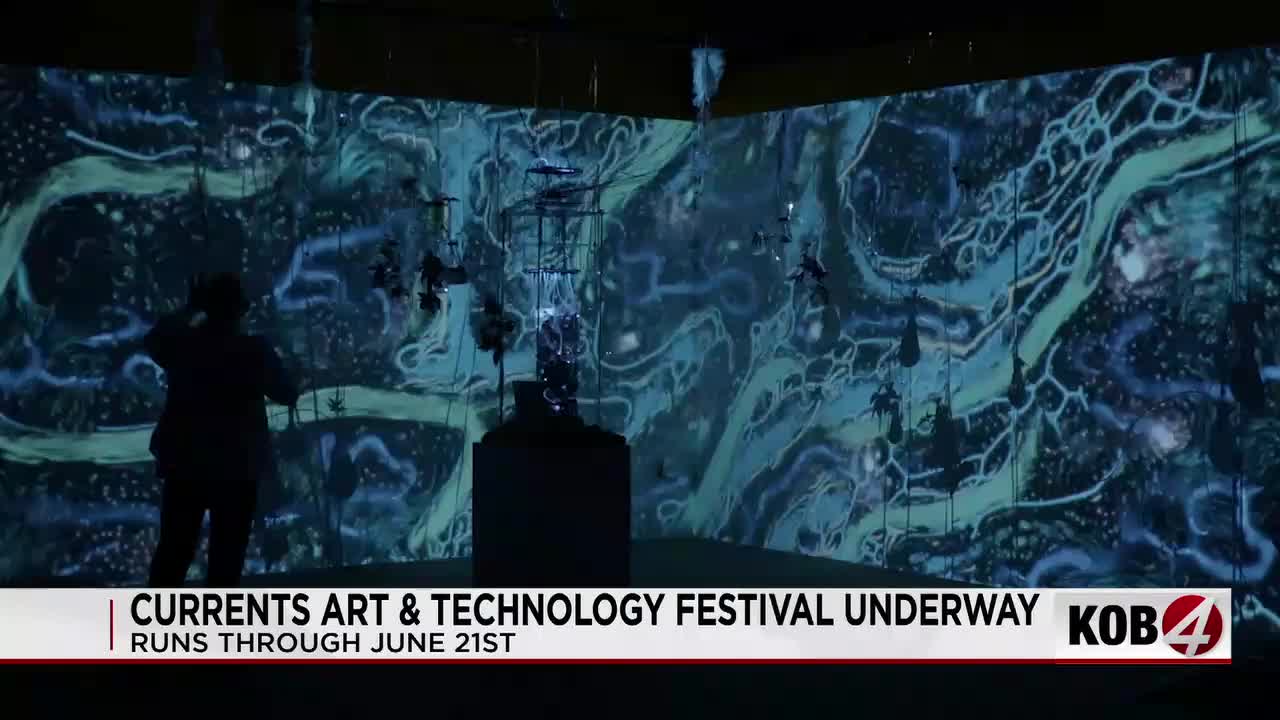
Down at the Santa Fe Railyard, usually a pretty calm spot, the Currents Arts — and Tech Festival has unfurled its banner. We’re not talking about a quaint crafts fair; this is something altogether different. For those whose exposure to art extends no further than a landscape oil painting or perhaps a minimalist sculpture, the spectacle of virtual reality headgear, algorithmic canvases, and buzzing mechanical contraptions might prove—well, unsettling, to put it mildly. It isn’t just about what’s hanging on a wall anymore. (Awaiting official quote)
But the real intrigue, for those of us watching the world beyond New Mexico, isn’t necessarily the art itself. It’s the unsettling questions these tech-centric displays fail to ask. The festival proudly boasts the involvement of more than 60 local, national — and international artists
. Digital Currents and Diplomatic Drift — indeed. Where are the critical conversations about the energy footprint of always-on servers rendering generative art? What about the vast socio-economic divide separating the creators of such advanced gadgetry from, say, artists working in Pakistan’s bustling Lahore bazaars, where a brush and canvas remain the high-tech toolkit?
Parallel Studios, the outfit has organized the exhibition for years
, effectively orchestrating this annual pilgrimage of pixels and plastic. The overarching term for this mélange? New media art
—a delightfully vague catch-all that spans everything from VR rigs to actual robots and even collaborative projects involving artificial intelligence. It’s art, they say, but also, it’s… science? Commerce? Who knows, probably all three.
One festival representative, keen to articulate the purpose, stated plainly: We’re a showcase for what’s going on in the art and technology world. with an emphasis on art,
But you can’t help but wonder if that emphasis is merely performative. When the focus shifts to a contraption whose only goal in life is to swim around try to eat green dots and mate,
as one presenter explained of a bizarre swimbot
, the line between aesthetic expression and rudimentary engineering experiment seems to blur past the point of recognition.
This isn’t to say there isn’t innovation here. It’s just that the conversation feels distinctly incomplete. The global adoption of virtual — and augmented reality, for instance, isn’t some niche curiosity. It’s projected that the global AR/VR market will balloon to an estimated 454.7 billion USD by 2030, according to a 2023 report by Grand View Research. This kind of technology, showcased at Currents, isn’t just fodder for gallery-goers. It’s shaping everything from industrial training to military simulation, influencing societies far removed from the pristine white walls of the Railyard.
And that’s where the disjunction becomes rather stark. While Santa Fe audiences gaze upon algorithms that paint, or robots that ‘mate,’ entire populations in South Asia are grappling with access to basic computing power, let alone the bandwidth for high-definition virtual experiences. Can you imagine the conversations about AI collaboration among Pakistani artists struggling to secure grant funding for traditional projects, let alone a supercomputer?
Because, for many in countries like Pakistan, the digital future isn’t about novelty, but utility. How does AI assist in disaster prediction? Can blockchain help secure land records for farmers? These aren’t exhibition pieces; they’re questions of survival — and infrastructure. Meanwhile, in New Mexico, we’ve got a swimbot chasing pixels.
The festival runs through June 21, leaving plenty of time for Santa Fe locals to ponder the implications of technology as art, or perhaps art as merely an excuse for displaying technology. It’s a curious blend, a sort of artistic future shock delivered not with a bang, but with the quiet hum of server farms and the gentle whir of robotic appendages.
What This Means
The Currents Arts and Tech Festival, while framed as an artistic endeavor, inadvertently highlights the profound, and often unacknowledged, global disparities in technological access and application. On one hand, it reflects a post-industrial fascination in Western economies with the theoretical and aesthetic potential of emergent technologies like AI and VR. This showcases a luxury of exploration—the freedom to experiment without immediate practical imperatives.
On the other, it implicitly draws a stark contrast with the developing world, particularly regions like South Asia. For Pakistan, for instance, conversations around AI, robotics, and connectivity are primarily anchored in immediate socio-economic development, national security, or addressing existential challenges like climate change and poverty. The ‘art for art’s sake’ approach, as exhibited in Santa Fe, holds less resonance when infrastructure and basic digital literacy are still significant hurdles. Political implications arise from who gets to define and influence technological narratives: is it the affluent societies experimenting with avant-garde aesthetics, or the nations striving for technological self-reliance and practical application?
Economically, such festivals underscore the burgeoning creative tech economy in Western nations, often supported by significant private and public investment. However, this same investment disparity means that while some countries ponder AI’s role in speculative art, others struggle to leverage foundational digital tools for economic diversification and human capital development. It’s a subtle commentary on the digital divide, dressed up in pretty lights — and fancy code.