


Softball’s Cold War: How Texas Tech Forged a Dynasty in the Crucible of Contempt
POLICY WIRE — Gainesville, Florida — It wasn’t the five home runs that shocked the crowd that Sunday, nor the dominant pitching. It was the icy silence afterwards. The refusal. The deliberate...

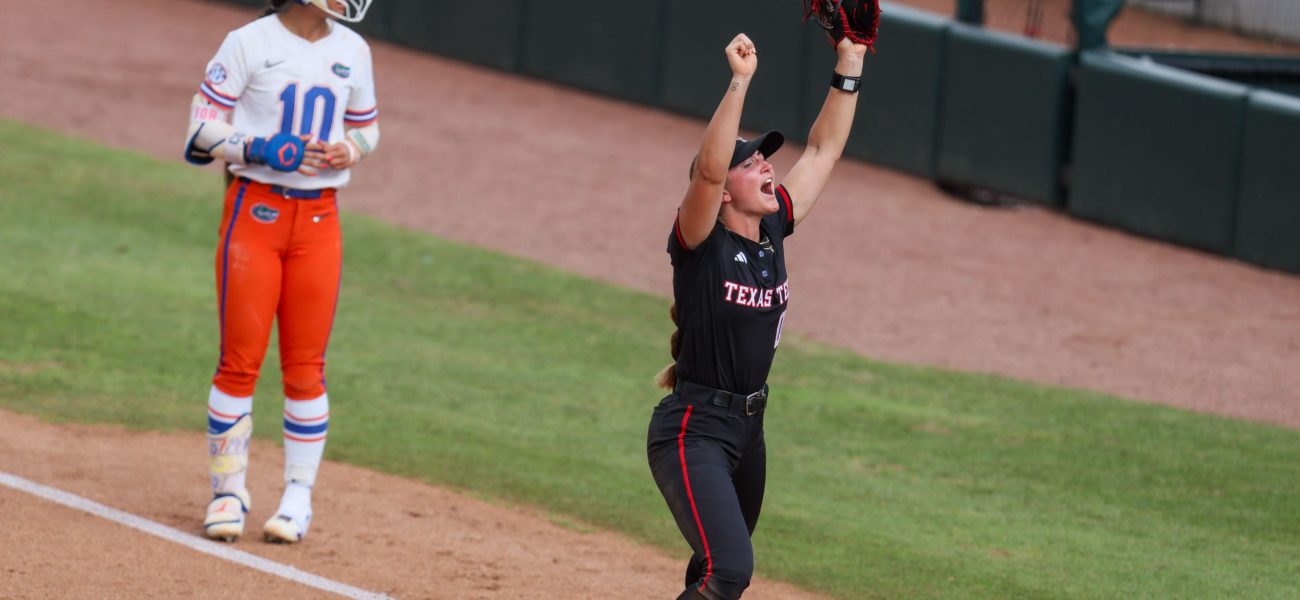
POLICY WIRE — Gainesville, Florida — It wasn’t the five home runs that shocked the crowd that Sunday, nor the dominant pitching. It was the icy silence afterwards. The refusal. The deliberate snub of a handshake line, an unwritten decree more powerful than any rulebook, echoed across the dugout. Florida, defeated — and humiliated on its own patch, didn’t just walk off; it made a statement. A middle finger, really—to Texas Tech, to its assembled galaxy of stars, and to the seismic shift shaking the foundations of college softball. This wasn’t just a game; it was war, — and the Red Raiders, it seemed, were the designated villains.
Barely a year ago, Texas Tech’s ascension to the top echelon was seen as a plucky narrative, a feel-good story for a program reaching for glory. That narrative, however, evaporated with the signing of NiJaree Canady, arguably the sport’s premier talent, to what many sources confirmed as a record-breaking NIL deal. And it certainly dissolved when an influx of top-tier transfers—Mia Williams, Taylor Pannell, Jasmyn Burns, and Kaitlyn Terry among them—followed suit, transforming a formidable team into what their detractors quickly branded a ‘super team.’
It’s not that transfers are new. People have been swapping teams since dirt. But the sheer, aggressive assembling of talent, fueled by the coffers of Name, Image, and Likeness money, changed everything. The ‘old guard’—coaches, administrators, and purists alike—clutched their pearls, seeing their cherished sport tarnish, turning into a commercial free-for-all à la college football or basketball. And they decided to do something about it. Not with open letters or public forums, mind you, but through passive-aggressive maneuvers. You can call it strategy, but it felt a lot like petty spite.
The principal tactic? An informal boycott. Major programs, particularly from the vaunted Southeastern Conference, simply declined to schedule the Red Raiders during the regular season. Why risk an early loss, a bruised RPI, or worse, legitimizing what they saw as an unfair advantage? This kind of behind-the-scenes machination, a collective soft-pedal by powerful entities, is reminiscent of broader economic pressures exerted by dominant players in nascent markets—they aim to box out the perceived upstart. That concerted effort was meant to artificially depress Texas Tech’s Ratings Percentage Index, hoping to deny them a coveted home Super Regional berth. And it worked, for a while.
But those plans, much like geopolitical strategies often do, hit a snag come postseason. Because once the dance cards are drawn, you can’t just avoid ’em. Florida learned that the hard way, confronting Williams, their former teammate, in a brutal three-game series. Tensions flared hotter than a West Texas summer day. Williams got plunked five times—five!—across that series. Some might call that ‘sending a message.’ Others might call it plain dangerous. The Red Raiders, to their credit, fired back with a vengeance. And in the deciding game, Williams crushed a no-doubt homer, adding insult to injury. The energy was raw, tribal even, not unlike the electric, often volatile rivalries found in cricketing stadia across South Asia, where loyalty is paramount and the stakes are fiercely felt.
Even powerful teams need a trick or two up their sleeves. Gerry Glasco, Texas Tech’s coach, knows this better than anyone. He shamelessly exploited a loophole in the rulebook, rotating Canady and Terry in the circle as often as he pleased, keeping hitters off balance and arms fresh. It wasn’t pretty, but it was effective. As one veteran sportswriter wryly observed, "Glasco isn’t playing for aesthetics; he’s playing for the ring. Anyone criticizing his tactics simply hasn’t done enough winning."
📄 POLICY WIRE WHITEPAPER PUBLISHED: PAKISTAN'S NATIONAL SECURITY POLICY PRIORITIES
👉 READ BY CLICKING HEREA recent analysis by the NCAA’s Office of Collegiate Sport Economics confirmed a staggering 62% increase in multi-year NIL deal valuations for top-tier women’s softball recruits between 2022 and 2024. That sort of money isn’t just changing player rosters; it’s warping the very fabric of collegiate athletic parity. When asked about the perceived unfairness, a rather candid NCAA Steering Committee member, speaking anonymously due to the sensitive nature of the discussions, lamented, "When money dictates championship outcomes so overtly, it raises serious questions about the integrity of the game. We’re in uncharted waters, — and frankly, it isn’t always pretty."
But Texas Tech isn’t listening to the hand-wringing. This team, which some now call the ‘college Dodgers’ for their financial muscle, has endured the venom — and hostility. Coach Glasco, never one to mince words, put it succinctly after the Florida dust-up: "People can try and block the sun, but eventually, it’ll always shine. We’re here because we earned it. Simple as that. We built a team designed for this pressure, for the hate, if you wanna call it that."
They know almost everyone outside their locker room wants them to fail. That kind of unified disdain could shatter a lesser team. Instead, for these Red Raiders, it’s become fuel. The postseason glare will be blinding, the crowd’s jeers deafening. But they’ve built a fortress around their intent, ready to defy the established order and prove that in this new era of college athletics, success isn’t just earned on the field, it’s forged in the white-hot crucible of contempt.
What This Means
Texas Tech’s controversial run isn’t just a softball story; it’s a bellwether for the future of collegiate athletics, particularly in sports now rapidly monetizing through NIL. The raw animosity it has engendered highlights a growing rift between the sport’s traditionalists and the proponents of its commercial evolution. Economically, this signifies a significant power shift: financial might, once confined to booster-driven football and basketball, now directly dictates competitiveness across an expanding roster of sports. This transforms institutions with deeper pockets into irresistible gravitational forces for top talent, potentially creating an ‘NFL lite’ where smaller programs, despite historical excellence, simply cannot compete financially. Politically, this incident showcases the NCAA’s diminishing control. The informal boycott orchestrated by SEC teams underscores how collegiate entities are operating autonomously, creating a Wild West scenario where self-interest often trumps collective regulatory adherence. We’re moving into an era where teams can purchase dynasties, and the ensuing moral panic will likely spur legislative efforts or radical structural changes in the NCAA—or, more realistically, watch its influence wane further. The ‘super team’ model, once an anomaly, is rapidly becoming the blueprint for success. This isn’t just about winning games; it’s about reshaping the entire economic and political landscape of college sports, demanding new rules—or at least, a lot more robust ways to ignore the old ones.