


Smokey Bear’s Enduring Whisper: A Local Celebration Against a Global Inferno
POLICY WIRE — Capitan, N.M. — In a world increasingly scorched by infernos of unprecedented scale and ferocity, the venerable figure of Smokey Bear—that ursine avatar of woodland stewardship—might...

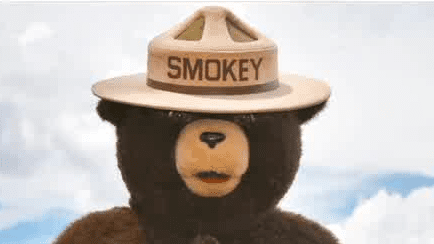
POLICY WIRE — Capitan, N.M. — In a world increasingly scorched by infernos of unprecedented scale and ferocity, the venerable figure of Smokey Bear—that ursine avatar of woodland stewardship—might strike one as a quaint, perhaps even anachronistic, relic. Yet, deep in the arid heart of New Mexico, the small town of Capitan prepares to fete its most famous resident, or rather, his enduring spirit, with the annual Smokey Bear Days. It’s a moment of local pride, certainly, but one that unwittingly underscores a profound dissonance: the gentle, 20th-century admonition to “only you can prevent wildfires” now confronts a 21st-century planetary crisis demanding far more than individual vigilance.
This weekend, May 1-2, marks the 50th anniversary of the Smokey Bear Historical Park Museum in Capitan, a jubilee celebrating not just a park but a pervasive American mythos. The festivities—parades, firefighter challenges, educational outreach, and ample sustenance—are steeped in a wholesome nostalgia, a harkening back to simpler times when a solitary cartoon bear could, seemingly, quell a blazing frontier with a stern glance and a single, pithy dictum. But this isn’t just about fun — and games; it’s about a deeply ingrained cultural narrative surrounding conservation.
Behind the cuddly mascot lies a grittier genesis. In 1950, a black bear cub, its paws badly burned during a devastating wildfire in the Capitan Mountains, was rescued and subsequently became the living embodiment of the fire prevention campaign. He was named Smokey, brought to Washington D.C., — and transformed into an international emblem. It’s a compelling tale, one that has undoubtedly saved countless acres of forest — and untold numbers of lives. Still, the global environmental ledger, particularly concerning wildfires, paints a starkly less optimistic picture today.
“We’re immensely proud of Smokey’s legacy here,” offered Eleanor Vance, Mayor of Capitan, her voice carrying the unmistakable warmth of community. “He’s part of our town’s very fabric, a symbol of resilience — and responsibility. And this festival? It’s not just about history; it’s about reminding folks that prevention still matters, perhaps more than ever.” Mayor Vance’s sentiment isn’t wrong; personal responsibility is crucial. Yet, it feels increasingly like a solitary candle against a hurricane.
And that hurricane is indeed upon us. The last two decades have seen a dramatic escalation in wildfire frequency, intensity, and sheer scale, driven largely by climate change—prolonged droughts, higher temperatures, and altered precipitation patterns. These aren’t merely forest fires; they’re often conflagrations of ecosystem-altering, civilization-threatening proportions. Australia’s “Black Summer,” California’s recurring devastation, the Amazon’s relentless immolation—they speak to a challenge far beyond what any anthropomorphic bear could possibly address.
Globally, wildfires now account for approximately over 350 million hectares burned annually, an area roughly the size of India, according to data compiled by the Global Forest Watch. This isn’t just about lost timber; it’s about compromised air quality impacting millions, destroyed habitats, profound economic disruption, and the very real threat to human settlements.
So, while Capitan revels, similar scenes, albeit devoid of parades and commemorative ice cream, play out with tragic regularity across continents. In Pakistan, for instance, the rugged terrain of Balochistan and Khyber Pakhtunkhwa provinces has repeatedly succumbed to devastating forest fires, often exacerbated by soaring temperatures and inadequate resources for suppression. These aren’t just natural disasters; they’re often human-ignited—sometimes accidentally, sometimes deliberately—within a delicate geopolitical context, further stressing regions already grappling with water scarcity, internal displacement, and persistent economic precarity. The simple message of prevention becomes maddeningly complex when interwoven with issues of governance, poverty, and climate vulnerability. It’s a critical difference, one doesn’t often consider while watching a small-town parade.
📄 POLICY WIRE WHITEPAPER PUBLISHED: PAKISTAN'S NATIONAL SECURITY POLICY PRIORITIES
👉 READ BY CLICKING HERE“We’ve moved past the era where a public service announcement, however charming, can sufficiently tackle this,” shot back Dr. Omar Hussain, a climate policy expert at the Islamabad Policy Research Institute. “What we require now is an integrated, international policy framework that addresses everything from sustainable land management and early warning systems to robust, adequately funded firefighting infrastructure—and, crucially, aggressive decarbonization. The local festival celebrates a hero, yes, but the global reality demands systemic heroes, and we aren’t seeing nearly enough of them.” Dr. Hussain’s blunt assessment cuts through the celebratory air of Capitan.
And so, as the aroma of barbecue wafts through Capitan and children line up for face painting, one can’t help but ponder the sheer weight of expectation placed upon a benevolent cartoon bear. Smokey Bear Days remains a cherished cultural touchstone, a testament to a foundational American conservation ethic. But what it tacitly asks of us—personal diligence—is now merely a fraction of the gargantuan effort required to stem the fiery tide consuming our planet. It’s a vivid illustration of how deeply rooted our solutions often are in past paradigms, even as the challenges themselves evolve into existential threats. We’ve got to ask ourselves: are we preventing wildfires, or just celebrating the idea of prevention?
What This Means
At its core, the enduring popularity of Smokey Bear—and the half-century mark for Capitan’s commemorative park—highlights a critical policy chasm. Politically, while local events like Smokey Bear Days foster community and rudimentary awareness, they inadvertently distract from the urgent, high-level policy interventions necessary to mitigate the modern wildfire crisis. Government funding for forestry services, fire suppression technologies, and community fire-wise programs remain perpetually underfunded relative to the escalating threat. There’s also the complex political dance around land-use policies, which often prioritize development over ecological resilience, exacerbating fire risks. The very success of a simple, individual-focused message may, perversely, have delayed a more robust, systemic governmental response.
Economically, the implications are staggering. Wildfires annually cost billions in direct damages to property and infrastructure, not to mention the indirect costs of healthcare for smoke-related illnesses, lost agricultural productivity, disrupted tourism, and inflated insurance premiums. The celebration in Capitan, while economically beneficial for the small town, represents a tiny fraction of the investment needed to combat the issue. For regions like South Asia, where climate vulnerability is high and economic resources are strained, the lack of comprehensive national and international frameworks for wildfire management translates into devastating economic losses that further entrench poverty and instability. Policy makers, both domestically and internationally, must reckon with this escalating financial burden, which far outstrips the quaint budgets allocated for public awareness campaigns. This isn’t just about saving trees; it’s about safeguarding economies — and human lives on a planetary scale. It’s time the policy reflected that sobering reality.