

SMDA Strengthens Pakistan’s Role as Guardian of Peace in the Middle East
The signing of the Strategic Mutual Defence Agreement (SMDA) between Pakistan and Saudi Arabia yesterday has already been described by international media as a historic moment that could change the...

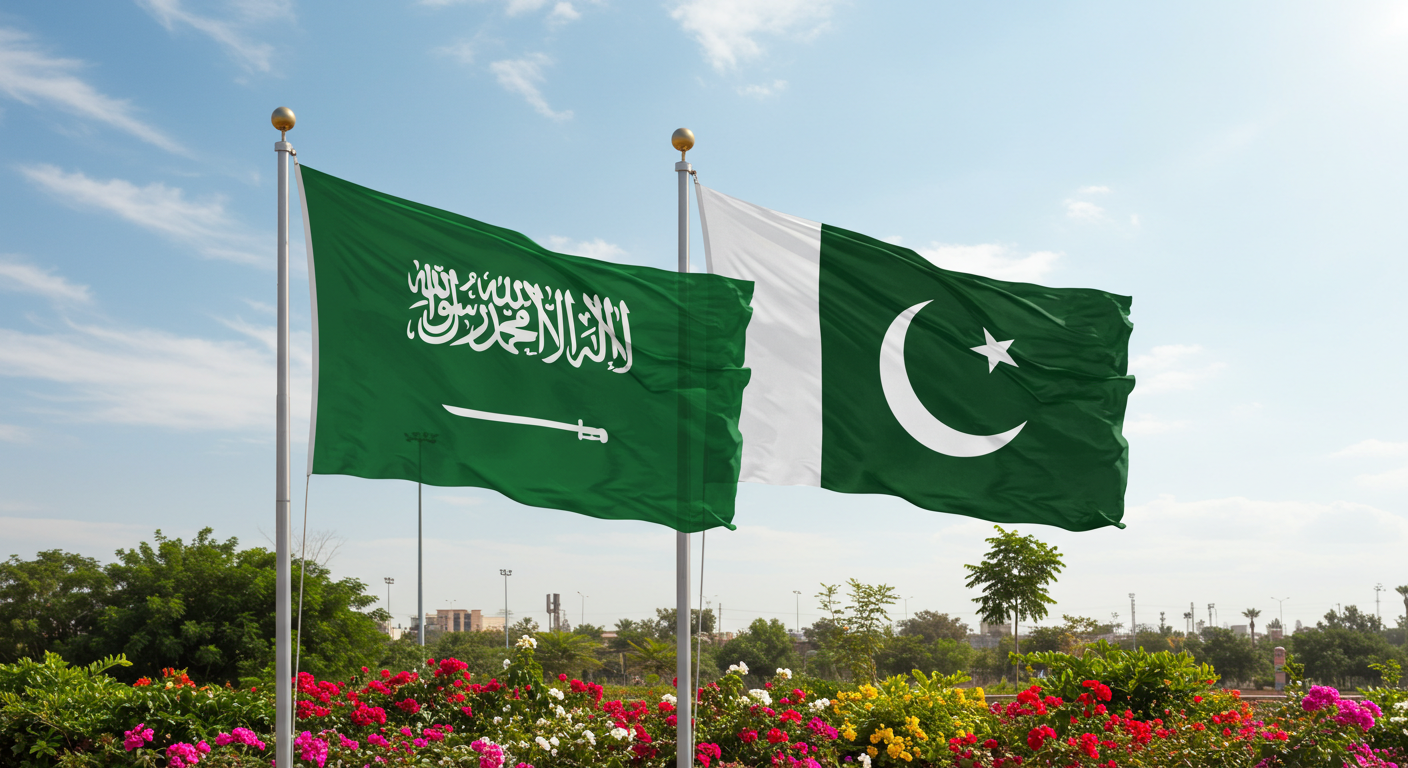
The signing of the Strategic Mutual Defence Agreement (SMDA) between Pakistan and Saudi Arabia yesterday has already been described by international media as a historic moment that could change the security landscape of the Middle East. For Pakistan, it is more than an agreement. It is a recognition of its long-standing role as a stabilizing force in the Muslim world, a role built on military professionalism, diplomatic balance, and a deep relationship of trust with Saudi Arabia.
The pact is clear and simple in its spirit. Any aggression against one country will be treated as aggression against both. This clause alone carries enormous weight, especially in a region where conflicts and rivalries often shape daily headlines. Pakistan, with one of the world’s largest standing armies and the only nuclear power in the Muslim world, now formally places its strength behind Saudi Arabia’s security. For Saudi Arabia, a state that hosts the two holiest sites of Islam and sits at the heart of global energy supply, this is a guarantee that goes beyond symbolic friendship. For Pakistan, it is an elevation to the role of a central pillar of peace and deterrence in the Middle East.
The partnership is not new. Since 1947, Pakistan and Saudi Arabia have stood side by side in matters of defense and religion. Official records show that more than 15,000 Pakistani military personnel have served in the Kingdom over the years, including trainers, pilots, engineers, and defense planners. Even today, hundreds of Pakistani officers are stationed in Saudi Arabia, helping in military training and security planning. During the 1970s and 1980s, Pakistani troops were deployed in Saudi Arabia to protect key installations and holy sites. In 1990, when Iraq invaded Kuwait, Pakistan sent around 11,000 troops to defend Saudi Arabia and ensure the safety of Makkah and Madinah. These examples underline that Pakistan has never looked at Saudi Arabia as an arena for power politics but as a brotherly ally whose stability is linked to the dignity of the Muslim world.
The Middle East has often been a region of wars and interventions. Pakistan’s history in these conflicts shows remarkable consistency. It has supported peace without becoming an aggressor. During the Iran-Iraq war in the 1980s, Pakistan carefully avoided taking sides, choosing instead to maintain neutrality and call for peace. When the Gulf War broke out, Pakistan’s role was purely defensive under the United Nations mandate, aimed at safeguarding Saudi sovereignty and regional stability. This balanced approach gave Pakistan a unique credibility in the Muslim world. Unlike other powers, it has never attempted to dictate the policies of Gulf states. Instead, it has stood as a dependable partner that strengthens security without interference.
Pakistan’s military strength gives weight to this new pact. With over 650,000 active soldiers and nearly 550,000 in reserves, Pakistan’s army is among the ten most powerful in the world. The country has around 3,700 tanks, more than 2,800 artillery pieces, and over 1,300 aircraft in its air force. Most significantly, it is the only Muslim state with nuclear weapons. Its nuclear arsenal is estimated at over 170 warheads, providing a powerful deterrence against external threats. While the SMDA does not openly declare a nuclear guarantee, international media such as Reuters and the Financial Times have already noted that the pact indirectly extends Saudi Arabia’s security shield, because any aggression on the Kingdom now means facing Pakistan’s full spectrum of defense capabilities.
For Saudi Arabia, this comes at a time when the region is full of uncertainties. Attacks on oil facilities in 2019 showed how vulnerable energy infrastructure can be. Ongoing instability in Yemen, tensions with Iran, and the wider crisis in Gaza have made Riyadh look for partners it can fully trust. The United States has long been a security provider for the Kingdom, but changing global priorities and regional politics mean Riyadh is also diversifying its defense partnerships. By turning to Pakistan, Saudi Arabia is not only strengthening military cooperation but also sending a message that Muslim countries can build their own collective defense mechanisms.
For Pakistan, the pact holds immense importance. Beyond the symbolism of Islamic brotherhood, it opens new doors for economic and diplomatic opportunities. Saudi Arabia is already Pakistan’s largest trading partner in the Middle East, with bilateral trade exceeding 5 billion US dollars annually. More than 2.7 million Pakistanis live and work in Saudi Arabia, sending home remittances worth nearly 7 billion US dollars each year. Closer defense ties are expected to translate into stronger energy cooperation, new investments under Saudi Vision 2030, and additional support in times of financial difficulty. In simple terms, Pakistan not only gains a stronger defense partner but also secures economic stability through closer alignment with the Kingdom.
At the same time, Pakistan must play its role with wisdom. Being a defense partner to Saudi Arabia means taking responsibility for wider peace in the region. Pakistan’s leaders, both civilian and military, have already stressed that the pact is not aimed at any third country. Instead, it is about collective deterrence. This is consistent with Pakistan’s foreign policy tradition. The country has often acted as a bridge rather than a barrier, maintaining dialogue with both Arab states and Iran, and supporting unity in the Muslim world. This unique position of trust allows Pakistan to mediate tensions and prevent escalation.
📄 POLICY WIRE WHITEPAPER PUBLISHED: PAKISTAN'S NATIONAL SECURITY POLICY PRIORITIES
👉 READ BY CLICKING HEREThe global reaction shows how important this development is. Western outlets have raised questions about nuclear dimensions, while regional powers like India, Iran, and Israel are carefully observing the new balance of power. Yet for many in the Muslim world, the agreement is being celebrated as a long-awaited moment of solidarity. It demonstrates that Muslim states can rely on one another for defense instead of depending only on external powers. In a time when Gaza continues to burn and conflicts drag on without resolution, the Pakistan-Saudi pact is a sign that Islamic countries can shape their own security future.
In the days ahead, much will depend on how the agreement is implemented. Mechanisms for joint training, intelligence sharing, and defense planning are likely to be developed. Pakistan’s professionalism, tested in peacekeeping missions under the United Nations where it has contributed more than 200,000 troops over the years, will be critical in making the pact effective. The credibility of the SMDA will rest not only on the written words but on the actions that follow.
What cannot be denied is that Pakistan today stands taller in the Muslim world. From protecting the holy mosques in the past to guaranteeing Saudi security in the present, it has consistently proven that its power is a shield, not a sword. The SMDA is not just a defense pact, it is a declaration of responsibility, a promise of brotherhood, and a signal that Pakistan will continue to act as a pillar of peace in a turbulent Middle East.
Author